말하다 (Mal-ha-da): Why the Korean Body Speaks Before Words Ever Do
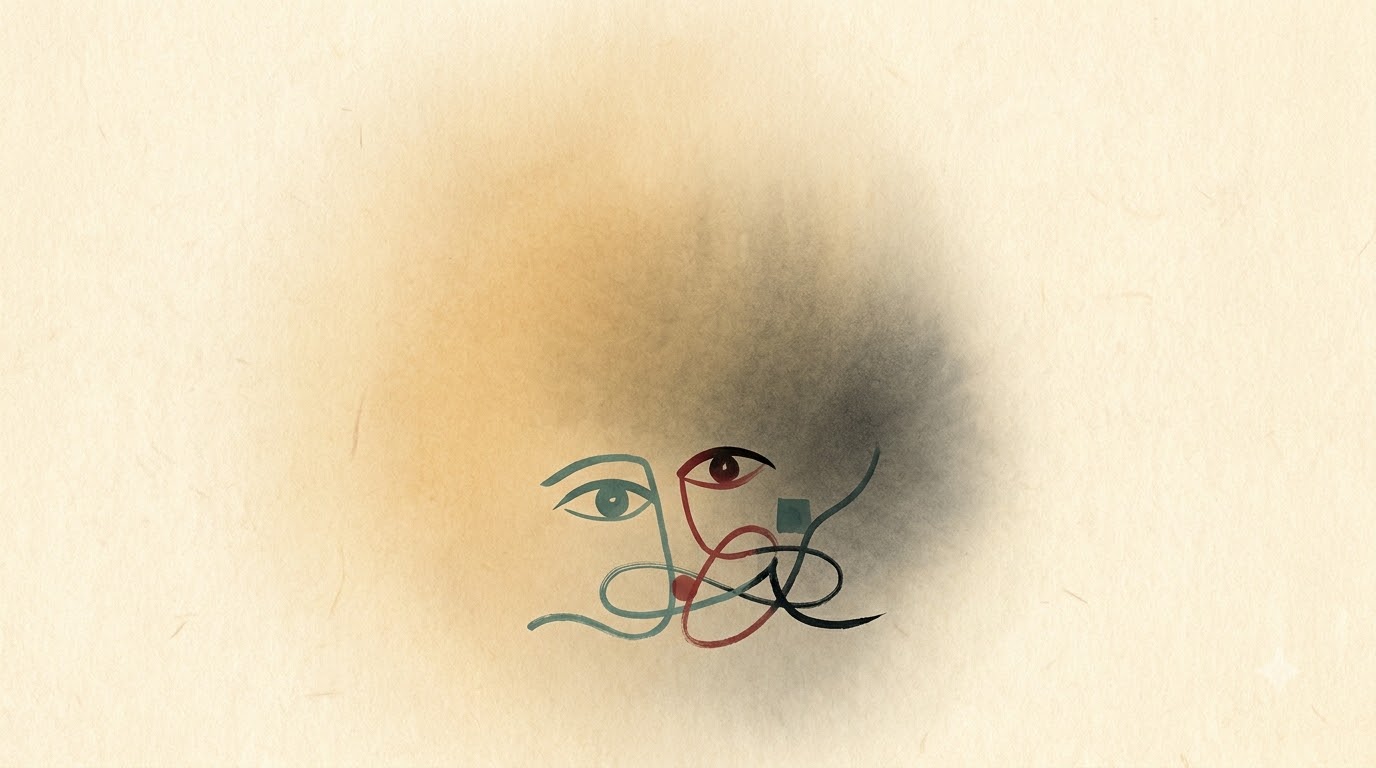
Search malhada meaning and you'll get "to speak / to tell." Accurate. Also nearly useless for understanding why, in every third K-drama scene, a character finally 말하다-ing their feelings lands like a structural event — like something in the architecture of the story has finally given way. The dictionary didn't lie to you. It just handed you the blueprint without telling you what the building is for.
Here's the frame that changes everything: Korean emotional expression treats the body as a pressure vessel. Feelings don't float freely — they accumulate physically, in the chest, the shoulders, the breath, the throat. Language is what happens after the pressure breaks. Once you see this, you stop being confused by body-part words carrying enormous emotional weight. You start reading them as the real-time instruments they are.
- • Why Textbooks Set You Up to Be Confused
- • 말하다 (Mal-ha-da): The Act of Speaking as Emotional Climax
- • 어깨 (Eo-kkae): A Shoulder Is a Social Contract
- • 숨 (Sum): Breath as an Emotional Timestamp
- • 포옹 (Po-ong) and 코 (Ko): The Reset Button and the Aesthetic Anchor
- • Try This in the Next Drama Scene You Watch
- • Quick Questions
Why Textbooks Set You Up to Be Confused
Standard vocabulary instruction sorts words into biological categories. Nose = smelling organ. Shoulder = load-bearing joint. Breath = respiratory function. This is technically correct and emotionally inert.
Korean — particularly in its intimate, expressive register — refuses this sorting. The body isn't a collection of parts that occasionally get mentioned in emotional contexts. It's the primary site where emotional reality is registered, held, and eventually released. Words that name body parts or bodily acts carry that register with them. When you don't know this, a lyric about someone's breath stopping reads like a medical symptom. When you do know it, it reads like a confession.
말하다 (Mal-ha-da): The Act of Speaking as Emotional Climax
말하다 (mal-ha-da, "to speak / to tell") is the word most learners look up first, and the gap between its dictionary definition and its emotional function is the widest of any common Korean verb.
Korean social culture — broadly, and every individual navigates this differently — places high value on enduring quietly, on not burdening others with your interior weather. Against that backdrop, the moment someone actually speaks their true feelings is structurally enormous. It's not information delivery. It's the dam breaking after years of quiet pressure.
Look at how this works in practice: 드디어 마음속에 숨겨두었던 진심을 그에게 말했어요 (deu-di-eo ma-eum-so-ge sum-gyeo-du-eot-deon jin-si-meul geu-e-ge mal-haess-eo-yo, "Finally, I spoke the true feelings I had hidden deep in my heart to him."). The word doing the heaviest lifting isn't 말했어요. It's 드디어 (deu-di-eo, "finally / at last") — an adverb that tells you this moment was preceded by a long internal siege. The speaking is the climax, not the setup.
This is why malhada meaning in English as "to speak" leaves you stranded in emotional scenes. The word arrives carrying everything that wasn't said before it. The silence is baked in.
어깨 (Eo-kkae): A Shoulder Is a Social Contract
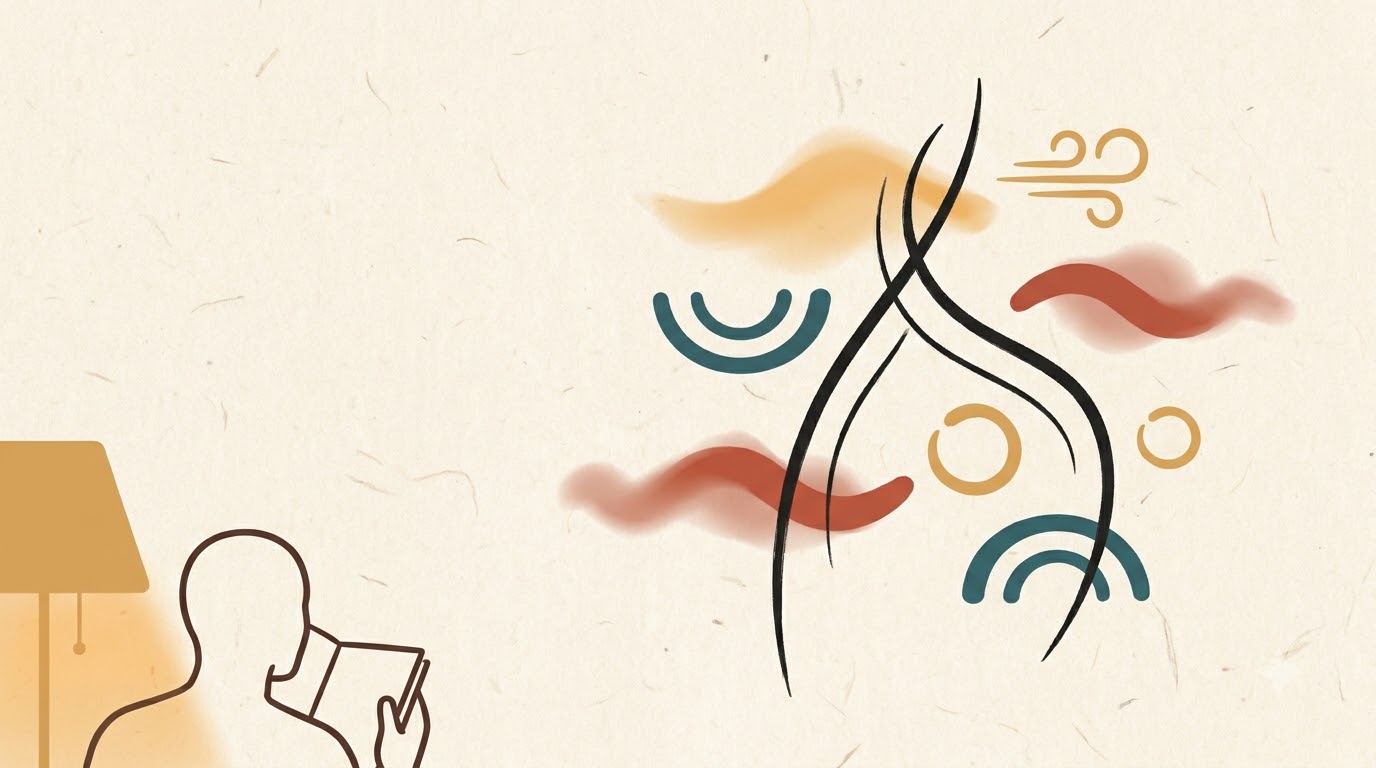
어깨 (eo-kkae, "shoulder") appears in dictionaries between 팔꿈치 (pal-kku-mi, "elbow") and 등 (deung, "back"). That placement tells you nothing about why offering someone your shoulder in Korean emotional vocabulary is an act of profound social trust.
In a context where openly displaying vulnerability carries real weight — again, this is a common cultural tendency, not a universal law — the shoulder becomes a designated sanctuary. Leaning on someone's 어깨 is an unspoken agreement: you don't have to explain anything here. The gesture bypasses the pressure to articulate pain and goes straight to physical acknowledgment.
오늘 하루도 힘들었지? 지친 어깨를 내게 기대어도 돼 (o-neul ha-ru-do him-deul-eot-ji? ji-chin eo-kkae-reul nae-ge gi-dae-eo-do dwae, "Today was hard, wasn't it? You can lean your tired shoulder on me.") — notice what the speaker does not say. They don't ask what happened. They don't offer solutions. They address the shoulder directly, the physical site where the day's weight has pooled, and they offer it a resting place. The emotional support is delivered through the body, not around it.
If you've wondered about eokkae meaning in Korean beyond anatomy, this is it: the shoulder is a social organ. It holds what words can't yet reach.
숨 (Sum): Breath as an Emotional Timestamp
Here's the sharpest "aha" in this whole system, and the one textbooks are least equipped to give you.
숨 (sum, "breath") in Korean emotional expression doesn't describe breathlessness the way English does — as a side effect, a symptom. It functions as a precise timestamp. When a character's breath stops, that is the exact moment the story turns. Logic hands over to sensation. The rational mind exits. Everything after this point operates under different rules.
그 사람을 마주한 순간, 너무 떨려서 숨이 멎을 것 같았어요 (geu sa-ra-meul ma-ju-han sun-gan, neo-mu tteol-lyeo-seo su-mi meoj-eul geot ga-tass-eo-yo, "The moment I faced him, I was trembling so much I felt like my breath would stop.") — the key phrase is 숨이 멎다 (su-mi meot-da, "breath stops"). This is the Korean emotional zero-point. You'll find it in love confessions, grief scenes, sudden shock, overwhelming awe. It marks the threshold, not the aftermath.
This is why 숨 floods Korean love songs in particular. The songwriter isn't describing a physical reaction. They're marking the precise instant they stopped being able to think clearly. Breath is the instrument that measures that crossing.
포옹 (Po-ong) and 코 (Ko): The Reset Button and the Aesthetic Anchor
포옹 (po-ong, "hug / embrace") is where Korean emotional communication looks most visibly different from cultures that default to verbal reassurance. A 포옹 doesn't accompany comfort — it delivers it, without requiring a single word of explanation first.
말없이 건네받은 따뜻한 포옹 하나가 모든 위로보다 깊었어요 (ma-reop-si geon-ne-bat-eun tta-tteu-tan po-ong ha-na-ga mo-deun wi-ro-bo-da gi-peo-ss-eo-yo, "A single warm hug received in silence ran deeper than any comfort.") — that phrase 말없이 (ma-reop-si, "without words") is the key. The silence isn't an absence of comfort. It's the mechanism. The 포옹 seals out the outside world and creates a temporary boundary against everything that's been pressing in. No explanation required, none requested.
코 (ko, "nose") operates in a different register entirely — the aesthetic one — but it still anchors identity in the body. A 오뚝한 코 (o-ttuk-han ko, "high, straight nose") is a specific compliment in Korean beauty discourse, marking a face as having classical, refined balance. 그 배우는 오뚝한 코 덕분에 옆모습이 특히 인상적이에요 (geu bae-u-neun o-ttuk-han ko deok-bun-e yeop-mo-seu-pi teuk-i in-sang-jeo-gi-e-yo, "That actor's profile is especially striking thanks to his high, straight nose.") — in idol commentary and drama reviews, 코 functions as the visual focal point that defines a face's entire character in profile. The body as identity, not just biology.
Try This in the Next Drama Scene You Watch
This is a five-minute exercise, not a long-term project.
Pick any emotionally charged scene — a confession, a reunion, a goodbye. Before you read the subtitles, watch the body. Does a character's chest visibly rise and fall differently (숨)? Does someone extend or accept a shoulder (어깨)? Does a character open their mouth, pause, close it, open it again before finally speaking (말하다)? Does someone reach out and pull another person in without a word (포옹)?
Write down what you observe — even just a word or two for each body signal you catch.
Now read the Korean dialogue. You'll find that the emotional content was already fully delivered by the time the words arrived. The 말하다 moment confirms what the 숨 already announced. The 포옹 said what the character couldn't.
This is the grammar nobody teaches: in Korean emotional expression, the body files the report. Words sign it.
Quick Questions
What does malhada mean in Korean? 말하다 (mal-ha-da) literally means "to speak" or "to tell," but in emotional contexts — especially in Korean drama and song — it represents something far weightier than information transfer. It marks the moment a person finally breaks through sustained inner silence to voice their true feelings, making the act of speaking itself the emotional climax rather than just a plot mechanic.
What does eokkae mean in Korean, and why does it feel so loaded in dramas? 어깨 (eo-kkae) means "shoulder" anatomically, but in Korean emotional vocabulary it functions as a designated space for shared vulnerability. Offering someone your shoulder is an unspoken social contract — no explanation needed, no words required. In a cultural context where openly displaying distress can feel costly, the shoulder becomes a physical sanctuary that bypasses the demand to articulate pain.
Why does 숨 (sum) appear constantly in Korean love songs and emotional drama scenes? 숨 (sum) means "breath," and Korean speakers use it to timestamp the exact moment overwhelming emotion takes over from rational thought. Phrases like 숨이 멎다 (su-mi meot-da, "breath stops") mark the emotional zero-point — the instant logic surrenders to feeling. It functions less as a biological description and more as a narrative marker: here is where everything changed.
The next time a K-drama line stops you cold because a shoulder or a breath seems to carry the weight of the entire scene, trust that instinct completely. You're not missing vocabulary. You're standing at the threshold of a different emotional logic — one where the body has always been the first language, and words arrive to confirm what flesh already knew.
🔊 Pronunciation Guide
Natural-sounding audio for the Korean in this article. Listen, then shadow out loud.
The exact phrases Koreans actually use every day — with the nuance notes that keep you from sounding like a textbook. Delivered as a beautiful PDF, free.
Send Me the Free PDFNo spam. Unsubscribe anytime.