거리, 전화, 음악, 일기 (Geo-ri, Jeon-hwa, Eum-ak, Il-gi): Why These Four "Basic" Korean Words Keep Tripping Fluent Learners Up
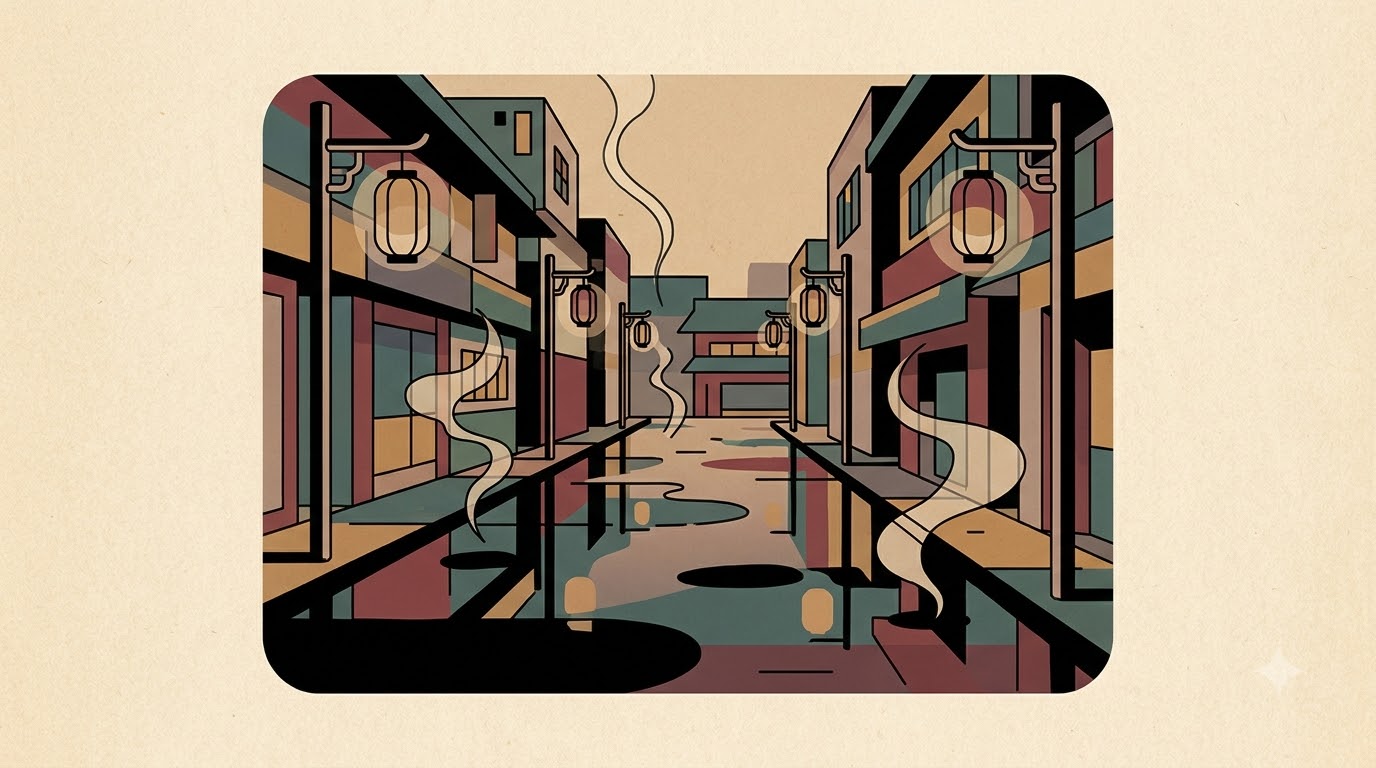
Search geori meaning and you'll get "street" back in under a second. Correct. Useless. Because the moment you hear 거리 in a K-drama — rain, a character standing still, the city moving around them — "street" explains nothing about why the scene lands the way it does. That gap between the dictionary and the feeling is where Korean actually lives, and it's exactly where most learners get stuck.
These four words — 거리, 전화, 음악, and 일기 — appear in week-one vocabulary lists everywhere. Native speakers use them every day without a second thought. But that effortlessness is the problem: nobody ever stops to explain the emotional logic underneath. Let's do that now.
- • 거리 (Geo-ri): A Street That Can Feel Lonely Without a Single Person in Sight
- • 전화 (Jeon-hwa): One Word for the Call, a Completely Different Word for the Phone
- • 음악 (Eum-ak): Music You Don't Just Listen to — You Lay Down
- • 일기 (Il-gi): Not a Journal. A Private Reckoning.
- • Try This in the Next Five Minutes
- • Quick Questions
거리 (Geo-ri): A Street That Can Feel Lonely Without a Single Person in Sight
Here's the thing textbooks skip: Korean has two words that both translate as "street" or "road," and conflating them is a quiet, persistent mistake.
길 (gil) is about movement — the physical path that takes you from A to B. 거리 (geo-ri, "street") is about place. It has width, atmosphere, and the accumulated presence of the people who pass through it. One is a function; the other is a stage.
This is why 거리에 사람이 없다 (geo-ri-e sa-ram-i eop-da, "there are no people on the street") doesn't just report foot traffic. It describes a felt absence — the kind of emptiness that presses on you. The 거리 is defined by the human energy it holds, so when that energy drains away, the word registers it emotionally in a way 길 simply wouldn't.
That's the aha moment hiding in plain sight: 거리 isn't a neutral location. It's a space with memory and mood, which is why Korean writers and lyricists reach for it constantly when they want atmosphere, not just geography.
퇴근길에 늘 지나치는 거리인데 오늘따라 유독 쓸쓸해 보여요. (toe-geun-gil-e neul ji-na-chi-neun geo-ri-in-de o-neul-tta-ra yu-dok sseul-sseul-hae bo-yeo-yo, "It's a street I always pass on my way home from work, but for some reason it looks especially lonely today.")
The speaker, the route, the street — nothing has changed. But the 거리 feels different today. That's the word doing work that "street" can't. Whenever you see 거리 in song lyrics or drama dialogue, ask what emotional atmosphere the writer is asking that space to carry.
전화 (Jeon-hwa): One Word for the Call, a Completely Different Word for the Phone
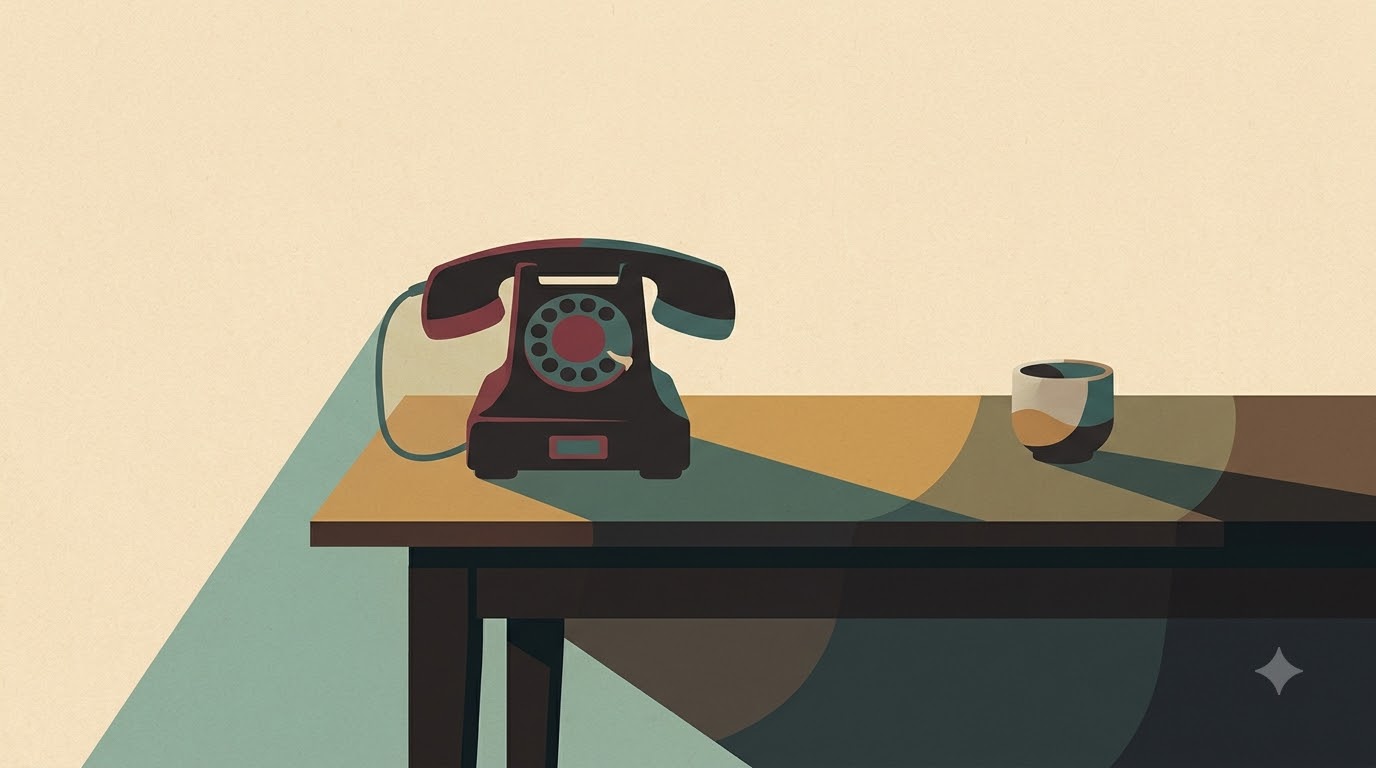
Most learners searching for jeonhwa meaning land on "phone" or "telephone" and move on. That's where the confusion starts.
If a Korean person wants to talk about the object in their hand, they'll say 휴대폰 (hyu-dae-pon, "mobile phone") or 스마트폰 (seu-ma-teu-pon, "smartphone"). 전화 (jeon-hwa, "phone call") is reserved almost entirely for the act — the live, two-way connection happening between two people right now.
This distinction has a real consequence for how the word feels. 전화를 받다 (jeon-hwa-reul bat-da, "to answer a phone call") isn't a mechanical description. Picking up means stepping into an exchange you haven't prepared for. You don't know the tone, the news, the emotional demand waiting on the other end. That unguardedness is baked into the word's everyday use, which is precisely why K-drama writers use the ringing 전화 as a tension device so reliably — the word already carries the charge before anyone speaks.
갑자기 걸려 온 전화 한 통에 온갖 생각이 머릿속을 스쳤다. (gap-ja-gi geol-lyeo on jeon-hwa han tong-e on-gat saeng-ga-gi meo-rit-sok-eul seu-chyeot-da, "A single unexpected phone call sent a whirlwind of thoughts flashing through my mind.")
Memorize 전화 한 통 (jeon-hwa han tong, "one phone call") — 통 (tong) is the counter for calls in Korean, and using it correctly signals genuine fluency. More importantly, notice what that phrase implies: one call is enough to change everything. The word already knows that about itself.
음악 (Eum-ak): Music You Don't Just Listen to — You Lay Down
음악 (eum-ak, "music") is easy to define and surprisingly easy to misuse. The definition isn't the issue; the verb pairings are.
In English, we listen to music — the preposition puts us at a slight distance, as an audience. In Korean, you'll frequently hear 음악을 깔다 (eum-a-geul kal-da, "to lay down music"). 깔다 literally means to spread something flat — to lay out a mat, to set a tablecloth. When Koreans use it with 음악, they're treating sound as something you place in a space to change its atmosphere. It's less like pressing play and more like adjusting the lighting. Music as interior design for your emotional state.
This framing shows up in casual conversation, not just in literary writing — though of course people relate to music in genuinely different ways, and not every Korean speaker thinks about it this consciously. But the verb 깔다 itself encodes the idea: music is something you deploy, not just something that happens to be on.
마음이 복잡할 때는 아무 생각 없이 좋아하는 음악을 크게 틀어놔요. (ma-eu-mi bok-ja-pal ttae-neun a-mu saeng-gak eop-si jo-a-ha-neun eum-a-geul keu-ge teu-reo-nwa-yo, "When my mind is cluttered, I blast my favorite music without thinking about anything else.")
마음이 복잡하다 (ma-eu-mi bok-ja-pa-da, "my heart/mind is complicated") is one of Korean's most useful phrases for emotional overwhelm — the kind where you can't even identify what you're feeling, only that there's too much of it. The solution here isn't reflection or talking it through. It's 음악, loud, as a reset. That's a very specific emotional logic, and the word carries it.
일기 (Il-gi): Not a Journal. A Private Reckoning.

일기 (il-gi, "diary") looks simple. It isn't.
It's not a journal in the modern, aestheticized sense — no audience, no theme, no brand. It's not a blog. 일기 is a private record of your inner life written for exactly one reader: yourself. That single-audience constraint is what gives the word its cultural weight. Because no one will ever read it, you don't perform. You account.
The sarcastic phrase 일기에 쓸 일이다 (il-gi-e sseul i-ri-da, "it's the kind of thing worth writing in a diary") is the aha moment here — and no textbook explains it. When a Korean says this about something that just happened, they mean: this is so bizarre, so frustrating, so absurd that my only witness will be myself. It's the Korean equivalent of "you genuinely cannot make this up." The phrase works because 일기 is understood to be the one place where you don't soften, explain, or perform. Raw truth goes there.
오늘 느낀 감정을 잊지 않으려고 잠들기 전에 일기에 적어 둔다. (o-neul neu-kkin gam-jeong-eul it-ji an-eu-ryeo-go jam-deul-gi jeo-ne il-gi-e jeo-geo dun-da, "I write down today's feelings in my diary before falling asleep so I don't forget them.")
The verb 적어 두다 (jeo-geo du-da, "to write down and keep") does more than "write." It means to record something deliberately and hold onto it — to preserve it against forgetting. That's the act 일기 is built for.
Try This in the Next Five Minutes
Pick one word. Write one Korean sentence about your actual day. That's it.
- 거리: Add a mood word to a street you walked. 오늘 걸은 거리가 조용했어요. (o-neul geo-reun geo-ri-ga jo-yong-haet-sseo-yo, "The street I walked today was quiet.")
- 전화: Did you answer a call, miss one, or dread one? 오늘 전화를 못 받았어요. (o-neul jeon-hwa-reul mot ba-dat-sseo-yo, "I couldn't answer the call today.")
- 음악: What did you play, and why? 기분 전환하려고 음악을 틀었어요. (gi-bun jeon-hwan-ha-ryeo-go eum-a-geul teu-reot-sseo-yo, "I put on music to change my mood.")
- 일기: Did you write — or want to? 오늘 일기를 쓰고 싶었어요. (o-neul il-gi-reul sseu-go si-peot-sseo-yo, "I wanted to write in my diary today.")
One sentence. One word. Emotional vocabulary becomes yours through use, not through re-reading definitions.
Quick Questions
What is the geori meaning in Korean? 거리 (geo-ri) means "street" in Korean, but it refers to a street as an atmospheric, human space — not just a path. Unlike 길 (gil), which describes the route itself, 거리 carries mood and the felt presence of people. When Koreans describe a 거리, they're evoking the emotional character of a place, which is why the word appears so often in lyrics and drama dialogue to signal loneliness, nostalgia, or urban life.
What does jeonhwa mean in Korean? 전화 (jeon-hwa) means "phone call" in Korean, with its emphasis firmly on the live connection between two people — not the physical device, which is 휴대폰 (hyu-dae-pon). Answering a 전화 implies stepping into an unguarded, real-time exchange, which gives the word a subtle undertone of urgency or emotional exposure in natural Korean speech and explains why it functions so well as a dramatic device.
What is the difference between 거리 meaning and 길 meaning in Korean? Both 거리 (geo-ri) and 길 (gil) can translate as "street" or "road" in English, but Korean speakers feel a clear difference. 길 is functional — it's the path that gets you somewhere. 거리 is spatial and atmospheric — it's a place with character, history, and human presence. When a scene calls for emotional atmosphere rather than simple direction, Korean writers consistently choose 거리.
These four words are ordinary enough to appear in any beginner's word list, and layered enough to keep revealing things the longer you study Korean. Once you start hearing the mood inside 거리, the tension inside 전화, the intentionality inside 음악, and the honesty inside 일기, you'll find them everywhere — in the songs you've been listening to, in drama scenes you thought you understood. That's when Korean stops being something you decode and starts being something you actually hear.

🔊 Pronunciation Guide
Natural-sounding audio for the Korean in this article. Listen, then shadow out loud.
The exact phrases Koreans actually use every day — with the nuance notes that keep you from sounding like a textbook. Delivered as a beautiful PDF, free.
Send Me the Free PDFNo spam. Unsubscribe anytime.