연필, 음악, 그림, 길 (Yeon-pil, Eum-ak, Geu-rim, Gil): Why These Four Korean Words Carry Emotions a Dictionary Can't Hold
You look up 연필 meaning in English, get "pencil," and feel satisfied — until a K-drama character says it like an accusation and the entire scene shifts. The dictionary wasn't wrong. It just handed you the shell of the word and kept the meaning.
Korean has a quiet structural habit that textbooks almost never flag: ordinary nouns do double duty as emotional shorthand. Not through slang or idiom, but through the cultural weight the words accumulate over years of songs, dramas, and late-night conversations. Native speakers absorb this without noticing. You have to reverse-engineer what they never had to consciously learn. That's what this piece does — and the pattern, once you see it, changes how you read the entire language.
연필 (Yeon-pil): A Pencil Is a Confession of Doubt
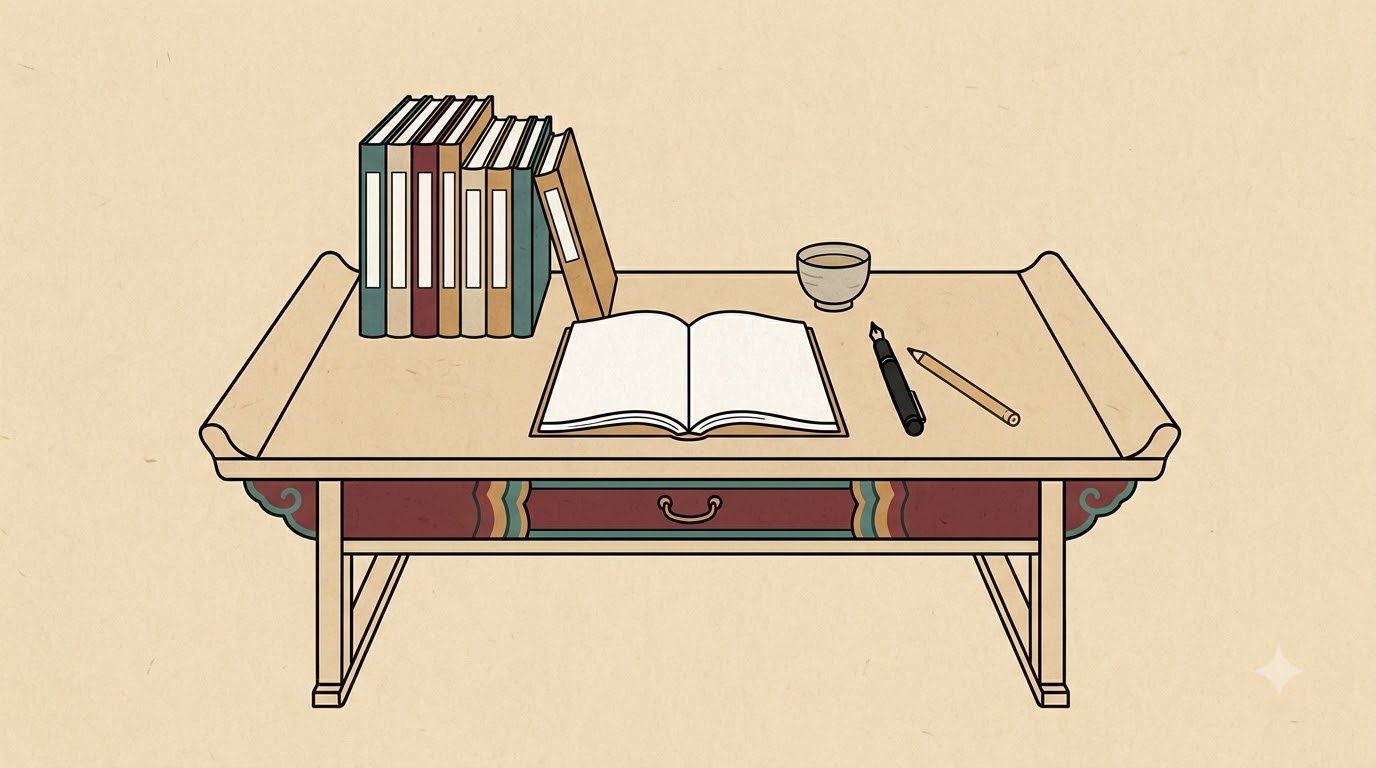
The literal 연필 meaning is exactly what it looks like: a pencil — the wooden, erasable kind. But here's the thing textbooks skip. In Korean emotional vocabulary, the material matters. Writing something in 연필 (yeon-pil, "pencil") means you haven't committed yet. Its counterpart is 볼펜 (bol-pen, "ballpoint pen") — ink that stays, that can't be taken back. The gap between those two objects is where the metaphor lives.
When someone says a promise or a feeling was written in pencil, they're not describing stationery. They're saying: you left yourself an exit. That distinction between erasable and permanent runs through how Koreans talk about relationships, plans, and intentions — and it's invisible until someone points it out.
우리 사이의 약속을 연필로 적어둔 것처럼 쉽게 지우려고 하지 마. (Uri sai-ui yak-so-geul yeon-pil-lo jeo-geo-dun geot-cheoreom swip-ge ji-u-ryeo-go ha-ji ma, "Don't try to easily erase the promise between us like it was written in pencil.")
That line is an accusation of emotional half-heartedness. The speaker isn't upset about how something was recorded — they're saying: you never fully showed up for this. The pencil is doing the work that "temporary" or "uncommitted" would do in English, but with a physical image attached that makes it hit harder.
The aha moment here: 연필 and 볼펜 form an unspoken binary in Korean emotional speech. Pencil = hesitation, reversibility, doubt. Pen = permanence, declaration, courage. When you hear one, the shadow of the other is always present.
음악 (Eum-ak): Not Background Noise — a Co-Survivor
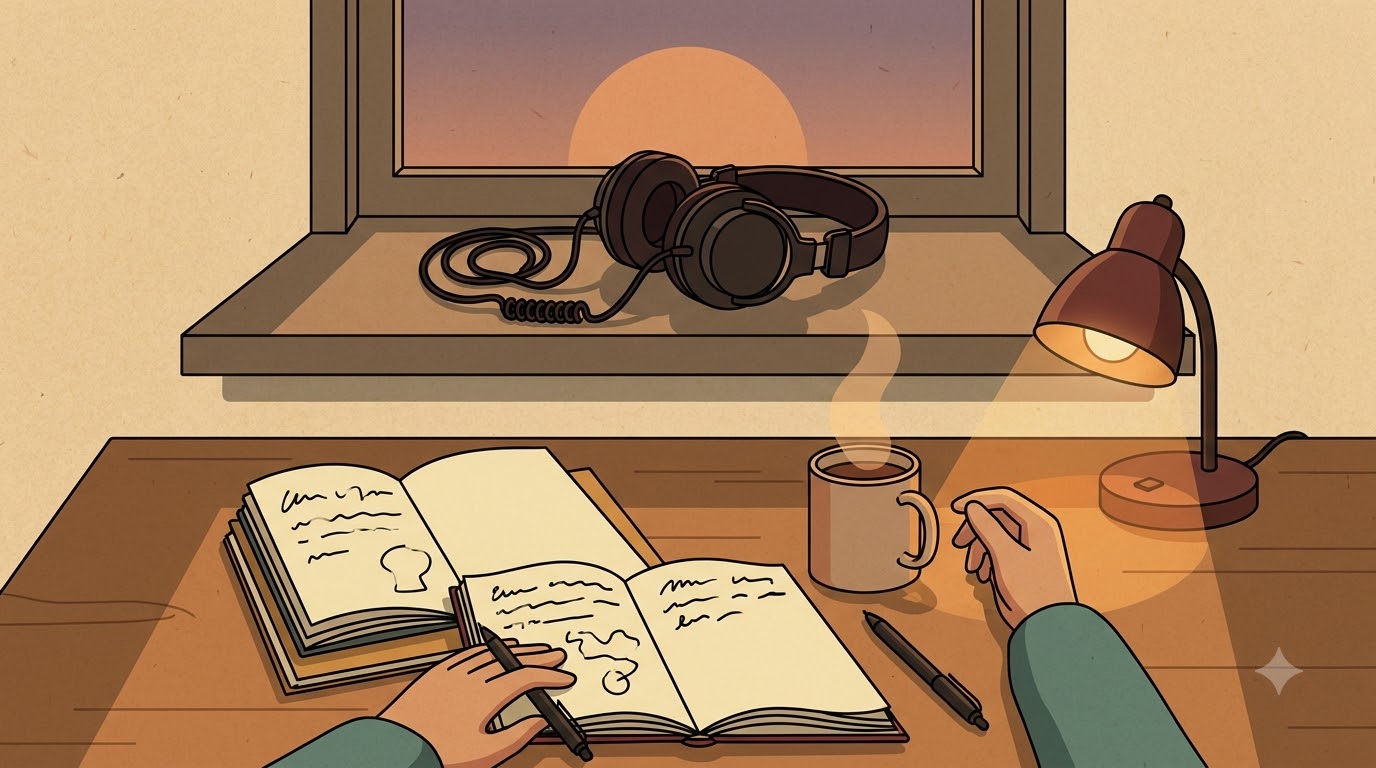
Search for eumak meaning in English and you'll find "music," which is accurate and almost useless for understanding how the word actually behaves. 음악 (eum-ak, "music") in Korean conversation — especially in lyrics and K-drama dialogue — is frequently personified in a way that English "music" isn't. It doesn't play in the background. It stays.
The cultural logic goes like this: people cancel plans, disappoint you, leave. 음악 doesn't. In a society where overwork, academic pressure, and performance expectations are genuinely heavy parts of daily life for many people, the idea of music as a silent companion that asks nothing of you carries real weight. That said, people are genuinely varied in how they relate to music — this is a common emotional framing in Korean media and conversation, not a universal experience. But when you encounter it in a lyric or a scene, recognizing the framing changes everything.
오늘 야근이 너무 길어서 음악 없이는 버틸 수가 없었어. (Oneul ya-geun-i neo-mu gil-eo-seo eum-ak eop-si-neun beo-til su-ga eop-seo-sseo, "Today's overtime shift was so long I couldn't have survived without music.")
The verb to notice is 버티다 (beo-ti-da, "to endure, to hold on"). This is not a passive verb. You 버티다 through something that's actively trying to break you. Using it alongside 음악 casts music as a co-survivor — something that got you through, not something that happened to be on. That verb choice is the whole story.
그림 (Geu-rim): The Future You Painted in Your Head
그림 (geu-rim, "painting / drawing") is the word on this list that surprises people most, because its metaphorical use is so embedded in casual speech that Koreans often don't realize it's a metaphor at all.
Literally, 그림 means any kind of picture — a painting, a sketch, an illustration. But in conversation, it frequently refers to a mental image: the vision of how you want a situation, relationship, or plan to look. When someone asks 그림이 나오냐? (Geu-rim-i na-o-nya?, "Does the picture come out?"), they're not asking about artwork. They're asking: Can you see this working? Is there a coherent shape to this idea?
That's already useful. But the deeper layer is what happens when the 그림 breaks.
우리가 함께 세운 미래의 그림이 완전히 망가져 버렸어. (Uri-ga ham-kke se-un mi-rae-ui geu-rim-i wan-jeon-hi mang-ga-jyeo beo-ryeo-sseo, "The picture of the future we built together has completely fallen apart.")
The verb 망가지다 (mang-ga-ji-da, "to fall apart, to be ruined") is key. You don't say plans 망가진다 — that verb is for things that were whole and are now broken. Applying it to 그림 implies that the vision of the future was a real, constructed thing that took effort, and now it's destroyed. Compare that to the English "our plans fell through" — which sounds almost administrative. The Korean version sounds like grief.
길 (Gil): A Road That Carries the Weight of an Entire Life
길 (gil, "road / path") appears in addresses, in directions, in the most mundane navigational contexts. And then it appears in a breakup scene and becomes one of the heaviest words in the language.
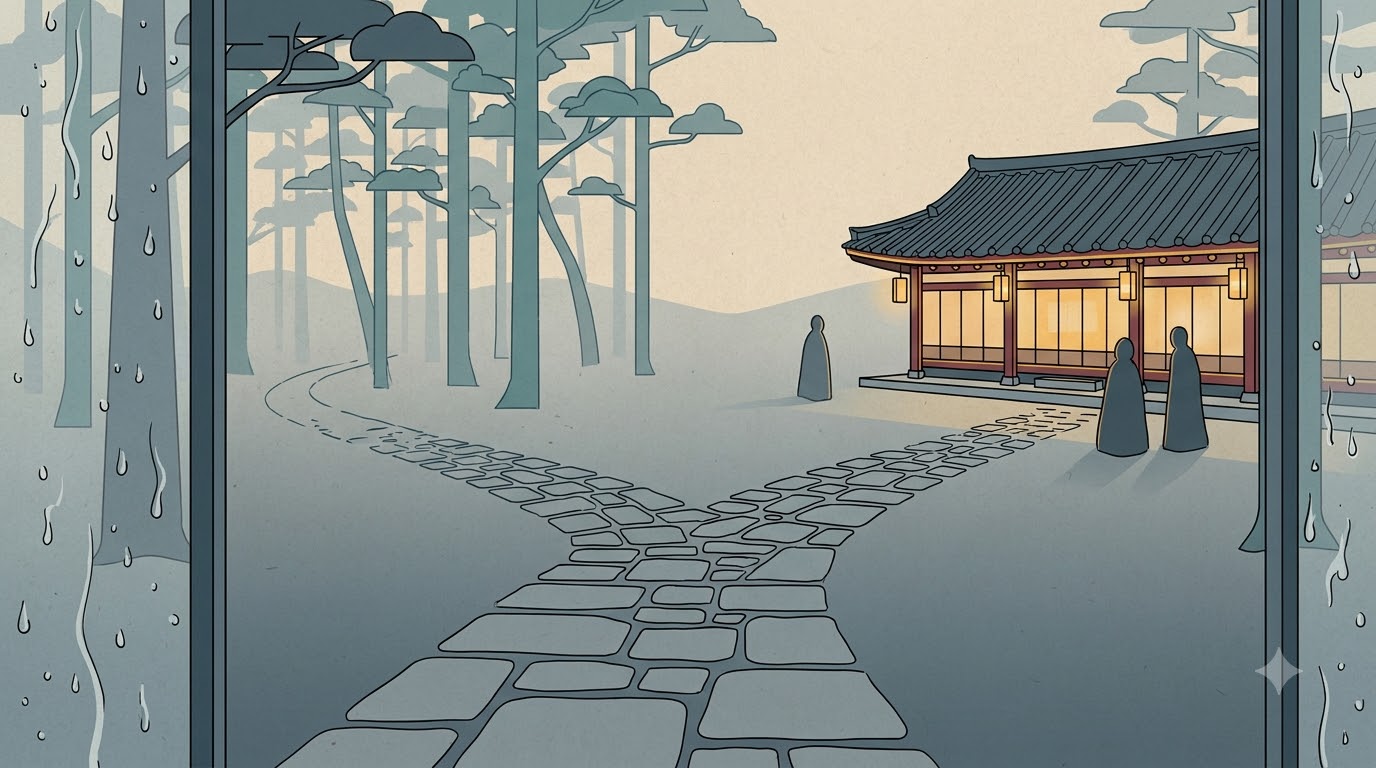
In emotional or reflective speech, 길 expands from a physical road into something existential: your life's trajectory, your chosen direction, the course you've committed to. Changing your 길 in Korean doesn't mean taking a different route home. It means restructuring who you are and where you're going — a career pivot, a breakup, leaving your hometown, abandoning a long-held plan. The word carries all of that without needing extra explanation, because Korean speakers have internalized it through years of hearing it used exactly this way.
우리가 서로 다른 길을 걷게 되었지만, 각자의 자리에서 행복하자. (Uri-ga seo-ro da-reun gil-eul geot-ge doe-eot-ji-man, gak-ja-ui ja-ri-e-seo haeng-bok-ha-ja, "Even though we've ended up walking different paths, let's be happy where we are.")
That sentence is doing three things at once: it's a breakup, a farewell between old friends, and a quiet blessing. There's no bitterness in it — just the acknowledgment that two people's 길 have diverged, and a wish for peace. English can get there with enough words. Korean gets there with 길 and the right verb tense.
Try This Right Now — Five Minutes, Any K-Pop Playlist
Open any Korean ballad you've heard before — something that felt emotional even before you understood the words. Pull up the lyrics. Scan for 연필, 음악, 그림, 길.
When you find one, run three quick checks:
1. Literal or emotional? A 길 in a song about separation is almost never a street. A 그림 in a love song is almost never a painting. Confirm which register you're in before you translate.
2. What's the implied contrast? 연필 implies 볼펜 is possible but wasn't chosen. 그림 implies a vision that was built carefully. 길 implies a fork that was reached and a choice that was made. The word gains meaning from what it's implicitly set against.
3. Swap it and notice the loss. Replace 길 with 방향 (bang-hyang, "direction") and the line becomes clinical. Replace 그림 with 계획 (gye-hoek, "plan") and the emotional texture disappears. The fact that the swap feels wrong tells you exactly what the original word was carrying.
This exercise doesn't just teach you four words. It trains you to feel the weight of Korean vocabulary — which is the difference between translating a language and actually reading it.
Quick Questions
What is the 연필 meaning in English, and why does it carry emotional weight in Korean? 연필 (yeon-pil) means "pencil" in English. In Korean emotional vocabulary, it represents impermanence and lack of commitment — the logic being that pencil can be erased, unlike ink. When used metaphorically in K-dramas or lyrics, it implies someone treated a relationship or promise as temporary and easily undone, making it a quiet but sharp accusation.
What does eumak mean in Korean, and how is it used beyond the basic definition? Eumak (음악) means "music" in English. Beyond the dictionary entry, Korean speakers frequently frame 음악 as a personified companion — something that stays present when human relationships fail or life becomes overwhelming. The verb 버티다 ("to endure") paired with 음악 is the clearest signal: it casts music not as background sound but as something that actively helped you survive.
Why do words like 그림 and 길 feel so emotionally loaded in K-dramas and K-pop? 그림 (geu-rim, "picture/drawing") and 길 (gil, "road/path") carry layered meanings Korean speakers absorb culturally from an early age. 그림 often describes a mental vision of how a relationship or future should look — and when it 망가진다 ("falls apart"), it sounds like destruction, not inconvenience. 길 represents life trajectory and existential choice, making it one of the heaviest words in Korean emotional speech.
Four words, four emotional tools — and now you have the key to each one. 연필 is hesitation. 음악 is survival. 그림 is vision. 길 is fate. Stop translating these words and start reading them. That shift is what fluency actually feels like from the inside.
🔊 Pronunciation Guide
Natural-sounding audio for the Korean in this article. Listen, then shadow out loud.
The exact phrases Koreans actually use every day — with the nuance notes that keep you from sounding like a textbook. Delivered as a beautiful PDF, free.
Send Me the Free PDFNo spam. Unsubscribe anytime.