한계 (Han-gye) and 감옥 (Gam-ok): Why Korean Emotional Lyrics Hit Harder Than Their Translations
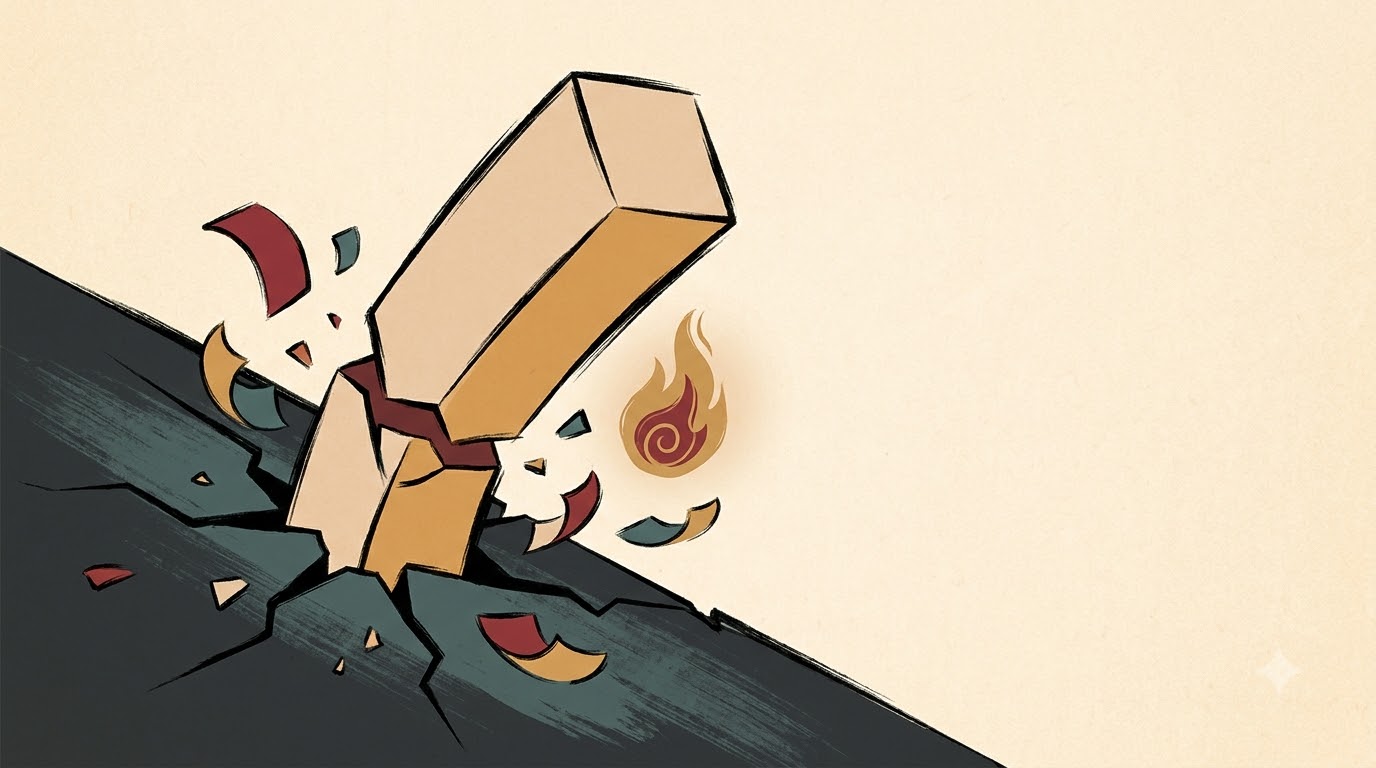
Something gets lost when Korean lyrics become English subtitles — and it isn't the translator's fault.
The original line feels like a body hitting concrete. The subtitle says "limit." You read it, nod, move on, and spend the next hour wondering why the song made you cry when the words seemed so plain. If you've searched for hangye meaning or 한계 meaning in English and felt underwhelmed by what the dictionary gave you, that underwhelm is actually important data. It's telling you the word is doing something the translation isn't.
This piece decodes three words — 한계 (han-gye), 감옥 (gam-ok), and 질문 (jil-mun) — not as isolated vocabulary items, but as a sequential emotional architecture that Korean artists use to map psychological collapse. Learn the architecture, and you stop reading subtitles. You start reading the song.
한계 (Han-gye): You Don't Reach It — You Crash Into It

The dictionary translation of 한계 (han-gye, "limit") is technically accurate and almost completely useless for understanding Korean emotional expression.
In English, a limit is something you approach, acknowledge, and manage. You reach your limit. You respect your limit. The word has a certain administrative calm to it — a speed sign, a credit ceiling, a polite boundary. The experience of encountering a limit, in English, is fundamentally rational.
Korean treats 한계 (han-gye) as something you collide with at full speed. The imagery is not bureaucratic; it's physical. And the proof is in the verb that native speakers instinctively pair with it:
더 이상 버티기 힘든 한계에 부딪혔어요. (deo isang beotigi himdeun han-gye-e budicheosseoyo, "I hit a limit where it's too hard to hold on any longer.")
부딪혔어요 (budicheosseoyo) means "crashed into," "collided with," "ran headlong into." You don't reach a 한계. You wreck against it. That single verb reframes the entire concept — this is not a calm acknowledgment of personal capacity. This is impact.
But here's the layer that textbooks never explain: 한계 in Korean emotional language almost never refers to purely personal exhaustion. It refers to the exact threshold where collective pressure meets the point of individual collapse. The grades your parents expected. The composure your workplace demanded. The loyalty your relationship required. 한계 is the moment all of that accumulated weight finds the one spot where your structure fails. It's not burnout. It's implosion under load.
That's why when a Korean lyricist writes about hitting 한계, the listener doesn't think "this person is tired." They think "this person held everything together for everyone, for too long, and the whole structure just gave way." The word contains the social context. The English word "limit" does not.
감옥 (Gam-ok): The Prison Where the Door Is Already Open
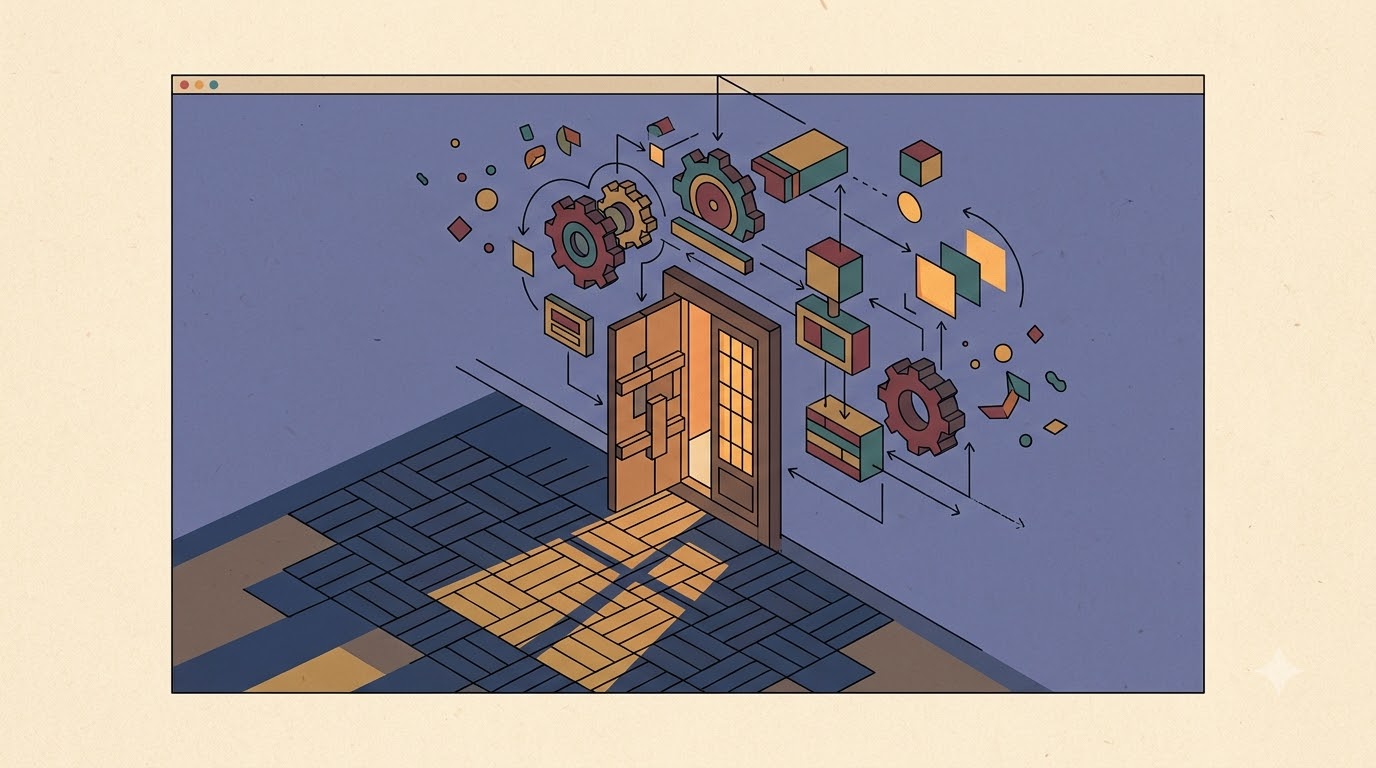
If 한계 is the collision, 감옥 (gam-ok, "prison") is what you wake up inside afterward.
Literally, 감옥 means a jail or penitentiary — and yes, it appears in news reports and legal contexts exactly that way. But in K-drama monologues and late-night ballads, 감옥 almost always describes psychological confinement, and the specific flavor of that confinement is where the real meaning lives.
The door is unlocked.
That's the defining feature of 감옥 in Korean emotional language. The confinement isn't enforced by external walls or guards. It's enforced by guilt, by memory, by the weight of what other people think of you. You know, intellectually, that you could walk out. That knowledge is precisely what makes it unbearable — because if the door is open and you still can't leave, the prison is you.
우리의 추억은 벗어날 수 없는 감옥 같아. (uri-ui chueok-eun beoseonal su eomneun gam-ok gata, "Our memories feel like a prison I can't escape from.")
Look at 벗어날 수 없는 (beoseonal su eomneun, "unable to escape"). This isn't "I haven't escaped yet." The grammar encodes categorical impossibility — escape is not within the range of available actions. Korean has precise grammatical tools for expressing that distinction, and lyricists use them deliberately. A translation that renders this as "prison" strips out the psychological paralysis that the original sentence builds directly into its structure.
This is also why 감옥 hits differently than "prison" in English. "Prison" implies someone put you there. 감옥, in this register, implies that the cruelest jailer is the version of yourself that cannot stop replaying what happened.
질문 (Jil-mun): The Question That Doesn't Want an Answer
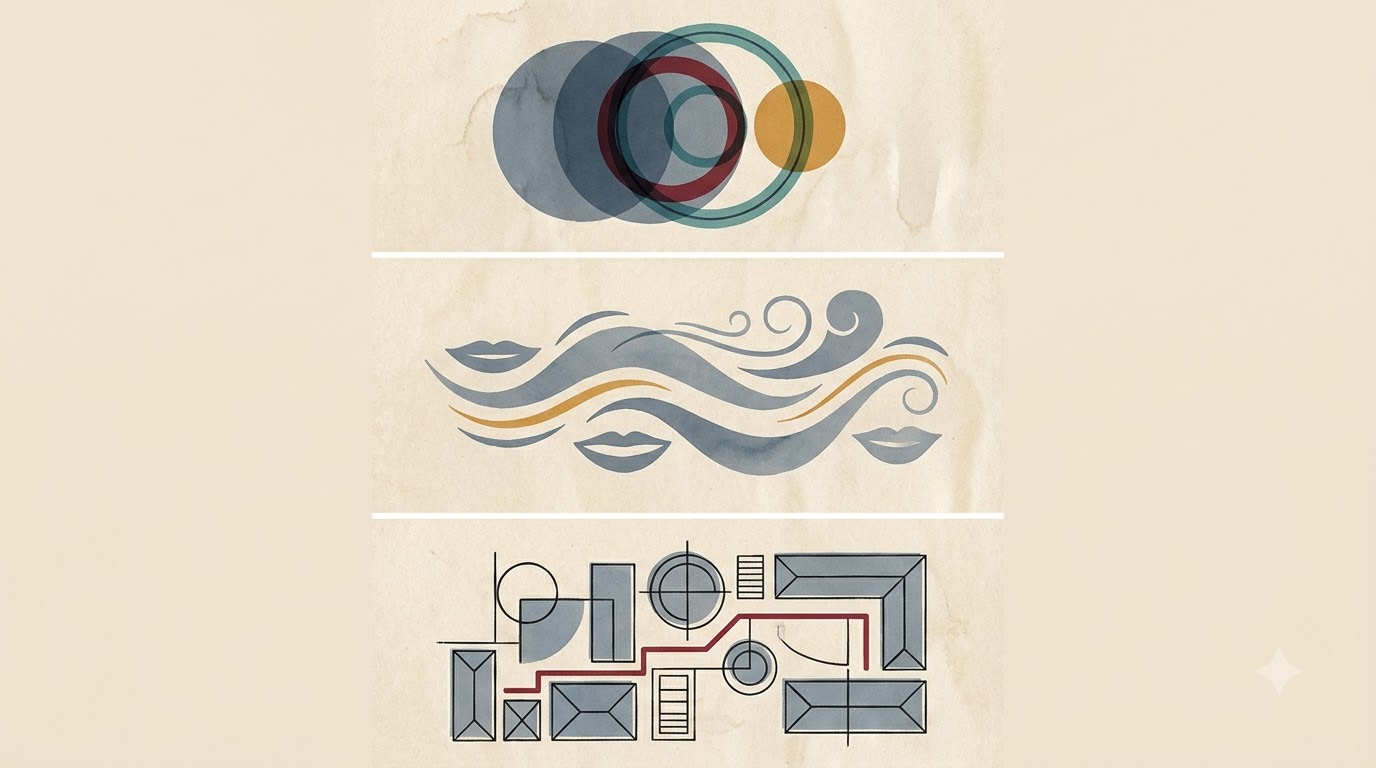
The third word in this triad is the quietest — and possibly the most devastating.
In everyday Korean, 질문 (jil-mun, "question") is completely neutral. A student asks a 질문 in class. A journalist asks a 질문 at a press conference. Nothing heavy about it. But shift into the register of Korean artistic expression, and 질문 transforms into something that has no clean English equivalent: the recursive loop of unanswerable self-interrogation that follows loss or failure.
Why did this happen? What did I do wrong? Could I have changed it?
The person asking these questions already knows, on some level, that no satisfying answer is coming. They aren't asking because they expect resolution. They're asking because the asking is what grief looks like when it has nowhere else to go. 질문 isn't a step toward an answer. It's the texture of suffering itself.
끝없는 질문 속에서 혼자 밤을 지새웠다. (kkeuteopneun jil-mun sok-eseo honja bam-eul jisaewotda, "I spent the night alone inside endless questions.")
속에서 (sok-eseo) means "inside of" — you are not having questions, you are inside them. They are the space you inhabit. That spatial metaphor is not accidental. 질문, in this construction, becomes a location — which loops the word directly back into 감옥. The questions are the walls.
The Sequence: Why These Three Words Belong Together
Here is the structural insight that no vocabulary list will give you, because vocabulary lists teach words in alphabetical order rather than emotional logic.
Korean dramatic narrative — in K-pop, K-drama, and literary prose — returns again and again to a specific emotional arc built from these three concepts in sequence:
한계 first. The breaking point arrives. Societal pressure and personal endurance collide at the exact threshold where compliance becomes physically impossible. Something cracks open.
감옥 second. In the aftermath of that collapse, the person finds themselves confined — not by external force, but by the trauma, the shame, or the memory of what broke them. The door is open. They cannot move.
질문 last. Immobile inside the self-constructed cage, they have nothing left but the recursive loop of questions that circle the wound without ever closing it.
Collapse → Confinement → Recursive grief. This is the emotional grammar of Korean psychological endurance. Once you recognize it, you'll find it everywhere — in a bridge that suddenly drops the tempo, in a drama character who stops mid-sentence and stares at nothing, in the moment a lyric shifts from "we" to "I" and the production goes quiet.
Try This Right Now: A Three-Question Filter
The next time you encounter 한계, 감옥, or 질문 in a lyric or a drama line, pause before you look anything up. Run through these three questions instead:
1. Who built the pressure? With 한계, the answer is almost never just the individual. Scan the context for what external force has been loading weight onto this person — family expectation, professional demand, relationship obligation. The word carries that context; your job is to surface it.
2. Is the door locked or just heavy? With 감옥, ask whether any external force is actually keeping the character confined. If the scene has no literal jail, you're watching psychological self-imprisonment. Then ask the sharper question: what is this person unable to forgive themselves for?
3. Is this question seeking an answer, or performing grief? With 질문, check whether the character expects a response. If they're alone, if the question is rhetorical, if the camera holds on their face after they ask it — they're not problem-solving. They're showing you what their pain sounds like when it finally finds words.
This filter takes about thirty seconds per scene. It won't replace learning Korean, but it will immediately change how much you extract from content you're already watching.
Quick Questions
What is the hangye meaning / 한계 meaning in English? 한계 (han-gye) translates literally as "limit," but in Korean emotional and artistic contexts it describes the violent breaking point where accumulated societal pressure — family expectations, professional demands, social performance — meets the exact moment a person can no longer hold on. Native speakers pair it with collision verbs, not approach verbs. It's a crash, not a boundary.
What is the 감옥 meaning in English? 감옥 (gam-ok) literally means "prison" or "jail," but in K-pop lyrics and K-drama dialogue it almost always describes psychological self-confinement. The defining feature is that the confinement is internally enforced: guilt, memory, or shame makes escape feel categorically impossible even when no external force is keeping the person trapped. The door is unlocked; the mind refuses to move.
How do 한계, 감옥, and 질문 connect in Korean emotional language? Korean dramatic narrative frequently uses these three words as a sequential arc: 한계 (han-gye) is the collapse under collective pressure, 감옥 (gam-ok) is the self-constructed psychological cage that forms in the aftermath, and 질문 (jil-mun) is the endless loop of unanswerable self-interrogation that traps a person inside that cage. Together they describe the full architecture of psychological endurance — from the breaking point to the grief that has no exit.
The next time a Korean lyric moves you before you've even read the subtitle, there's a good chance 한계, 감옥, or 질문 is carrying the weight. The translation gave you the word. Now you have the architecture behind it.
🔊 Pronunciation Guide
Native-speed audio for the Korean in this article. Listen, then shadow out loud.
The exact phrases Koreans actually use every day — with the nuance notes that keep you from sounding like a textbook. Delivered as a beautiful PDF, free.
Send Me the Free PDFNo spam. Unsubscribe anytime.