드시다 (Deu-si-da): Why Korean Gives Respected People Entirely Different Words for Eating and Sleeping
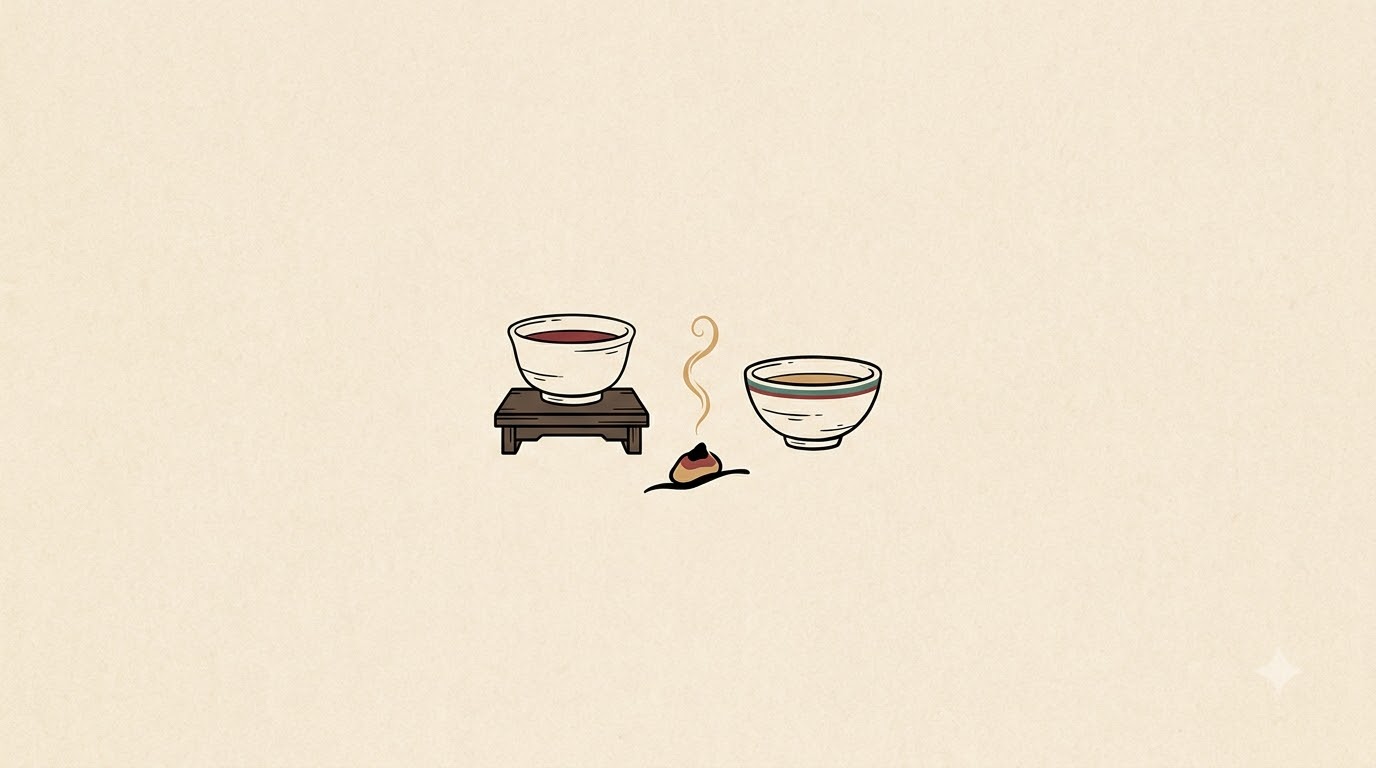
Your grammar checker just gave you a green light. The sentence is complete, the verb ending is correct, and you feel confident. Then you say it to your professor — and something in the air shifts.
No one corrects you. But you can feel it.
This is the moment most intermediate learners hit a wall that textbooks never fully explain. You've learned -(으)시-, you know how to conjugate politely, and yet something is still wrong. The issue isn't your conjugation. It's that Korean, for a specific set of very human acts — eating, sleeping, suffering, dying — doesn't adjust the same verb to sound more polite. It replaces the verb entirely with a word that belongs to a different category of existence.
The Assumption That Breaks Everything
Once you learn -(으)시-, it's tempting to treat it as a universal politeness dial. Turn it up, and you're respectful. So when you first see 드시다 (deu-si-da, "to eat [honorific]") in a vocabulary list, the natural assumption is: this must just be a fancier version of 먹으시다 (meog-eu-si-da). A stylistic choice. Interchangeable.
That assumption is the exact trap.
드시다 is not a dressed-up 먹다. It's a word from a parallel vocabulary system — one that Korean built specifically to separate the bodily acts of respected people from the bodily acts of everyone else. And the moment you use 먹다 (meok-da, "to eat") for your professor's lunch, you haven't made a minor slip. You've placed their eating in the same linguistic category as a child grabbing a snack. To many Korean ears, that registers not as casual, but as a quiet erasure of social standing.
A Parallel Vocabulary for the Human Body
Here's the reframe that changes everything: Korean honorific verbs for eating, sleeping, existing, and dying are not modified ordinary verbs. They are exclusive words that exist only for people above you in social standing. Linguists sometimes call this a parallel vocabulary system — two lanes running side by side, and crossing between them is not a grammar error, it's a social signal.
Korean society decided, over centuries, that describing an elder's most intimate physical acts with the same words used for anyone else was a form of disrespect at the level of personhood, not just politeness. So the language assigned those acts their own protected vocabulary.
The ordinary person 먹다 (meok-da, "eats"). The respected person 드시다 (deu-si-da, "eats [in a manner befitting their dignity]"). Same biological act. Different linguistic universe.
Four Pairs That Reveal the System
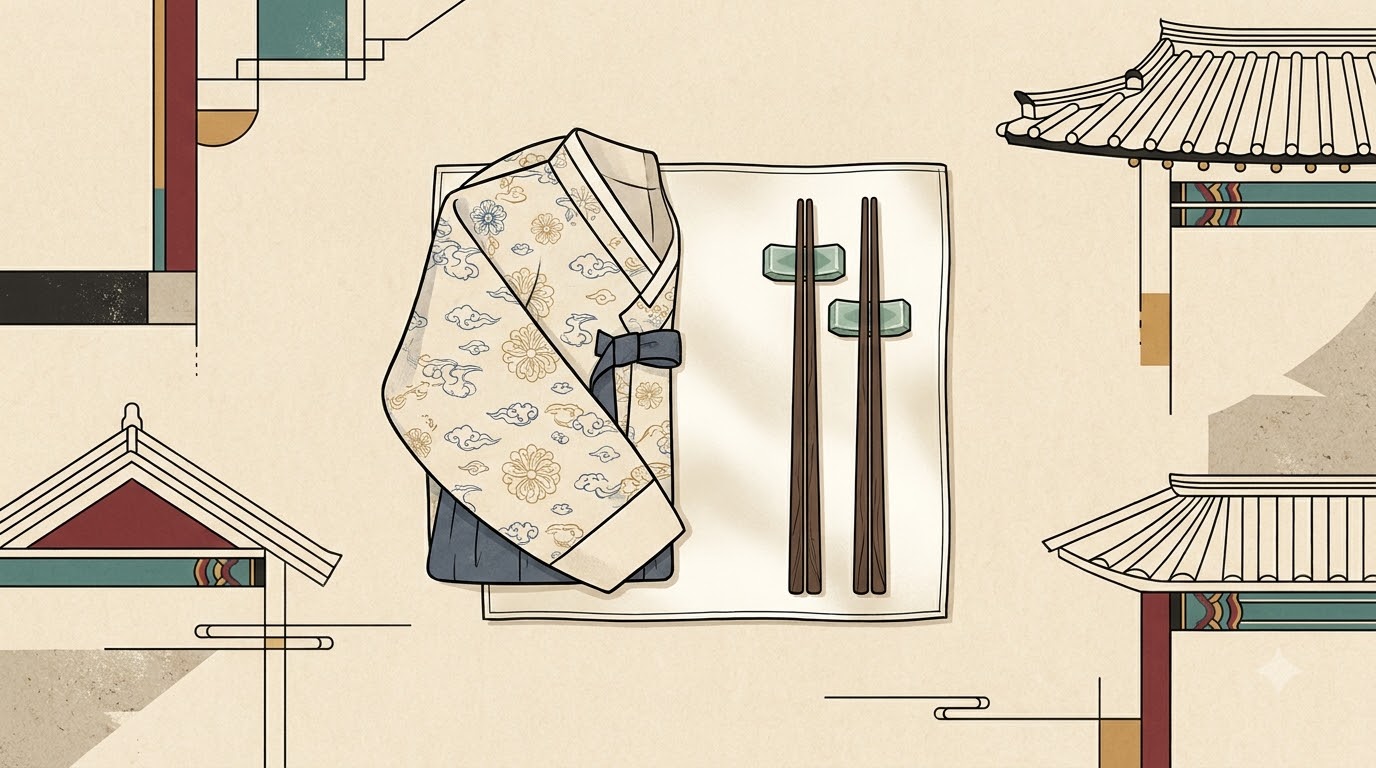
Eating — 먹다 (meok-da) → 드시다 (deu-si-da) or 잡수시다 (jap-su-si-da)
드시다 is the everyday honorific for eating — warm, natural, and appropriate in most modern contexts. But 잡수시다 (jap-su-si-da, "to eat [honorific, traditional]") carries a heavier, more ceremonial weight. You're more likely to hear it from a grandchild addressing a grandparent at a formal family gathering, or from someone being especially deferential to an older generation. Both words signal that this person's act of putting food in their mouth is not the same category of event as yours or mine — but 잡수시다 says it with a deeper bow.
When you want to ask your professor whether they've eaten, the right question is: 교수님, 점심 드셨어요? (gyo-su-nim, jeom-sim deu-syeo-sseo-yo?, "Professor, have you had lunch?") — not 먹었어요 (meog-eo-sseo-yo). The word 진지 (jin-ji), the honorific term for a meal itself, can replace 점심 in more formal settings: 진지 잡수셨습니까? (jin-ji jap-su-syeoss-seum-ni-kka?) signals the deepest register of respect.
Sleeping — 자다 (ja-da) → 주무시다 (ju-mu-si-da)
Sleep is a state of total vulnerability. Eyes closed, defenses down, completely unaware. 주무시다 (ju-mu-si-da, "to sleep [honorific]") wraps that fragile state in linguistic protection. When you ask 할머니, 잘 주무셨어요? (hal-meo-ni, jal ju-mu-syeo-sseo-yo?, "Grandmother, did you sleep well?"), you're not just inquiring about her rest. You're acknowledging that her vulnerability deserves its own guarded space in the language — that her unconscious hours are not the same as just anyone's sleep.
Being sick — 아프다 (a-peu-da) → 편찮으시다 (pyeon-chan-eu-si-da)
This one is particularly elegant. 아프다 is blunt — it describes a body breaking down, a physical malfunction stated plainly. 편찮으시다 (pyeon-chan-eu-si-da, "to be unwell [honorific]") reframes the suffering entirely. It suggests something closer to being troubled or not at ease, shielding the elder's dignity from the rawness of physical pain. When you say 어머니께서 편찮으세요 (eo-meo-ni-gge-seo pyeon-chan-eu-se-yo, "My mother is unwell"), the language itself is softening the blow — protecting her even in how you describe her condition to others.
Dying — 죽다 (juk-da) → 돌아가시다 (dol-a-ga-si-da)
This may be the most quietly profound example in the entire system. 돌아가시다 (dol-a-ga-si-da, "to pass away [honorific]") literally means "to return to where one came from." It removes the biological bluntness from death and reframes it as a peaceful, orderly journey — a homecoming. When someone says 할아버지께서 돌아가셨어요 (hal-a-beo-ji-gge-seo dol-a-ga-syeo-sseo-yo, "Grandfather has passed away"), the language is doing grief work. It protects the dignity of the person who died and holds space for the people left behind — all in a single verb choice.
Why the Wrong Word Feels Worse Than a Grammar Mistake
Say this to your boss: 사장님, 점심 먹었어요? (sa-jang-nim, jeom-sim meog-eo-sseo-yo?, "Boss, did you eat lunch?")
A grammar checker passes it. The conjugation is fine. But to many Korean speakers — and it's worth saying that people genuinely vary in how sensitive they are to this; not every Korean person will react identically — this lands somewhere between careless and quietly rude. It's the linguistic equivalent of addressing a judge by their first name: technically possible, socially tone-deaf.
The correct version: 사장님, 점심 드셨어요? (sa-jang-nim, jeom-sim deu-syeo-sseo-yo?, "Boss, have you had lunch?")
The native speaker's discomfort isn't grammar pedantry. It's that you've placed their eating in the same vocabulary category as anyone else's. In Korean's social logic, the body of a respected person is not supposed to share words with just anyone. Using 먹다 for your boss doesn't just fail to show respect — it actively removes the linguistic marker that says your physical existence occupies a different register than mine.
The Mirror Trap: Never Elevate Yourself
Here's where learners who have almost figured this out still trip: applying honorific verbs to their own actions.
If you say 제가 주무셨습니다 (je-ga ju-mu-syeoss-seum-ni-da, "I slept [honorific self-reference]"), you've accidentally crowned yourself. Honorific vocabulary flows strictly upward — toward people of higher standing — never toward yourself. Using it on your own actions doesn't just sound strange; to a Korean ear, it sounds obliviously arrogant, like bowing to yourself in a mirror.
Your own actions always take the plain form: 저는 잤어요 (jeo-neun ja-sseo-yo, "I slept"). The elevated vocabulary belongs exclusively to others who deserve it.
Apply This Today: Four Swaps You Can Use Right Now
The next time you're in a Korean conversation with someone older or senior to you, try replacing these four verbs. That's the entire exercise — just four words.
| Situation | Plain verb | Honorific verb |
|---|---|---|
| Asking if someone ate | 먹다 (meok-da) | 드시다 (deu-si-da) |
| Asking if an elder slept well | 자다 (ja-da) | 주무시다 (ju-mu-si-da) |
| Saying someone is unwell | 아프다 (a-peu-da) | 편찮으시다 (pyeon-chan-eu-si-da) |
| Referring to someone's passing | 죽다 (juk-da) | 돌아가시다 (dol-a-ga-si-da) |
If you have a Korean tutor or language partner who is older than you, open your next session with: 오늘 잘 주무셨어요? (o-neul jal ju-mu-syeo-sseo-yo?, "Did you sleep well last night?") Watch what happens to the tone of the conversation from that first sentence. That shift — that small, immediate warmth — is the system working exactly as it was designed to.
These words stop feeling like arbitrary exceptions the moment you see what they actually are: a language that decided, centuries ago, that the most intimate physical facts of a respected person's life — how they eat, how they rest, how they suffer, how they die — deserved their own protected vocabulary. Not a volume adjustment. A separate room entirely.
That's not a grammar rule. That's a philosophy about human dignity, encoded into the dictionary. And once you hear it that way, you'll never reach for 먹다 again when your professor is hungry.
🔊 Pronunciation Guide
Natural-sounding audio for the Korean in this article. Listen, then shadow out loud.
The exact phrases Koreans actually use every day — with the nuance notes that keep you from sounding like a textbook. Delivered as a beautiful PDF, free.
Send Me the Free PDFNo spam. Unsubscribe anytime.