그리다 (Geu-ri-da): 5 Korean Words for Missing Something That English Can't Capture
English hands you one verb — miss — and expects it to do everything. Miss a person. Miss a place. Miss a version of your life that quietly closed without warning. Korean finds that arrangement insufficient, and honestly, once you see the alternatives, so will you.
These five words don't just translate longing. They diagnose it — by texture, by scale, by whether the loss is still raw or has already gone cold. A dictionary will flatten all of them into "to miss" or "to feel regret," which is exactly how learners end up stuck cycling through the same blunt expressions. Here's what those translations are hiding.
- • 1. 그리다 (Geu-ri-da) — The Longing That Sketches You Back
- • 2. 애틋하다 (Ae-teut-ha-da) — The Fondness That Leaves a Bruise
- • 3. 공허하다 (Gong-heo-ha-da) — The Terrifying Vastness of Total Absence
- • 4. 허전하다 (Heo-jeon-ha-da) — The Quiet Ache of an Ordinary Tuesday
- • 5. 아쉽다 (A-swip-da) — The Soft Protest Against Endings
- • Frequently Asked Questions
1. 그리다 (Geu-ri-da) — The Longing That Sketches You Back
그리다 (geu-ri-da, "to yearn for / to trace from memory")
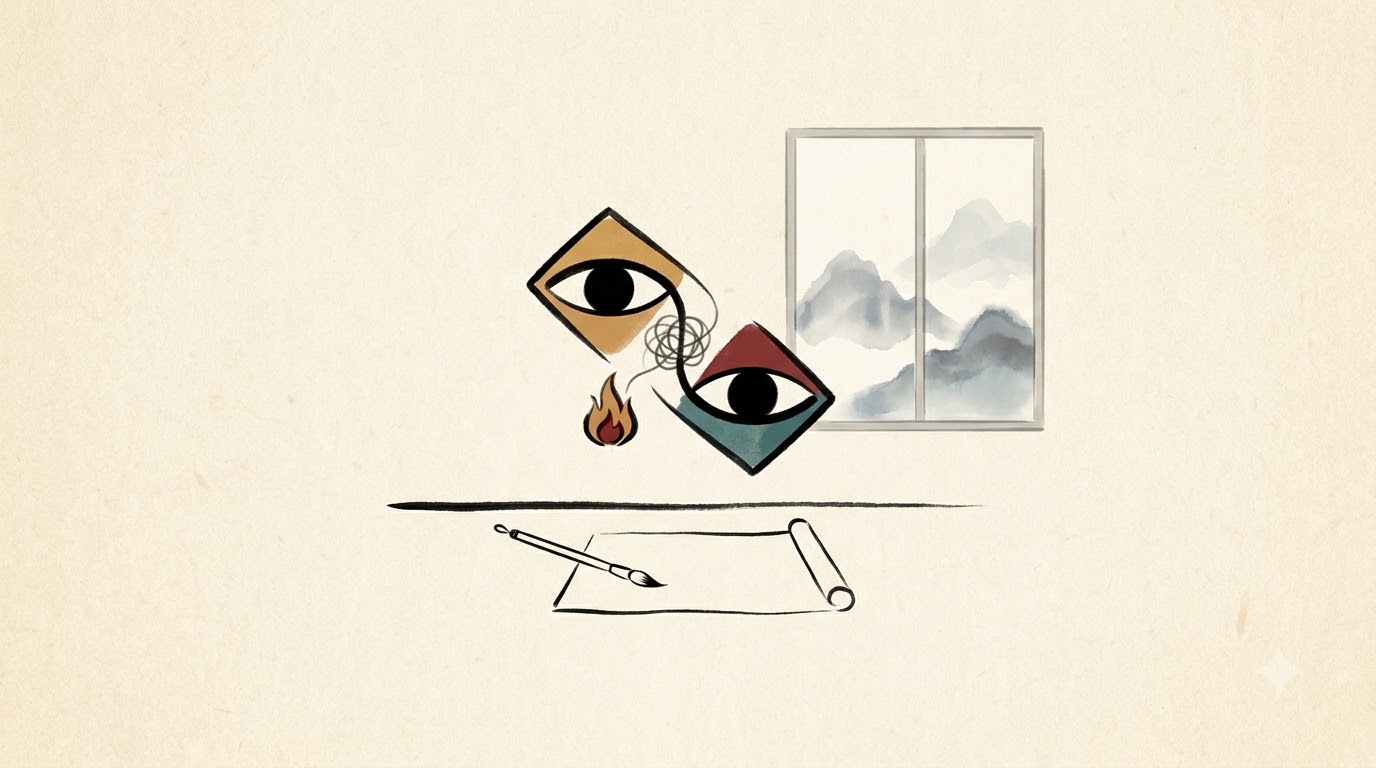
Here is what no dictionary bothers to tell you: 그리다 is the same verb Koreans use for painting and drawing. The word for "I miss you" and the word for "I'm drawing a picture" are, at their root, identical. That overlap is not a coincidence — it's the whole meaning.
When you 그리다 someone, you are not sitting passively in your sadness. You are actively tracing their outline back into existence, stroke by stroke, because the original is no longer in front of you. It's effortful. It has direction. It moves through you the way a pencil moves across paper — with intention and a kind of grief-tinged concentration.
This is why 그리다 feels more soulful and more literary than simply "missing" someone. It implies that the person or place has left such a clear impression on you that you can reconstruct them from memory — and that doing so is both a comfort and an ache.
네가 너무 그리워서 잠을 못 자겠어. (Ne-ga neomu geu-ri-wo-seo jameul mot jagesseo, "I miss you so much I can't sleep — I keep tracing you back.")
2. 애틋하다 (Ae-teut-ha-da) — The Fondness That Leaves a Bruise
애틋하다 (ae-teut-ha-da, "poignantly tender / heart-wrenchingly fond yet sorrowful")
This one resists translation so stubbornly that even fluent English speakers who learn it tend to just keep the Korean word. 애틋하다 is not sadness, and it's not quite nostalgia. It's what happens when missing something is tangled up with a fierce, protective tenderness — as if the memory itself is fragile and you're afraid your own longing might damage it.
Think of looking at a photograph from a time that was irreplaceable and slightly precarious: a friendship that held through something difficult, a moment with someone who is no longer here. You're not just sad. You're careful with it. That carefulness — that bruised, aching fondness — is 애틋하다.
It surfaces in deeper conversations, song lyrics, and the kind of writing that earns its emotion. When someone says 애틋하다, they're not making small talk.
그때 우리가 참 애틋했지. (Geutae uri-ga cham ae-teuthaetji, "We were really heart-wrenchingly precious to each other back then.")
3. 공허하다 (Gong-heo-ha-da) — The Terrifying Vastness of Total Absence
공허하다 (gong-heo-ha-da, "vast and hollow / utterly emptied out inside")
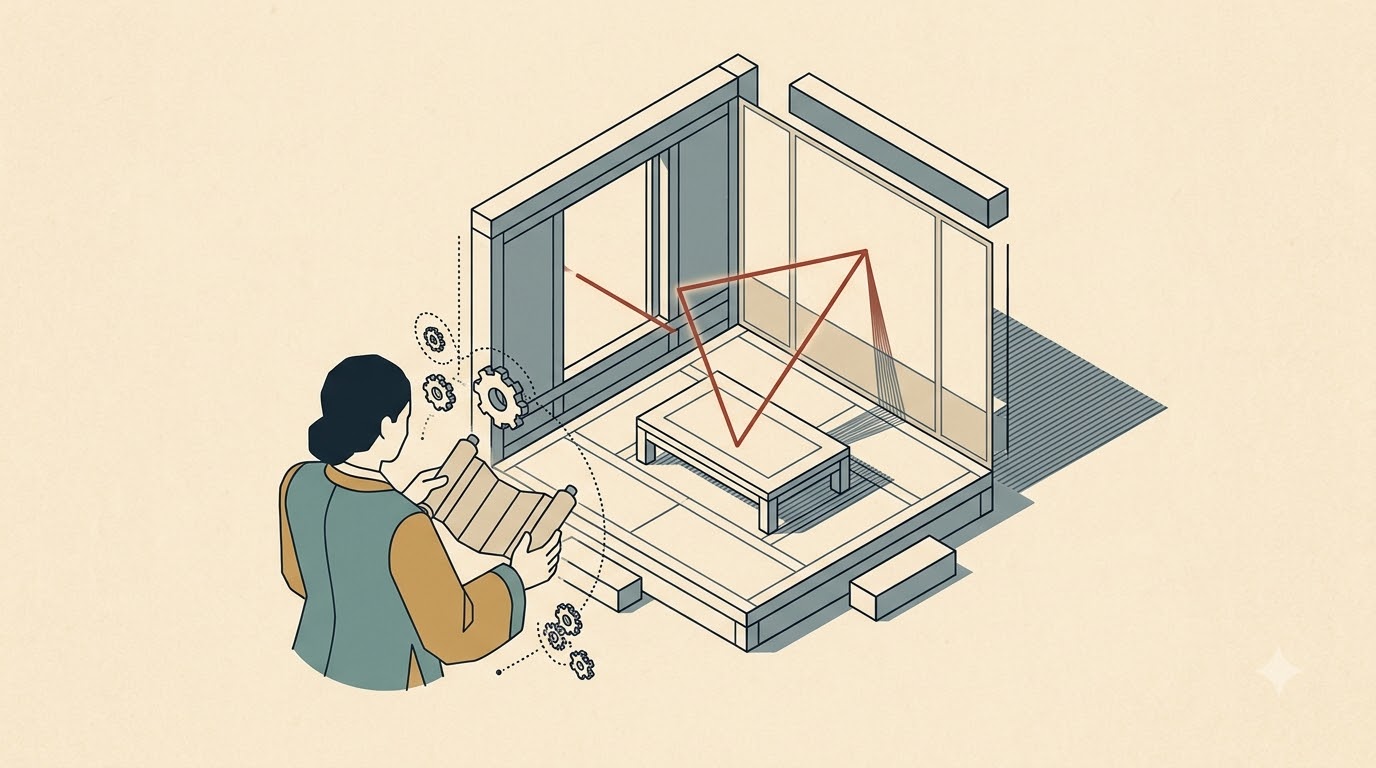
공허하다 is not about the thing you've lost. It's about what the room looks like after it's completely gone. The 공 (空) character embedded in the word literally means empty space — not a small gap, but an architectural void. This is the feeling of staring at a chair where someone always sat and hearing the silence echo back at you.
Most people reach for this word when a loss has moved past the acute stage of grief and arrived somewhere colder and more structural — when the absence has reorganized the entire shape of daily life. That said, how people experience and name their losses is genuinely personal; what registers as 공허하다 for one person might sit differently for another. It's a tendency in how the word gets used, not a rule about how you're supposed to feel.
What's consistent is the scale. 공허하다 is not a small ache. It's the kind of emptiness that has room to echo.
그 사람이 떠난 뒤로 집이 너무 공허해. (Geu saram-i tteonan dwie jibi neomu gong-heohae, "Since that person left, the house feels terrifyingly hollow.")
4. 허전하다 (Heo-jeon-ha-da) — The Quiet Ache of an Ordinary Tuesday
허전하다 (heo-jeon-ha-da, "restlessly underfilled / mildly desolate and lacking")
If 공허하다 is an empty cathedral, 허전하다 is an empty coffee mug — the one you always reach for at 9 a.m. that isn't where it's supposed to be. Same emotional family, entirely different scale.
허전하다 is the low-grade, nagging desolation of something familiar going missing from your immediate surroundings. Not a catastrophic loss — a structural one. The long project that finally ends and leaves your evenings purposeless. The close friend who moves to another city and quietly removes herself from your lunch routine. The habit-shaped absence that catches you off guard on an unremarkable weekday.
This is the most domestic word on this list, and in many ways the most honest one — because most of the loss in ordinary life doesn't arrive as tragedy. It arrives as 허전하다: a Tuesday that feels slightly wrong and you can't immediately say why.
친구가 이사 가고 나서 괜히 허전하네. (Chingu-ga isa gago naseo gwaenhi heojeonne, "Now that my friend has moved away, I just feel strangely underfilled.")
5. 아쉽다 (A-swip-da) — The Soft Protest Against Endings
아쉽다 (a-swip-da, "regretfully incomplete / wistfully falling short of closure")
아쉽다 is the feeling at the end of a perfect evening when you're not ready to say goodbye. It's the last bite of something you should have eaten more slowly. It fires specifically when something good ends before you could fully absorb it — and that qualifier matters enormously. You would never use 아쉽다 about something you're relieved is over. The word only works when what ended was worth keeping.
There's no blame in 아쉽다, which is what separates it from 후회하다 (hu-hoe-ha-da, "to regret with a sense of fault"). You can feel 아쉽다 about a perfect trip ending without regretting a single decision you made on it. The lingering is the point — a soft, wordless protest against the abruptness of a severed moment.
In daily conversation, 아쉽다 is one of the most frequently used words on this list. You'll hear it constantly, in casual settings, as a genuine and lightweight expression of "I wish this weren't over yet."
조금 더 있다 가지, 벌써 가면 너무 아쉬워. (Jogeum deo itda gaji, beolsseo gamyeon neomu a-swiwo, "Stay a little longer — leaving already feels so incomplete.")

Frequently Asked Questions
Q: What's the real difference between 공허하다 and 허전하다? They both seem to mean "empty." They share the same emotional neighborhood but operate at completely different scales. 공허하다 (gong-heo-ha-da) is vast, existential emptiness — the structural silence after a major loss that reorganizes how daily life feels. 허전하다 (heo-jeon-ha-da) is smaller and more domestic: the nagging desolation of something familiar going missing from your immediate routine. One is the whole house after a death; the other is your desk after your favorite mug disappears.
Q: Is 아쉽다 the same as regretting something? Not quite. 아쉽다 (a-swip-da) carries no sense of fault — it's purely the wistfulness of something good ending before its time. 후회하다 (hu-hoe-ha-da, "to regret") points toward a mistake you made, with blame attached. You can feel 아쉽다 about a perfect vacation ending without regretting a single choice you made during it. One is reluctance; the other is self-reproach.
Q: Can 그리다 be used for missing a place, not just a person? Absolutely — and this is where the verb's core image becomes especially beautiful. Because 그리다 is fundamentally about tracing an outline that has disappeared, it works for anything that once existed in front of you and no longer does: a hometown you've left, a childhood kitchen, even a version of yourself from years ago. Koreans use it freely across all of these, and the sketching metaphor deepens with each application.
Q: Which of these five words would feel most natural to use as a beginner? Start with 아쉽다 and 허전하다 — they're high-frequency, casual, and low-stakes. You'll hear them in everyday conversation and can use them without the interaction suddenly becoming heavy. 그리다 and 애틋하다 carry more emotional and literary weight, so they tend to surface in deeper exchanges or written expression. 공허하다 is the most serious of the five and signals that something significant has happened.
The next time you reach for miss and feel it slide right off what you're actually trying to say, that friction is information. Korean has already mapped that territory — and it left you five precise tools, each one built for a different quality of absence. Using the right one isn't just more accurate. It's more honest.
🔊 Pronunciation Guide
Natural-sounding audio for the Korean in this article. Listen, then shadow out loud.
The exact phrases Koreans actually use every day — with the nuance notes that keep you from sounding like a textbook. Delivered as a beautiful PDF, free.
Send Me the Free PDFNo spam. Unsubscribe anytime.