드라마체 (Deu-ra-ma-che): The K-Drama Korean That Will Get You in Trouble in Real Life
You said 야! (ya, "hey!") to get a stranger's attention at a café. The barista looked at you like you'd just demanded their wallet. You were confused — you'd heard it a hundred times in dramas, delivered with total confidence. What went wrong?
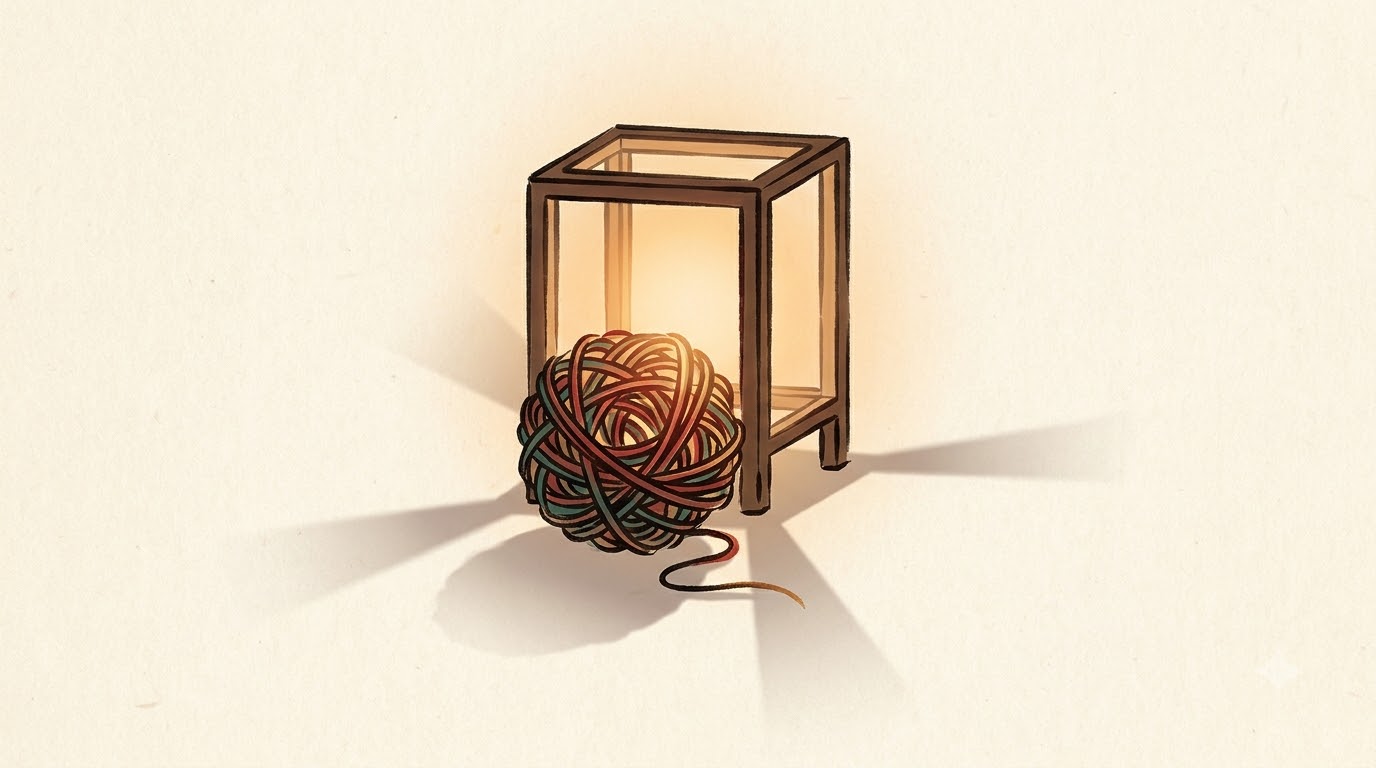
Here's the thing no textbook explains clearly: K-drama characters already have relationships. The language they use comes pre-loaded with years of friendship, shared history, and earned intimacy. When you lift those words out of their context and carry them into the real world alone, you're not just sounding unnatural — you're stepping into a minefield.
This is your map.
- • The Real Problem Isn't Grammar — It's the Relationship You're Missing
- • Your 사회적 지뢰 (Sa-hoe-jeok Ji-roe) Map
- • 🔴 HIGH RISK — Don't Use These with Strangers
- • 🟠 MEDIUM-HIGH RISK — Tone Does All the Work
- • 🟡 CONTEXT-DEPENDENT — Proceed with Awareness
- • What You Can Actually Use from K-Dramas
- • One Question That Changes Everything
The Real Problem Isn't Grammar — It's the Relationship You're Missing

K-dramas use what you could call 드라마체 (deu-ra-ma-che, "drama register") — a version of Korean that is clearer, slower, and more emotionally compressed than how people actually speak. It's broadcast language, shaped to be understood by millions across different regions and ages. Real native speech is fast, contracted, and full of context that only makes sense between two people who already know each other.
But here's the aha moment: Korean honorifics aren't just a grammar layer you toggle on or off. They function as a live social navigation system — a vertical axis that requires you to instantly calculate the age and social position of the person you're speaking to. Every sentence you produce signals whether you recognize that person's status or not.
존댓말 (jondaetmal, "polite/formal speech") isn't the "formal option" you switch to at job interviews. It's the default signal of respect that holds social harmony together. Failing to use it — even with warm intentions — is read as a challenge to that order, not as friendliness.
Drama characters break these rules constantly. That's the point. A rebellious lead dropping into 반말 (banmal, "casual/intimate speech") with someone they just met is the show telling you: this character defies convention. In real life, the same move tells your listener: this person doesn't respect me.
Drama doesn't teach you Korean. It teaches you 드라마체 — and the two are not the same thing.
Your 사회적 지뢰 (Sa-hoe-jeok Ji-roe) Map
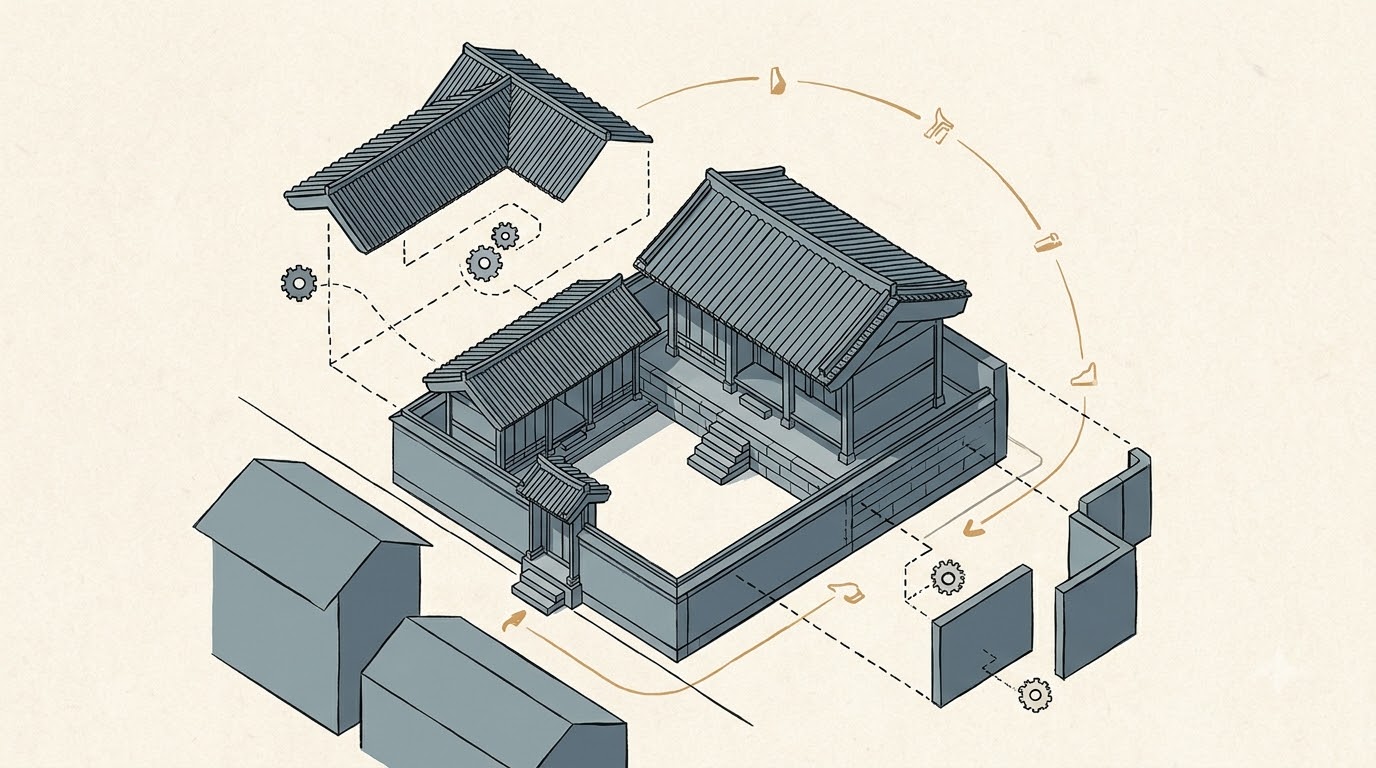
사회적 지뢰 (sa-hoe-jeok ji-roe) literally means "social landmine" — an expression that detonates into unintended offense the moment you step on it without context. The following are the most common ones learners pick up from dramas. Of course, individual Koreans vary enormously in how they respond, and many will be patient with foreign learners who are clearly trying. But these are the patterns that commonly cause friction — worth knowing before you find out the hard way.
🔴 HIGH RISK — Don't Use These with Strangers
야! (ya, "hey!") is probably the single most dangerous expression for learners. It's the most common attention-call in dramas precisely because it sounds natural between close friends — which is exactly where it belongs. Direct it at a stranger, a service worker, or anyone older than you, and it's the verbal equivalent of snapping your fingers at them. The safe replacement: 저기요 (jeo-gi-yo, "excuse me") works for anyone you don't know. With friends you're already close to, 이름+아/야 (ireum+a/ya, "name + casual suffix") is the right call.
반말 전반 (banmal jeonban, "banmal in general") needs its own warning because it's the source of so many smaller mistakes. The move from 존댓말 to 반말 is a social milestone in Korean relationships — and it's usually negotiated explicitly. A Korean friend will often say something like "우리 말 놓을까요?" (uri mal no-eul-kka-yo, "shall we drop the formality?") before switching. Drama characters skip this phase entirely because it creates dramatic tension. In real life, skipping it creates a different kind of tension. Always start with 해요체 (haeyo-che, the standard polite speech level). Wait for an explicit invitation before switching.
정신 차려! (jeongshin cha-ryeo, "get yourself together!") is burned into every drama fan's memory — the moment someone shakes another character back to reality. But this is a strong reprimand even when directed at someone close to you. There's genuinely no safe context for a learner to use this. If you ever feel this phrase is appropriate, you almost certainly need a different phrase. There's no safe alternative here — the situation this fits simply won't arise in normal learner life.
됐거든 / 꺼져 (dwaessgeodeun / kkeojyeo, "forget it / get lost") appear in villain scenes and climactic confrontations for a reason. They are exactly as aggressive in real life as they sound in those moments. Recognize them when you hear them. Don't reproduce them.
이 자식 / 이 녀석 (i ja-sik / i nyeo-seok, "this guy / you [rude]") can carry real affection between men who have known each other for years — the kind of insult-as-endearment that exists in many languages. But that warmth is relationship-specific. From a foreign learner's mouth, the warmth disappears completely and only the rudeness survives. If you're close enough to someone to use casual address, stick to their name + 아/야 (a/ya, the casual name-suffix used on banmal terms).
🟠 MEDIUM-HIGH RISK — Tone Does All the Work
뭐야? (mwo-ya, "what? / what is this?") is completely natural between close friends processing something surprising together. But directed at someone you don't know well — especially in a professional context or toward an elder — it registers as confrontational. When you need a neutral "pardon?", reach for 네? (ne, "pardon?") or 정말요? (jeongmal-yo, "really?"). They carry zero aggression regardless of tone.
몰라! (mol-la, "I don't know!") in drama is almost always an emotional outburst — a character shutting down a conversation they can't handle. Used literally as an answer to a genuine question, it's fine. Used with any emotional edge, it sounds petulant or childish. If you genuinely don't know something, say 잘 모르겠어요 (jal mo-reu-ge-sseo-yo, "I'm not sure") — it's polite, honest, and sounds measured.
🟡 CONTEXT-DEPENDENT — Proceed with Awareness
됐어 (dwae-sseo) is a word that wears two completely different faces. In a neutral situation — say, you've finished setting the table — 됐어 simply means "it's done, we're good." In an emotionally charged moment, the exact same word means "I'm done with this conversation, don't push me." Native speakers read the difference through tone and situation in a split second. Learners often can't, and neither can their listeners. When in doubt, 괜찮아요 (gwaen-chan-a-yo, "it's okay") does the same neutral job without the ambiguity.
아 진짜? (a jinja, "really?") sounds so natural that learners reach for it immediately — which is exactly what makes it risky. Rising intonation communicates genuine surprise: oh wow, really? Falling intonation communicates something closer to sarcasm: seriously? that's it? Most learners don't yet have fine enough control over Korean intonation to guarantee they're landing on the right one. Until your ear is more calibrated, 그렇군요 (geu-reo-kun-yo, "I see / is that so") carries the same conversational function with zero intonation risk.
오빠/언니 (oppa/unni, "older brother/older sister used as terms of address") are kinship terms that become terms of affectionate address — but the operative word is become. The relationship has to exist first. Calling a Korean man 오빠 (oppa) the moment you meet him, because you've seen it done in a romance drama, skips the entire relational groundwork that makes the word feel natural rather than presumptuous. Start with 이름+씨 (ireum+ssi, "name + honorific suffix"). Let the relationship define the address, not the address define the relationship.
What You Can Actually Use from K-Dramas

Not everything is a landmine. These expressions travel well into real life without needing a relationship to back them up:
- 진짜 (jinja, "really/truly") — safe in almost any casual context as an intensifier
- 대박 (daebak, "awesome/incredible") — great between friends, low social risk
- 맞아요 (ma-ja-yo, "that's right") — universally safe, universally useful
- 괜찮아요 / 괜찮아 (gwaen-chan-a-yo / gwaen-chan-a, "it's okay") — use the -요 version until you're on banmal terms
- 감사합니다 / 고마워요 (gam-sa-ham-ni-da / go-ma-wo-yo, "thank you") — always right, always safe
- 설레다 / 두근두근 (seol-le-da / du-geun-du-geun, "to feel excited/nervous / heart pounding") — expressing your own feelings is always lower risk than directing charged language at others
One Question That Changes Everything
Before using any expression you picked up from a drama, ask yourself: what is the relationship between the characters using it?
If the answer is "close friends who've known each other for years," "a couple in the middle of a fight," or "a character who is deliberately being rude to make a point" — treat that expression as context-locked. It belongs to that relationship. You don't have that relationship yet.
This is the core insight behind 드라마체 (deu-ra-ma-che): drama characters speak from inside established relationships. The language reflects intimacy that already exists. You're not inside that relationship yet — and the words don't carry the relationship with them when you borrow them.
Build the relationship first, in 존댓말 (jondaetmal). The right words will follow naturally when the moment actually earns them.
Korean speakers are, on the whole, genuinely patient with learners. The fact that you're trying earns you real goodwill. But even goodwill has a ceiling, and 야! (ya) shouted at a stranger tends to find it fast.
Start with 해요체. Wait for the invitation to go casual. And the next time a drama character says something that sounds impossibly cool — pause and ask who they're saying it to, and what years of shared history earned them the right to say it that way.
That pause is where real fluency begins.
🔊 Pronunciation Guide
Natural-sounding audio for the Korean in this article. Listen, then shadow out loud.
The exact phrases Koreans actually use every day — with the nuance notes that keep you from sounding like a textbook. Delivered as a beautiful PDF, free.
Send Me the Free PDFNo spam. Unsubscribe anytime.