밥 먹으러 갈까? (Bap Meo-geu-reo Gal-kka?): The K-Drama Line Subtitles Always Mistranslate
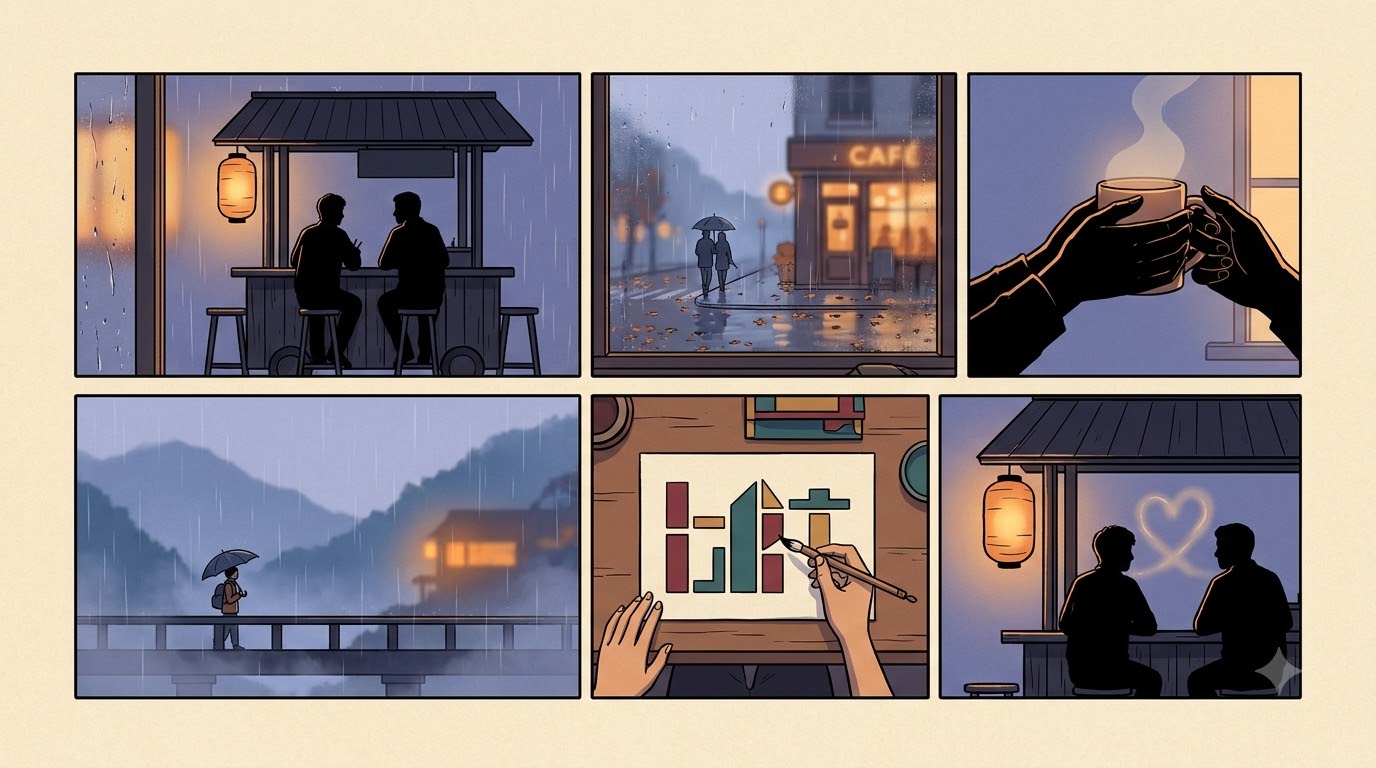
You've watched the scene. A character gets the worst news of their life — fired, dumped, betrayed. A beat of silence. Then their closest friend looks at them and says:
밥 먹으러 갈까? (bap meo-geu-reo gal-kka?, "Want to go get something to eat?")
The subtitle says: "Want to eat?"
And you think: ...that's it?
Here's the thing no subtitle will ever tell you: that line is the emotional climax of the scene. The writers didn't reach for it because they ran out of ideas. They reached for it because it's exactly what a Korean friend says in that moment — and it means something completely different from what it looks like.
- • The Invisible Work Inside "Want to Eat?"
- • The Scene Pattern You've Watched a Hundred Times Without Noticing
- • The Catharsis Ritual: When a Drink Means More Than a Drink
- • 치맥할래? — The Most Elastic Invitation in Korean
- • The Crucial Distinction You Cannot Afford to Miss
- • 정 (Jeong): The One Word That Explains Why This Works
- • Use This Today
The Invisible Work Inside "Want to Eat?"
Korean comfort culture doesn't usually begin with "Tell me everything. How are you feeling? What happened?" That kind of direct emotional excavation can feel intrusive — it puts the person in pain on the spot and forces them to articulate something they may not be ready to name yet.
Instead, Korean emotional support often works through presence and action. You don't ask someone to open up. You create a situation where they can open up, without any pressure to do so. And the most natural, low-stakes way to create that situation? Food.
밥 먹으러 갈까? is the verbal equivalent of quietly sitting down next to someone. It's an invitation that says: I'm not going anywhere. No explanation required.
The real message has nothing to do with calories. It's: I'm here, right now, and I want to stay near you.
This is why the subtitle "Want to eat?" fails so completely — it translates the what and loses the why.
The Scene Pattern You've Watched a Hundred Times Without Noticing
Once you know what to look for, the pattern jumps out of every K-drama you've ever seen.
After bad news or failure: A character hears something devastating. A pause. Then a friend asks 밥 먹으러 갈까?. Notice: it doesn't matter what the answer is. "Yes" or "no," they end up walking out the door together anyway. The meal is a pretext, not a purpose.
After a heavy conversation, when silence goes thick: 술 한잔 할래? (sul han-jan hal-lae?, "Want to have a drink?") arrives to break the tension. This one is particularly elegant — it signals we don't have to keep dissecting this, but I'm also not leaving you alone with it. The drink is permission to exhale. It's not about the alcohol; it's about offering the person a way to stay in company without having to perform recovery.
When someone is visibly crying: This is where you'll hear 일단 나와 (il-dan na-wa, "Just come out for now"). No "why are you crying?" No "do you want to talk?" Just: get out of that room, change the physical environment, and we'll figure out the rest from there. Comfort as logistics — move the person first, feelings second.
These aren't three separate expressions. They're the same instinct, wearing slightly different clothes depending on the moment.
The Catharsis Ritual: When a Drink Means More Than a Drink
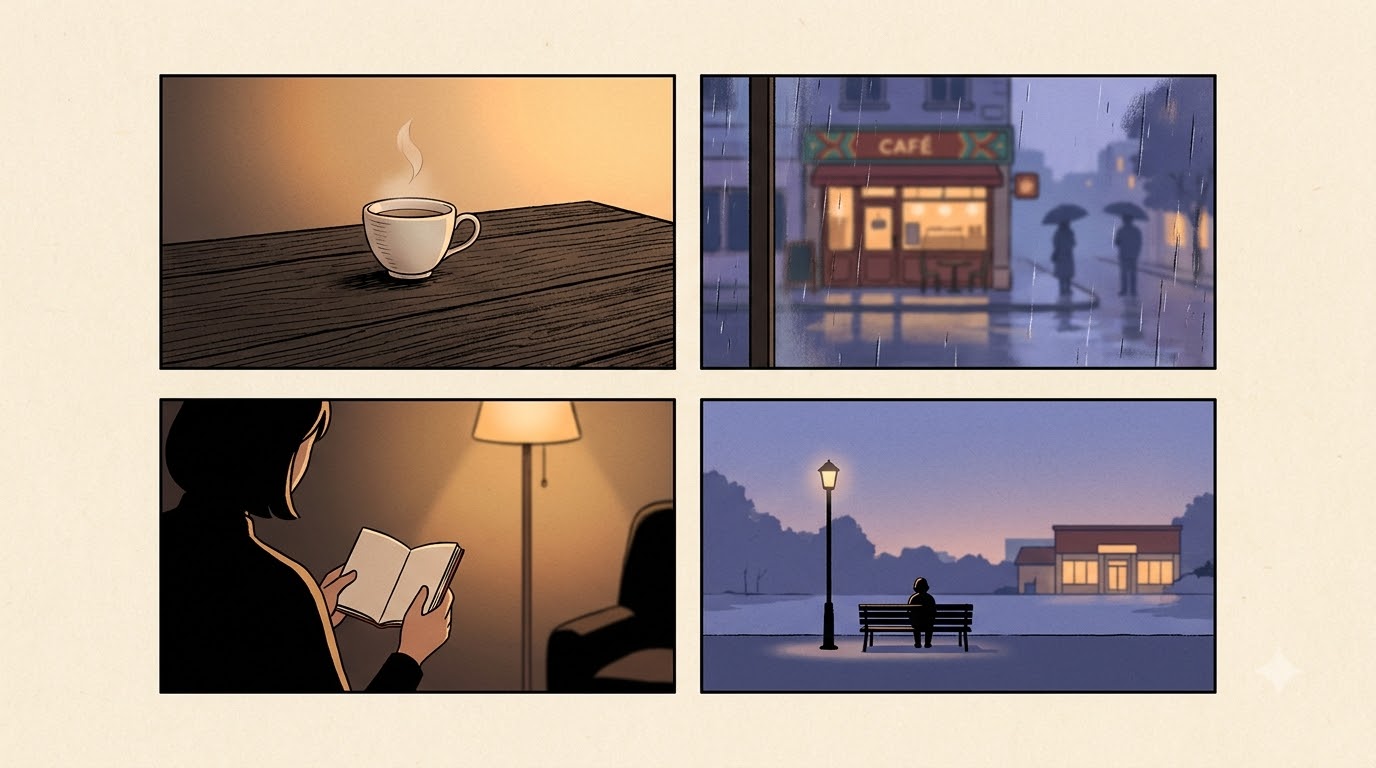
술 한잔 할래? deserves its own attention, because alcohol plays a specific symbolic role in this family of expressions.
You'll also hear 한잔 먹고 툭 털어버려 (han-jan meo-kko tuk teo-reo-beo-ryeo, "Have a drink and just shake it off"). The verb here is the key: 털다 means to shake something loose — like flicking dust off a jacket. The image is physical and deliberate. You take the weight that's been sitting on you, and you flick it away. The drink isn't about getting drunk; it's a ritual act of release, a symbolic gesture that says we're going to set this down together.
Sometimes the invitation goes even further: 술 한잔 사줄게 ("I'll buy you a drink") — where the speaker absorbs the cost as a way of saying don't even think about logistics, just show up. It removes every possible excuse not to come. That small gesture is its own kind of care.
This isn't a drama convention writers invented for dramatic effect. These expressions move through real friendships and workplaces in Korea — a text after a brutal week, a call on the commute home. The writers didn't create the pattern; they borrowed it from life.
치맥할래? — The Most Elastic Invitation in Korean
If 밥 먹으러 갈까? leans toward comfort and 술 한잔 할래? leans toward emotional processing, then 치맥할래? (chi-maek-hal-lae?, "Want to get chicken and beer?") — a blend of 치킨 (chikin, "fried chicken") and 맥주 (maekju, "beer") — is the expression with no emotional prerequisites whatsoever.
Someone got a promotion? 치맥할래?. Failed an exam? 치맥할래?. It's Friday and neither of you wants to go home yet? 치맥할래?. Just bored on a Tuesday? Still 치맥할래?.
This one doesn't carry the weight of comfort — it carries the simpler signal of I want more time with you, whatever the reason. Where 밥 and 술 invitations have their center of gravity in the hard moments, 치맥 stretches to cover joy, boredom, celebration, and restlessness with equal ease. It's the most honest version of this whole family: it doesn't pretend there's a crisis. It just says let's not end this yet.
The Crucial Distinction You Cannot Afford to Miss
Here's the trap that catches most learners: confusing all of the above with 언제 밥 한번 먹어요 (eon-je bap han-beon meo-geo-yo, "We should grab a meal sometime").
These are not the same thing.
언제 밥 한번 먹어요 is a social nicety — something Koreans often say when parting, roughly equivalent to "let's catch up sometime." It's warm in feeling, but it is not an actual invitation. No date, no plan, no urgency. It's closer to a farewell than a proposal.
밥 먹으러 갈까? is the opposite: it's now, it's specific, and it's aimed directly at you in this moment. Same ingredient (밥, bap, "rice/a meal"), completely different function. Same word, opposite meaning depending on context — and no subtitle will ever flag that difference for you. This is exactly the kind of gap that makes learners feel like they're watching a drama in a foreign language even after years of study.
정 (Jeong): The One Word That Explains Why This Works
There's a concept woven through Korean social life that has no clean English translation: 정 (jeong) — the deep emotional bond that accumulates between people through shared time, especially ordinary shared time. It's not quite love, not quite friendship. It's the invisible warmth that builds when people have simply been there for each other, often without making a big deal of it.
Sharing a meal, sitting through an awkward silence together, going for a drink after a rough day — these are all acts of 정 in motion. The reason 밥 먹으러 갈까? lands so powerfully in a difficult scene is that the offer itself is a deposit into that bond. The person asking is saying: I choose to spend this moment with you — especially this moment.
Of course, people are genuinely diverse. Some friends would rather talk directly; some moments call for something different. 정 is a strong cultural tendency, not a universal rule. But if you're ever unsure how to show up for a Korean friend, leading with an invitation rather than a question is rarely the wrong instinct.
Use This Today
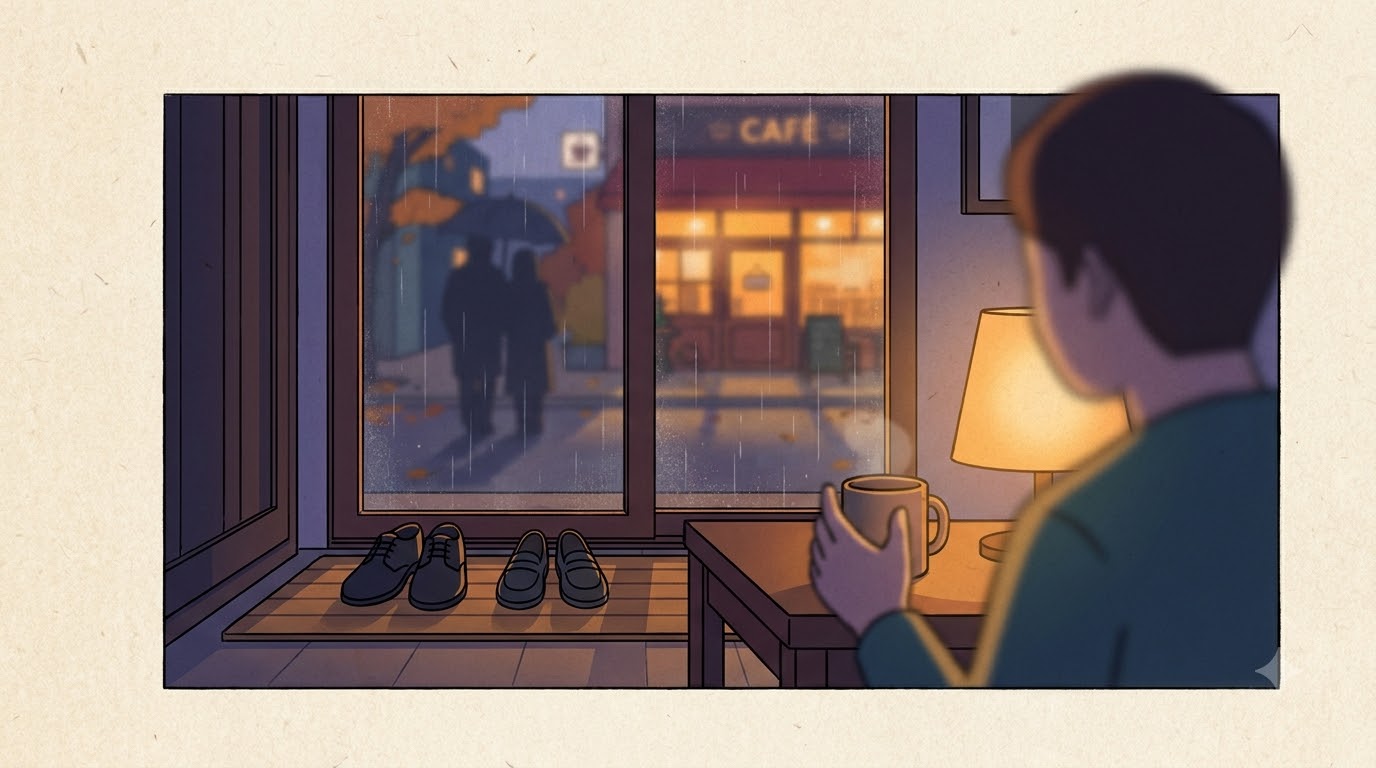
The practical shift is small but immediately usable. Next time a Korean friend is clearly having a hard day, try one of these instead of "Are you okay?" or "Do you want to talk about it?":
- 밥 먹으러 갈까? (bap meo-geu-reo gal-kka?) — gentle, zero pressure, works any time of day
- 일단 나와, 밥이나 먹자 (il-dan na-wa, ba-bi-na meok-ja, "Just come out, let's eat") — slightly more direct, for closer friends; 이나 here softens it to "let's just eat or something," keeping the tone light
- 술 한잔 할래? (sul han-jan hal-lae?) — evening, after something heavy has happened
- 나와라~ (na-wa-ra~, "Come out already~") — the most affectionate version; the casual command ending -라 sounds bossy on paper but reads as I care about you enough to insist
The logic connecting all four: you are not asking them to explain themselves. You are making an offer of company. That's the entire point.
The next time you're watching a drama and someone says 밥 먹으러 갈까? right after a character's worst moment, you don't need to wonder why the writer chose that line. You already know. It's not small talk filling a gap in the script. It's the scene's emotional climax — just wearing very ordinary clothes.
That's what makes it beautiful, and that's what makes it worth learning.
🔊 Pronunciation Guide
Natural-sounding audio for the Korean in this article. Listen, then shadow out loud.
The exact phrases Koreans actually use every day — with the nuance notes that keep you from sounding like a textbook. Delivered as a beautiful PDF, free.
Send Me the Free PDFNo spam. Unsubscribe anytime.