Your K-Drama Subtitles Are Lying to You — Here's Exactly What They're Hiding

You're watching a confession scene. The male lead finally says what he's been holding back for eight episodes. Your Korean is good enough now that you catch the words before the subtitle appears — and something feels wrong. The subtitle says "I miss you." But what he actually said was 보고 싶어 미치겠어 (bo-go si-peo mi-chi-ge-sseo, "I want to see you so badly I think I'm going crazy"). Those are not the same sentence. One is a feeling. The other is a man coming apart.
This is the gap nobody warns you about. 자막 (ja-mak, "subtitles") don't just translate Korean — they rebuild it in English, and five things get quietly demolished in that process. Once you can name them, every drama you watch becomes twice as rich, and you'll finally understand why your Korean sometimes sounds correct to native speakers but never quite feels Korean.
Distortion 1: Every "Go" Is Not the Same Go
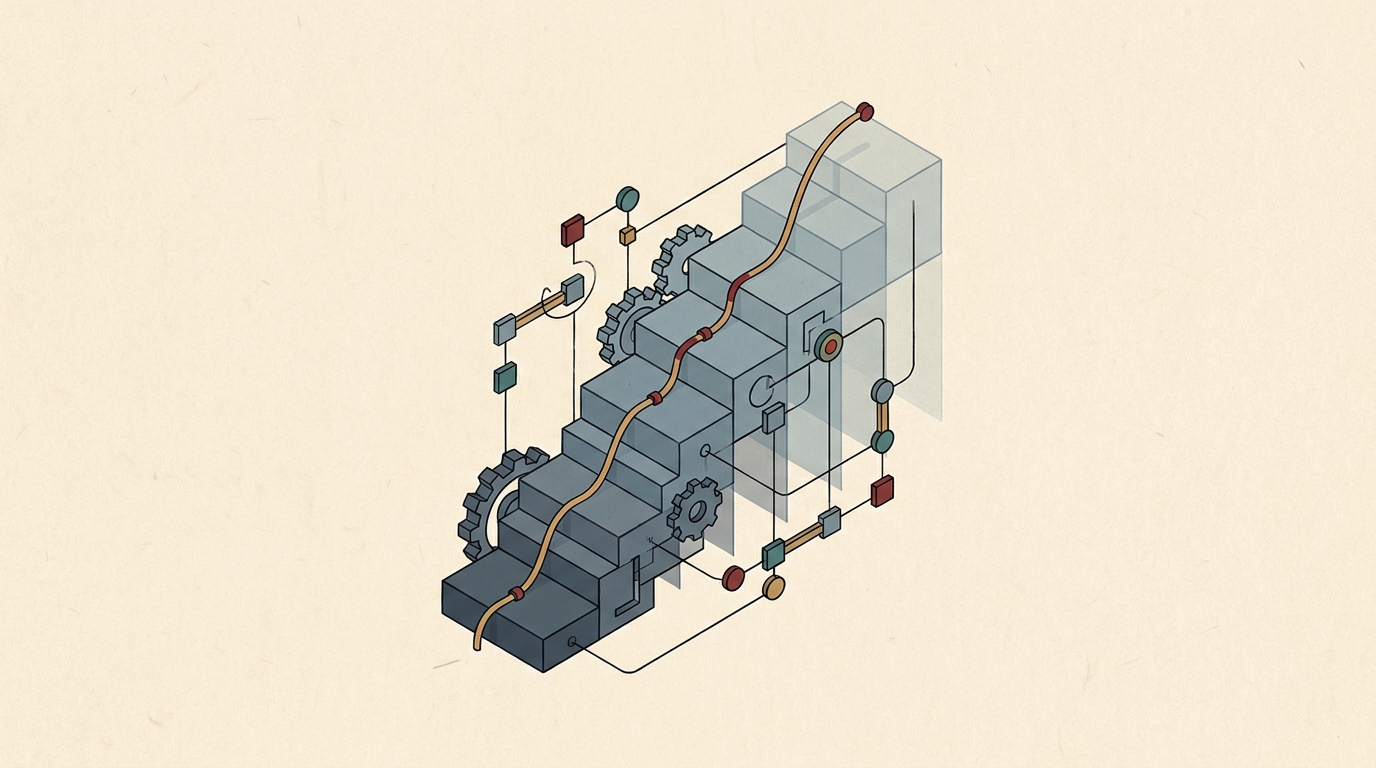
Korean encodes social relationships directly into grammar. English doesn't. So when a subtitle has to choose between accuracy and readability, the social layer gets cut first.
가세요 (ga-se-yo, "please go — formal polite"), 가요 (ga-yo, "go — casual polite"), 가 (ga, "go — informal, between close friends"), and 가라 (ga-ra, "go — blunt command, used downward in hierarchy") are four completely different social acts. In any subtitle, all four become: Go.
Here's what that costs you as a viewer: the most emotionally significant moment in many K-dramas is when two characters switch from formal speech to 반말 (ban-mal, "informal speech — used between close friends or equals who've agreed to drop formality"). For Korean audiences, this is a threshold moment. It means I trust you enough to stop performing politeness. The subtitle before and after that switch is identical. The English dialogue sounds unchanged. But Korean viewers just felt a full emotional beat land — from grammar alone.
Start listening for 요 (yo) endings disappearing. Watch for characters switching from 씨 (ssi, "a polite name suffix") to 야/아 (ya/a, "informal name suffix for close friends"). When that shift happens mid-drama, that's the scene's real turning point, whether the subtitle acknowledges it or not.
Distortion 2: The Subtitle Turned Off the Volume
Korean emotional language is vivid, physical, and deliberately excessive. Subtitles translate the meaning while quietly halving the intensity.
보고 싶어 미치겠어 (bo-go si-peo mi-chi-ge-sseo, "I want to see you so badly I think I'll go crazy") becomes I miss you. But 미치겠어 means I'm going to lose my mind — it's longing at the edge of sanity. That's not emphasis. That's the entire emotional content of the sentence.
진짜 너무해 (jin-jja neo-mu-hae, "This is genuinely too much") becomes That's not fair. But 너무 (neo-mu) means too much — something exceeding a limit, overflowing past what's acceptable. Not fair is a complaint. 너무해 is a small eruption.
And 짜증나 (jja-jeung-na, "I'm irritated") gets subtitled as so annoying, which sounds like a mild inconvenience. Korean speakers describe 짜증 as almost physical — friction under the skin, like sand being dragged across it. A character who says 짜증나 is not mildly bothered. They're grating.
The practical rule: when you learn an emotional word from a drama, assume the subtitle has already turned the volume down. The Korean original is almost always stronger.
Distortion 3: "I'll Think About It" Means No
Korean is a high-context language. Disagreement, refusal, and discomfort often get communicated indirectly, through softening and implication. English is comparatively direct, so subtitles are forced to make things explicit — and in doing so, they accidentally reverse the meaning.
생각해볼게요 (saeng-gak-hae-bol-ge-yo, "I'll think about it") is subtitled literally. But in real Korean social interaction, this is a soft refusal. Korean speakers read it as no the majority of the time. If a character says this in response to a confession or an invitation, they're not undecided — they're declining without forcing the other person to experience a direct rejection.
좀 그렇네요 (jom geu-reo-ne-yo, "That's a bit...") becomes That's not great in subtitles. But this phrase is one of the most indirect ways to express opposition or discomfort in Korean — used specifically to avoid saying 싫어요 (si-reo-yo, "I don't want to / I don't like it") outright. The trailing implication is the point. The subtitle makes it sound like mild criticism. The Korean means I'd rather not, but I'm too polite to say so directly.
Then there's 언제 밥 한번 먹어요 (eon-je bap han-beon meo-geo-yo, "Let's get a meal sometime") — subtitled as Let's get a meal sometime, which sounds like a genuine plan. Often it's a social closing, a warm way to end an interaction with no actual follow-through expected. Responding by trying to set a specific date can leave the other person visibly caught off guard.
These aren't translation errors. They're structural incompatibilities between how the two languages handle social reality. The subtitle gives you the words. It doesn't give you the code.
Distortion 4: One Sentence, Five Vanished Honorifics
Korean doesn't just add politeness through verb endings. It has entirely different vocabulary for the same objects and actions depending on who they involve. None of this survives translation.
어머님께서 진지를 드시고 계세요 (eo-meo-nim-kke-seo jin-ji-reul deu-si-go gye-se-yo) becomes Mom is eating. Count what disappeared: 어머님 (eo-meo-nim) is the honorific form of mother. 께서 (kke-seo) is the honorific subject particle, a version of 이/가 used only for people deserving respect. 진지 (jin-ji, "meal — the honorific word for food, used specifically when referring to an elder's eating") replaces the ordinary word entirely. 드시다 (deu-si-da) is the honorific verb for eating, replacing 먹다 (meok-da). Four distinct honorific markers, all erased, replaced by three English words.
진지 (jin-ji) is worth learning on its own because it illustrates something textbooks often underemphasize: Korean respect isn't just a tone or an ending — it's embedded in the nouns themselves. When you ask 진지 드셨어요? (jin-ji deu-syeo-sseo-yo?, "Have you eaten? — said respectfully to an elder"), you're not just being polite in delivery. You're using a different word for the meal itself. The respect is baked into the vocabulary.
This is why a sentence spoken to a grandmother sounds completely different from the same sentence spoken to a friend — not just in endings, but in every word choice throughout.
Distortion 5: The Words That Sound Like Feelings
This is the gap subtitles simply cannot close, because the problem is architectural.
Korean has an extraordinarily developed system of 의성어 / 의태어 (ui-seong-eo / ui-tae-eo, "onomatopoeia and mimetic words — vocabulary that encodes sound, movement, or texture directly into the shape of the word itself"). English has onomatopoeia, but Korean deploys these words in everyday conversation at a density that has no real equivalent.
두근두근 (du-geun-du-geun) gets subtitled as heart racing or nervous. But 두근두근 is the heartbeat sound itself. When a character says 심장이 두근두근 뛰어 (sim-jang-i du-geun-du-geun dwi-eo, "my heart is going du-geun du-geun"), you're not being told about a feeling — you're hearing its rhythm in the syllables. The subtitle translates the content. The Korean delivers the sensation.
살금살금 (sal-geum-sal-geum) means something like sneaking quietly, but the repeated syllable structure itself mimics the slow, deliberate weight of each careful step. Quietly is a description. 살금살금 is the movement.
And then there's 설레다 (seol-le-da) — subtitled as excited or heart fluttering, but neither lands. 설레다 is the specific emotional texture of anticipating something good that hasn't happened yet: a first date, a person you like about to walk through the door, an answer you're waiting for. It holds hope, nervousness, and sweetness in the same breath. English has no single word for this, which means every subtitle that renders it as excited is technically functional and completely wrong.
These words are the most distinctly Korean part of the language. Build a list of them from your dramas. They will make your Korean feel alive in a way no grammar drill ever will.
What to Do With Your Next Episode — Starting Tonight
Delay the subtitle by one beat. Listen to a line, form your impression of the emotion and register, then read the subtitle. Ask yourself: what did the subtitle keep, and what did it quietly drop? You'll start feeling the gaps immediately.
Watch for the 요 (yo) disappearing. When a relationship breaks open — a fight, a confession, a reconciliation — listen for whether speech levels shift. Does a character stop using 요 endings? Switch from 씨 (ssi) to 야 (ya) after a name? That grammatical shift is the scene's emotional turning point. The subtitle won't mark it. You have to catch it yourself.
Collect 의성어/의태어 (ui-seong-eo/ui-tae-eo) with scene context. When you hear 두근두근 (du-geun-du-geun) during a confession or 살금살금 (sal-geum-sal-geum) during a comedic sneak scene, write it down with the moment. Context is how these words stick. This is the vocabulary that will make native speakers feel like you actually sound Korean.
Handle 반말 (ban-mal, "informal speech") with care. The casual speech you hear constantly between drama characters is relationship-specific — it requires mutual agreement, similar age, or established closeness. Using it with the wrong person in real life lands very differently than it does on screen. Learn it from dramas, but don't deploy it until you understand the social conditions that make it appropriate.
There's a test native Korean speakers apply instinctively when they see Korean translated into English: it's correct, but it doesn't feel Korean. That gap — between technically accurate and actually Korean — is precisely what subtitles erase. The formality layers, the emotional volume, the indirect refusals, the honorific vocabulary, the words that carry their meaning in their sound.
You know where the five erasures happen now. Which means the drama you watch tonight is a richer text than anything you watched last week. You're not just following the plot anymore — you're reading the language underneath it.
That's when Korean stops being something you study and starts being something you hear.
🔊 Pronunciation Guide
Native-speed audio for the Korean in this article. Listen, then shadow out loud.
The exact phrases Koreans actually use every day — with the nuance notes that keep you from sounding like a textbook. Delivered as a beautiful PDF, free.
Send Me the Free PDFNo spam. Unsubscribe anytime.


Comments
Post a Comment