"Polite" Isn't One Thing in Korean — and Mixing Them Up Costs You
Your textbook taught you that 가요 (ga-yo) and 갑니다 (gam-ni-da) both mean "I go (polite)." Both correct. Both polite. So why does it matter which one you use?
Here's what the textbook quietly skipped: in Korean, how polite you sound and what kind of relationship you're signaling are two completely different things. One ending says "I respect you, and I'm comfortable with you." The other says "I respect you, and I am performing a role right now." Using the wrong one doesn't make you rude — it makes you strange. And native speakers notice immediately.
Two Roads, Both Polite, Very Different Destinations
Most learners picture Korean politeness as a ladder: informal at the bottom, polite in the middle, very polite at the top. So they assume 갑니다 is simply more polite than 가요. That assumption is the one that causes real problems in real life.
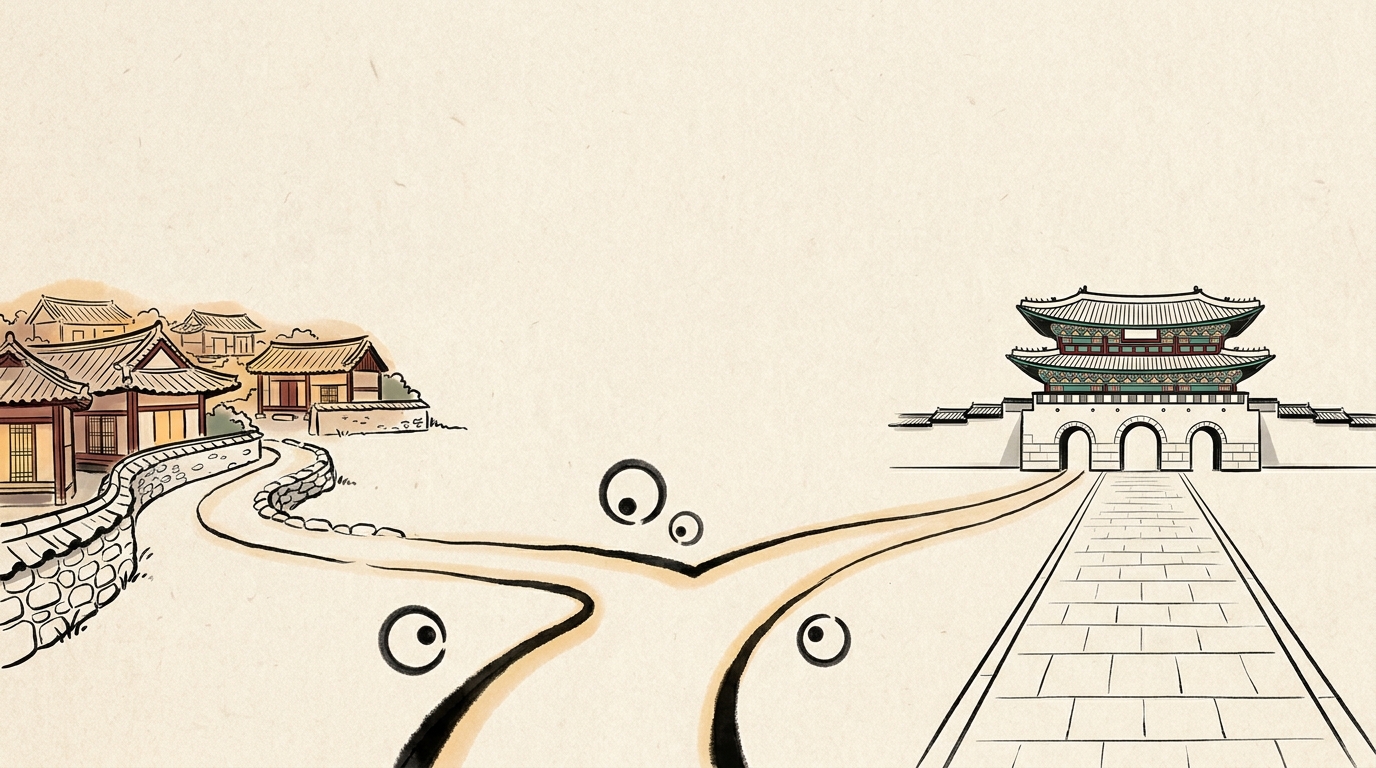
The truth is closer to a fork in the road. Both paths are polite — they just lead to different social places.
The first path is 해요체 (hae-yo-che, "informal polite speech level") — the warm, approachable register that says I see you as a person, not a title. It's the most frequently used polite register in modern Korean. Mastering just this one level will carry you through the vast majority of everyday situations.
The second path is 합쇼체 (hap-syo-che, "formal polite speech") — also called 하십시오체 (ha-si-pi-o-che) in academic grammar. This is the register of institutions, announcements, and professional distance. Sentences ending in -습니다/-ㅂ니다 belong here. It isn't warmer than 해요체. It's more structured, more official, and deliberately less personal.
Neither is "higher." They serve different human purposes — and here's the aha moment most textbooks never give you: the choice between them isn't about your level of respect, it's about the social frame you're stepping into. Are you two people talking? Or are you filling a role in a formal context?
What the Two Registers Actually Feel Like
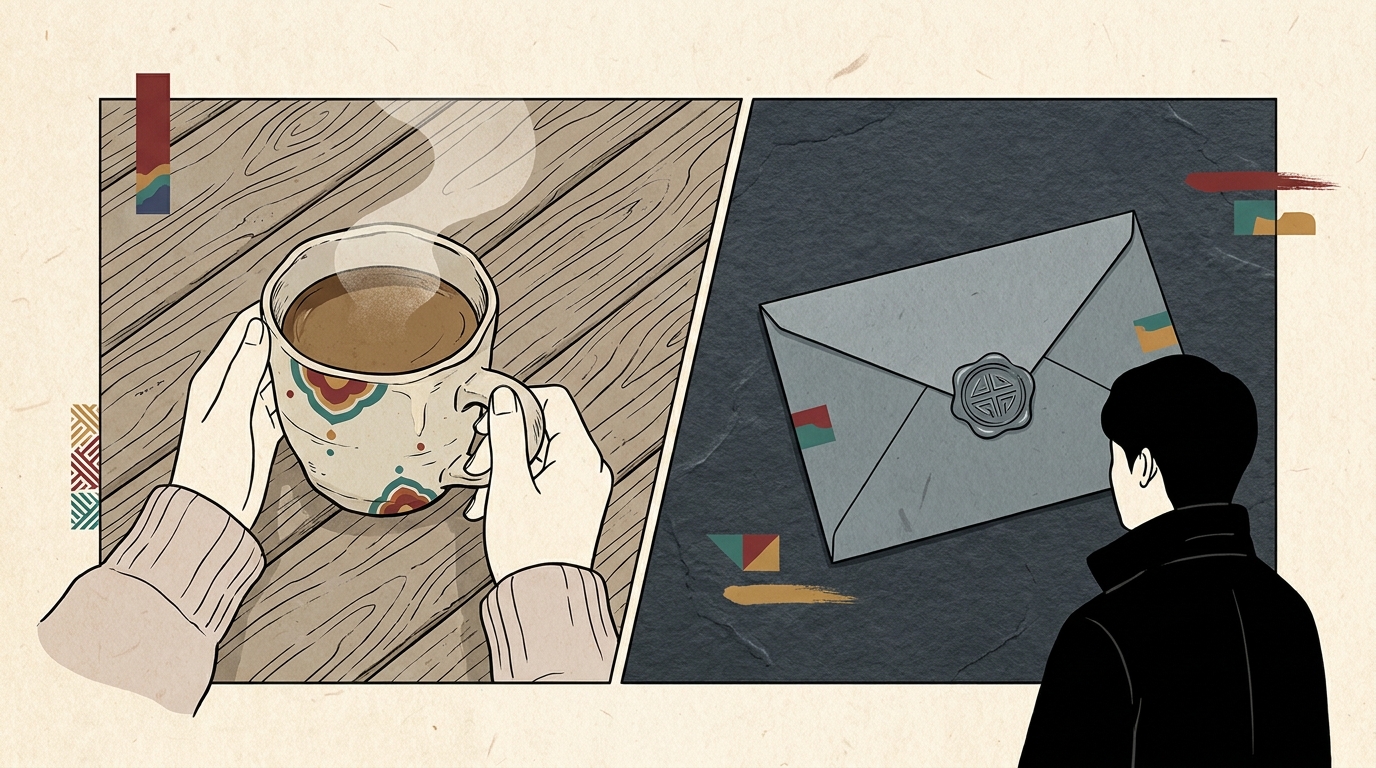
In English, both of these are polite:
- "I'll have a coffee, please."
- "We are pleased to inform you that your application has been received."
Nobody would call the second one "more polite" than the first. You'd just never say it to a barista — and you'd never write the first one in a formal letter. The situation determines the register, not some internal ranking of politeness.
해요체 is the first sentence. Person-to-person. There's warmth in it.
합쇼체 is the second sentence. Role-to-role. There's structure in it.
When a Korean news anchor closes a broadcast with 지금까지 뉴스였습니다 (ji-geum-kka-ji nyu-seu-yeot-seum-ni-da, "That was the news"), they're not being maximally polite to the viewer. They're signaling: this is a formal broadcast, not a conversation. That's 합쇼체 doing exactly what it's designed to do — it creates institutional distance on purpose.
When a café worker smiles and says 어서 오세요 (eo-seo o-se-yo, "Welcome, come in"), that's 해요체 — professional, warm, human. Same service industry, same respect, completely different social frame.
How to Build Each One
해요체 attaches 아요/어요/여요 to the verb stem:
- 가다 → 가요 (ga-yo, "goes / I go")
- 먹다 → 먹어요 (meo-geo-yo, "eats / I eat")
- 하다 → 해요 (hae-yo, "does / I do")
To ask a question, raise your intonation: 가요? 먹어요? Same ending, different music.
합쇼체 requires one extra decision. Check whether the verb stem ends in a consonant — a 받침 (bat-chim, "final consonant") — or not:
- 가다 → 갑니다 (gam-ni-da) — no 받침, so use -ㅂ니다
- 먹다 → 먹습니다 (meok-seum-ni-da) — has 받침, so use -습니다
For questions in 합쇼체, the ending changes completely: -습니까?/-ㅂ니까?
- 갑니까? (gam-ni-kka, "Are you going?")
- 먹습니까? (meok-seum-ni-kka, "Do you eat?")
This is where a very common mistake hides. Learners sometimes write -습니다? with a question mark, assuming that's enough. It isn't — -습니다 is a statement ending, full stop. The question form genuinely changes. Burn that into muscle memory now, because it will trip you up in a formal setting if you don't.
Where Each One Belongs: A Quick Reference
| Situation | 해요체 | 합쇼체 |
|---|---|---|
| Ordering at a café | 아메리카노 한 잔 주세요 | 아메리카노 한 잔 주십시오 |
| Work presentation | 이번 분기 실적이에요 | 이번 분기 실적입니다 |
| News broadcast closing | (not used) | 지금까지 뉴스였습니다 |
| Job interview | (too casual) | 저는 OOO입니다. 잘 부탁드립니다 |
| Asking for directions | 지하철역이 어디예요? | 지하철역이 어디입니까? |
Look at the job interview row carefully. Saying 저는 이 분야가 정말 좋아요 (jeo-neun i bun-ya-ga jeong-mal jo-a-yo, "I really like this field") in a Korean job interview isn't a grammar error — but it signals that you don't understand the room. The interviewer is not your friend yet. You are two people in roles, and 합쇼체 says you know that. 해요체 in that moment sounds like you wandered in from a different social context entirely.
The Broader Term Worth Knowing
There's a word that ties this together: 격식체 (gyeok-sik-che, "formal register"). It refers to any speech that follows formal, institutional conventions — and 합쇼체 is its most prominent representative in spoken Korean. When you hear 격식체, your brain should register: official context, professional distance, structured interaction. It's the opposite of casual — not the opposite of polite.
You'll encounter 격식체 in corporate presentations, military commands, public transport announcements, and department store staff greeting customers: 어서 오십시오 (eo-seo o-si-pi-o, "Welcome"). That last example is worth noting — the same greeting, 어서 오세요 vs. 어서 오십시오, tells you almost everything about how formal the establishment wants to feel.
One small note on the service industry: traditionally, 합쇼체 has been the standard for staff speaking to customers. In recent years, especially in casual cafés and younger-run shops, 해요체 has become increasingly accepted. Don't be surprised if a barista says 감사해요 (gam-sa-hae-yo, "Thank you") instead of 감사합니다 (gam-sa-ham-ni-da). Both are fine — the register boundary is shifting slightly in everyday commercial spaces, even if formal institutions haven't moved at all.
Your K-Drama Register Detector
If you watch Korean dramas, you already have a built-in register training tool — you just haven't been using it consciously.
Stop paying attention to what characters say. Start paying attention to where they are:
- Police station, hospital, courtroom, office scenes → 합쇼체. Listen for all those -습니다 and -ㅂ니다 endings stacking up.
- Friend group hangout scenes → 반말 (ban-mal, "informal speech") — polite endings disappear entirely.
- Tense in-between moments — a new colleague, a first meeting, a stranger asking for help → 해요체. This is the register that holds social uncertainty gracefully, neither too cold nor too familiar.
The reason drama writers shift registers so deliberately is that Korean speakers hear register as a social signal before they process the words. When a character switches from 해요체 to 합쇼체 mid-scene, something has shifted — power, distance, formality. When they drop from 합쇼체 to 해요체, something has relaxed. That's not just drama technique. That's how the language actually works.
Apply This in the Next Five Minutes
Take one verb and say it four ways out loud right now. Use 먹다 (meok-da, "to eat"):
- 해요체 statement: 먹어요. (meo-geo-yo, "I eat / I'm eating.") — Telling a friend, a neighbor, a new acquaintance.
- 해요체 question: 먹어요? (meo-geo-yo, "Are you eating?") — Same ending, raised intonation.
- 합쇼체 statement: 먹습니다. (meok-seum-ni-da, "I eat.") — Reporting in a meeting, answering formally.
- 합쇼체 question: 먹습니까? (meok-seum-ni-kka, "Do you eat?") — Note the ending actually changes. Say it until it stops feeling strange.
Same meaning. Four completely different social frames. Now do it with 가다 (ga-da, "to go") and 있다 (it-da, "to be / to have"). The goal isn't to drill rules — it's to feel the register shift before you open your mouth.
One more thing to watch: mixing registers within the same context creates a subtle inconsistency that native speakers pick up on immediately. If you open with 저는 김민준입니다 (jeo-neun gim-min-jun-im-ni-da, "I am Kim Minjun") in 합쇼체, don't close with 잘 부탁드려요 (jal bu-tak-deu-ryeo-yo, "I look forward to working with you") in 해요체. The slight drop in register feels unsteady — like a speaker who started in a suit and finished in a t-shirt. Commit to one lane per context.
You already knew both endings existed. Now you know why they exist — not as levels of politeness, but as two different social frames Korean speakers step in and out of all day without thinking. That's the distinction your textbook handed you the vocabulary for but never explained. Start noticing the register in every drama scene, every café interaction, every news clip, and Korean will start making a different kind of sense — the kind that comes from understanding people, not just grammar.
🔊 Pronunciation Guide
Native-speed audio for the Korean in this article. Listen, then shadow out loud.
The exact phrases Koreans actually use every day — with the nuance notes that keep you from sounding like a textbook. Delivered as a beautiful PDF, free.
Send Me the Free PDFNo spam. Unsubscribe anytime.