반말 (Banmal) Isn't Just "Casual Korean" — It's a Social Contract You Have to Be Invited Into
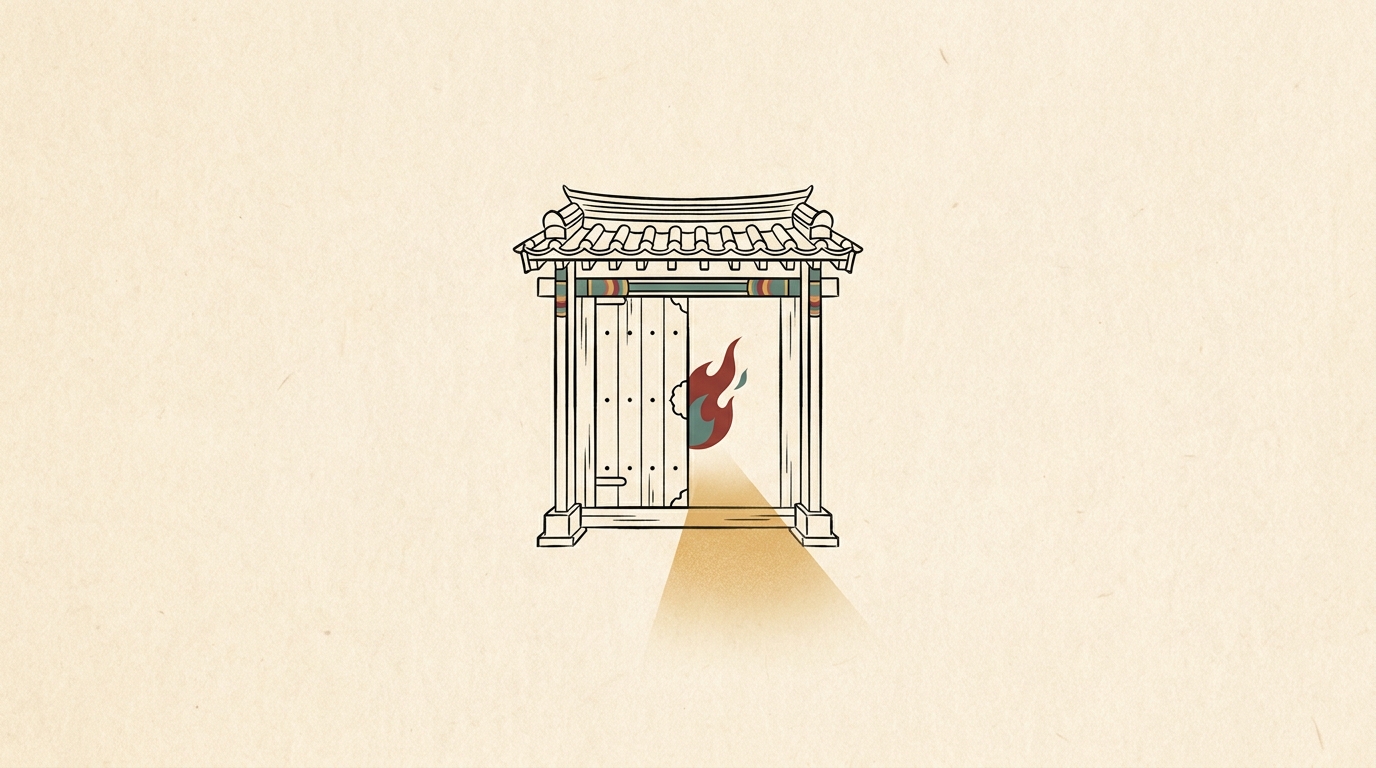
You've watched enough K-dramas to recognize the shift. Two characters are speaking in careful, polite sentences — and then something changes. One of them drops the formal endings. The other follows. Suddenly they're talking like old friends, tossing out 야 (ya, "hey") like it costs nothing. It sounds effortless. It sounds real.
So you try it with an actual Korean person.
Nobody corrects you. Nobody explains what went wrong. But the warmth in the conversation dips, and you can't figure out why.
Here's the thing no drama subtitle ever tells you: 반말 (ban-mal, "informal speech — the language of close equals") is not a style you choose when you feel comfortable. It's a status that gets granted to you by the other person. You didn't make a grammar mistake. You made a relationship mistake — and in Korean social logic, those are much harder to walk back.
What 반말 Actually Is
The mechanics are simple enough. You take a polite verb ending and remove the -요 (-yo):
- 가요 (ga-yo) → 가 (ga, "I'm going")
- 먹어요 (meo-geo-yo) → 먹어 (meo-geo, "I'm eating")
- 좋아요 (jo-a-yo) → 좋아 (jo-a, "it's good / I like it")
- 했어요 (haess-eo-yo) → 했어 (haess-eo, "I did it")
But 반말 isn't just polite Korean with the -요 peeled off. It has its own endings that don't appear in formal speech at all. Suggestions take -자 (ja): 같이 가자 (ga-chi ga-ja, "let's go together"). Casual justifications use -거든 (geo-deun): 나 바빠거든 (na ba-ppa-geo-deun, "the thing is, I'm busy"). And the identification form shifts from -이에요/예요 to -이야/야: 나 학생이야 (na hak-saeng-i-ya, "I'm a student").
So 반말 is a complete register — a grammatical world of its own. You can study its mechanics from day one. The right to enter that world, however, is not yours to claim.
The Aha Moment Textbooks Skip
Here is something most grammar books never say directly: 반말 does not create closeness. It confirms closeness that already exists.
This distinction matters more than any verb ending. In Korean social logic, switching to 반말 is not a way to signal that you want to be friends. It's a way to acknowledge that you already are. The relationship comes first. The speech level follows.
This is why using 반말 with someone who hasn't offered it doesn't read as friendly — it reads as presumptuous. You're announcing a level of intimacy that hasn't been established yet. The Korean person on the receiving end isn't offended by your grammar. They're unsettled by the social claim you've just made without asking.
Compare this to switching to first names in English. In most Western contexts, that shift is low-stakes — a small gesture toward informality. 반말 carries a completely different weight. It's closer to saying I consider you family than I consider you a friend. The gap between those two things is significant.
말 트기: The Ritual That Makes It Real

Korean even has a dedicated phrase for the moment when two people agree to drop formality: 말 트기 (mal teu-gi, "the social ritual of mutually agreeing to use informal speech"). Literally: opening up speech.
It sounds like this:
- 야, 우리 말 놔도 돼? (Ya, u-ri mal nwa-do dwae?, "Hey, can we just talk casually?")
- 말 편하게 해도 돼요? (Mal pyeon-ha-ge hae-do dwae-yo?, "Is it okay if I speak comfortably with you?")
And the response: - 응, 그래 (Eung, geu-rae, "Yeah, of course") or 편하게 해 (Pyeon-ha-ge hae, "Speak comfortably")
This exchange is not small talk. It is a milestone — the official moment a relationship moves to its next stage. Koreans don't do 말 트기 casually or automatically. They do it when they've decided something about you.
For learners, the rule is simple: you wait. You don't propose 말 트기 first. You don't inch toward 반말 and see if anyone notices. You stay in polite speech until a Korean person opens that door — and when they do, you recognize it for what it is.
A Korean person offering you 말 트기 is not adjusting their communication style for convenience. They are bringing you inside their social circle. That is a considered act, not a casual one.
Why K-Dramas Mislead You (and Why That's Not Entirely Their Fault)
Drama writers understand something about 반말 that's actually linguistically true: it sounds more emotionally immediate. When a character drops formal endings mid-scene, the intimacy spikes. Viewers feel it viscerally. It's one of the most efficient emotional tools in the Korean screenwriter's toolkit.
The problem is that dramas routinely skip 말 트기 entirely, or compress months of relationship development into a single charged moment. Characters who met twenty minutes ago are suddenly speaking like childhood friends. That's not realism — that's narrative compression. The 반말 is doing the work of a three-episode arc in one line of dialogue.
In reality, even 동갑 (dong-gap, "same Korean age — the condition under which mutual 반말 becomes possible") friends who just met will open with polite 해요체 (hae-yo-che, the standard -요 form) and gradually feel their way toward 말 트기. Being the same age makes 반말 possible — it doesn't make it automatic. You still have to ask. Skipping that step, even between same-age peers, is still a social shortcut that registers as slightly off.
The drama version of 반말 is like movie car chases — thrilling to watch, not a driving tutorial.
The Word That Causes the Most Damage
Of all the 반말 expressions that saturate K-dramas, 야 (ya, "hey — a casual attention-getter used between close friends") is the one that gets learners into the most trouble, precisely because it sounds so simple.
야 is everywhere in dramas. Characters fling it at each other constantly. It sounds energetic, affectionate, alive. So learners pick it up — and then say it to a Korean person they've just met, or to someone older than them, and the reaction is immediate and uncomfortable.
Here's the nuance that matters: 야 is not a neutral greeting. It is only appropriate inside an established, equal, close relationship. Saying 야! to a stranger signals that you've assumed a familiarity that doesn't exist. Saying it to someone older is a genuine show of disrespect — the kind that makes people go quiet in a way that isn't friendly.
The reason it feels natural from dramas is that you're watching relationships that are already intimate, or that the drama is pretending are already intimate for narrative effect. 야 is not the problem. Assuming you're already in the relationship that makes 야 appropriate — that's the problem.
A Clear Map for When 반말 Is Yours to Use
반말 is appropriate when: - You and the other person are 동갑 and have gone through 말 트기 - You're speaking to someone clearly younger — a younger sibling, a child - You're writing in a diary, talking to yourself, or voicing an internal monologue - A Korean person has explicitly invited you to speak casually
반말 is not appropriate when: - You've just met someone — regardless of age, regardless of how well the conversation is going - The other person is older than you in Korean age - You're in any professional or service context - A Korean person has not proposed 말 트기 first
That last point is the one most learners underestimate. Even if you're technically the older person in the interaction, as a foreign learner your safest default is always 해요체 until you receive a clear invitation. The social cost of using 반말 too early is far higher than the cost of being "overly polite." Politeness reads as respectful. Presumed intimacy reads as intrusive.
Something You Can Do in the Next Five Minutes
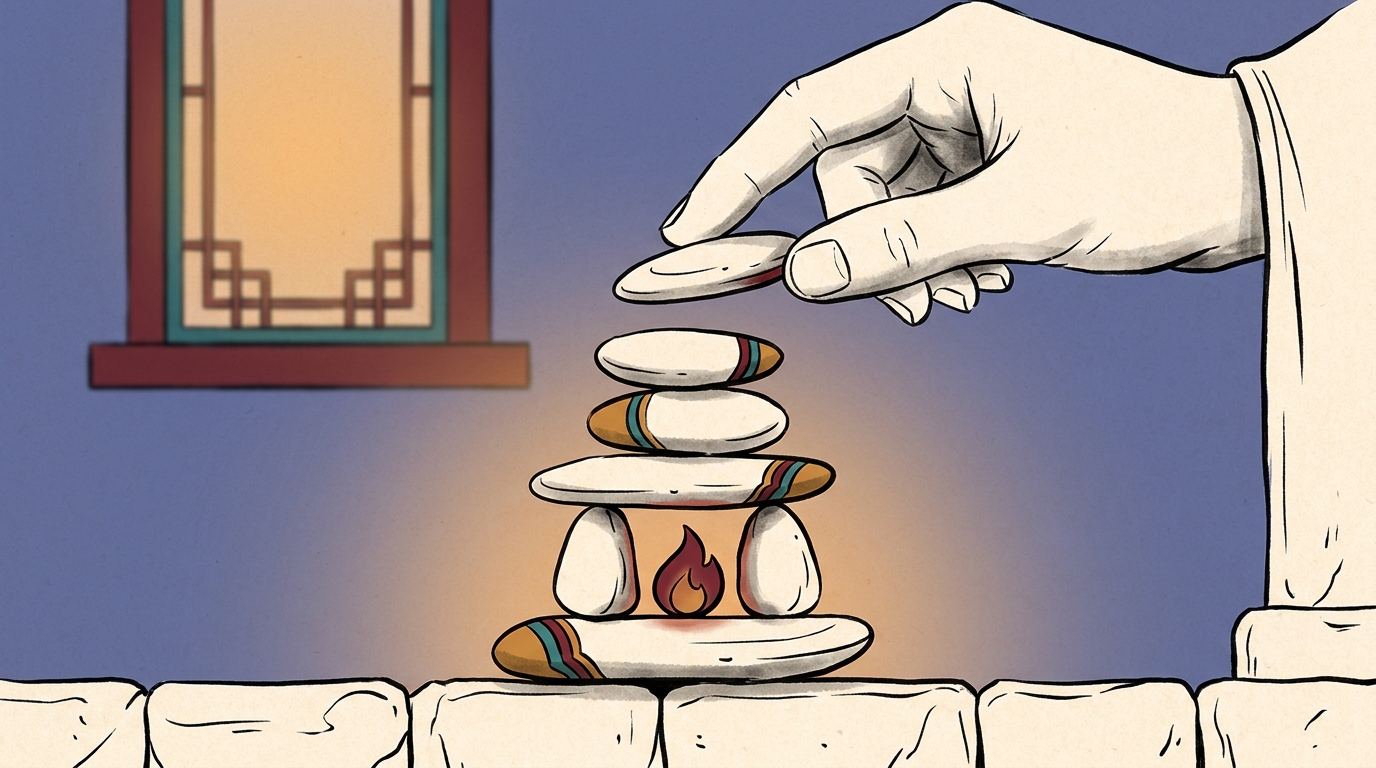
Open a K-drama episode you've already seen — one where the main characters are clearly close. Pick any 반말 exchange and ask yourself three questions:
1. Did these characters ever do 말 트기 on screen, or did the drama skip it? Most dramas skip it. Notice when that happens.
2. What is the age and relationship dynamic? Are they 동갑? Is one clearly older? How does that map onto who initiated 반말 first?
3. Is this a moment of emotional intensity? Dramas often use 반말 specifically in high-emotion scenes to signal a relationship breakthrough. If the characters just confessed something or survived something together, the 반말 may be doing narrative work, not modeling normal behavior.
Do this with three scenes. By the third one, you'll start hearing 반말 differently — not as "casual Korean" but as a relationship signal with a specific social meaning attached to it. That shift in perception is more valuable than memorizing fifty 반말 verb forms.
The real fluency goal with 반말 isn't learning to use it. It's learning to recognize when you've been trusted with it.
When a Korean person says 말 편하게 해 (mal pyeon-ha-ge hae, "speak comfortably with me"), they're not simplifying things for your benefit. They're handing you something that means something to them. Knowing how to receive that — without having grabbed for it first — is one of the quieter, more meaningful things you can learn in this language.
🔊 Pronunciation Guide
Native-speed audio for the Korean in this article. Listen, then shadow out loud.
The exact phrases Koreans actually use every day — with the nuance notes that keep you from sounding like a textbook. Delivered as a beautiful PDF, free.
Send Me the Free PDFNo spam. Unsubscribe anytime.