눈치 (Noonchi): Why Your Korean Is Good but Your Conversations Still Feel Off
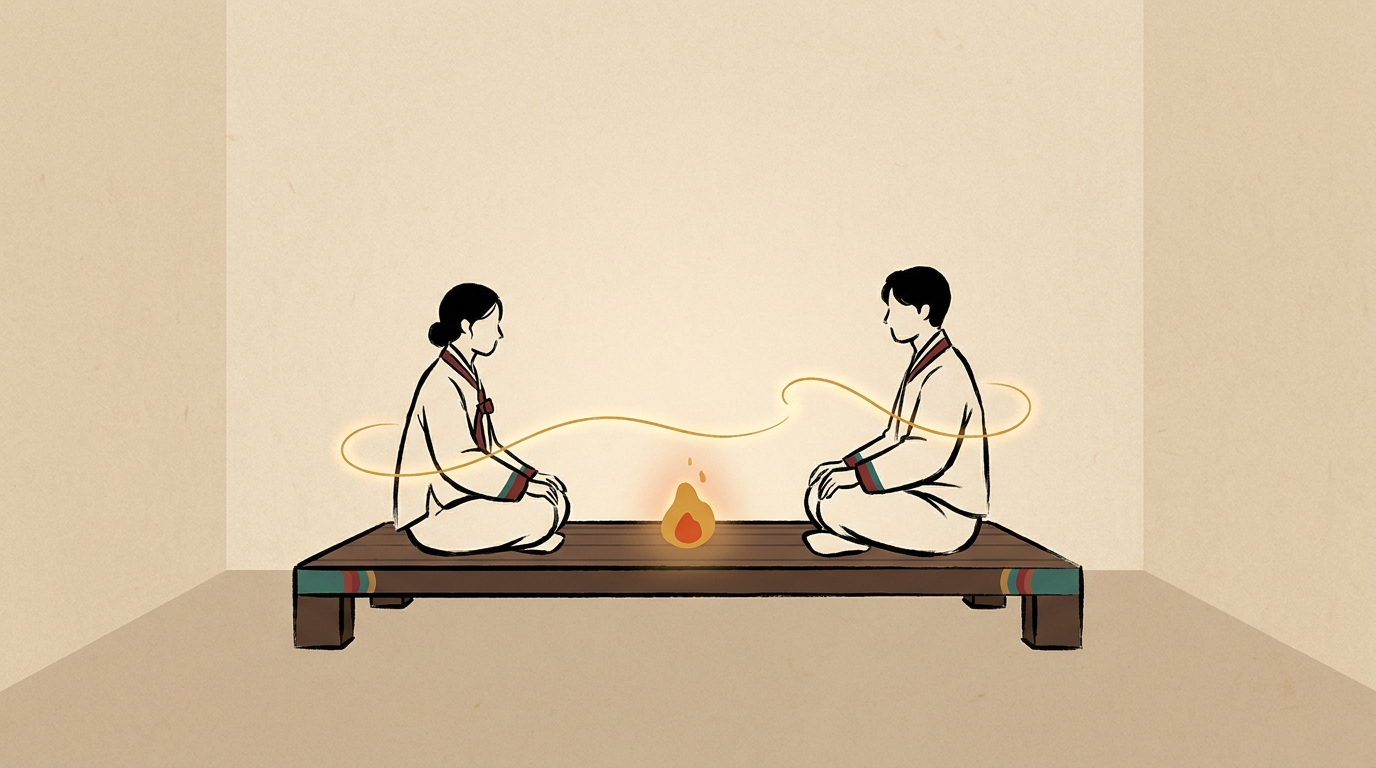
You passed TOPIK. Your grammar is solid. You can order food, argue a point, even crack a joke in Korean. And yet — something keeps feeling off. A silence you couldn't read. An invitation that confused you. A moment where the room shifted and everyone else moved with it, and you just... stood there.
Here's what's actually happening: you've been learning the words, but not the operating system underneath them.
That operating system has a name: 눈치 (nun-chi, "the measure of one's eyes — social reading intelligence"). And until you understand it, there will always be a ceiling on how connected you feel in Korean conversations — no matter how many grammar points you master.
- • The Literal Clue Hidden in the Word
- • The Proverb That Explains the Whole System
- • The Part No Textbook Covers: 눈치 Is a Language Inside the Language
- • Indirect Rejection Sounds Like Hesitation (It Isn't)
- • The Three-Refusal Rule (This One Will Save You Embarrassment)
- • Silence Is a Full Sentence
- • The Social Vocabulary of 눈치
- • What It Feels Like When 눈치 Fails
- • Try This in Your Next Korean Conversation
- • The Real Finish Line
The Literal Clue Hidden in the Word
Break 눈치 apart: 눈 (nun) means "eye," and 치 (chi) is an old unit of measure. So 눈치 is literally the measure of your eyes — how precisely you can observe and gauge a situation without anyone spelling it out for you.
The closest English translation is "reading the room," but that comparison undersells it the same way calling a scalpel "a sharp knife" undersells it. Reading the room is something you do occasionally, at a party, when things get awkward. 눈치 is something Koreans are doing constantly, in every social interaction, as a baseline expectation — not a special skill.
The cultural root goes deep. Under Confucian hierarchy, those in lower positions were expected to anticipate what their superiors wanted before being asked. Waiting to be told was a mark of incompetence. That instinct got woven into everyday social life over centuries, and it shows up in how Korean people communicate right now, today — in your group chat, at dinner, in the office.
The Proverb That Explains the Whole System
There's a Korean saying that cuts to the heart of this:
말 안 해도 알아야지 (mal an hae-do al-a-ya-ji, "You should know even without being told.")
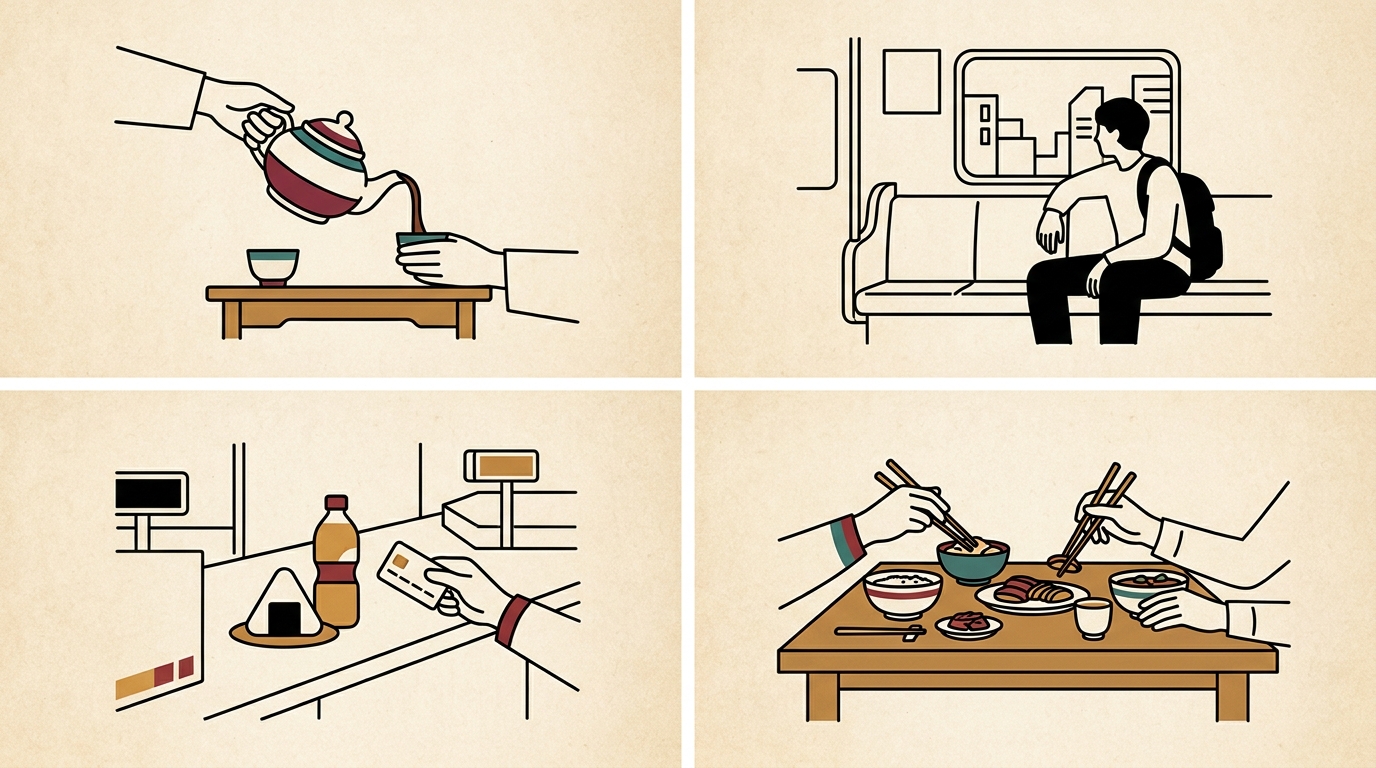
Read that again. You should know even without being told. This isn't a piece of folk wisdom. It's a social contract. Korean communication is built on the assumption that a perceptive person won't need everything stated explicitly — and that if you do need it stated, something is already a little wrong.
This is where 화합 (hwa-hap, "collective harmony — the social value that makes indirect communication necessary") comes in. Korean social culture prioritizes the harmony of the group over the directness of the individual. When you say exactly what you think, at full volume, the moment you think it, you might be linguistically correct — but you're socially disruptive. 눈치 is the tool people use to protect 화합: to navigate desires, disagreements, and discomfort without cracking the surface of the group. The two concepts are inseparable. You can't understand why Koreans communicate indirectly without understanding that 화합 is what they're protecting when they do it.
The Part No Textbook Covers: 눈치 Is a Language Inside the Language
Here is the genuine aha moment most learners never reach: Korean has a whole layer of communication that operates parallel to the words being spoken. And 눈치 is the skill of reading that layer.
When you're learning Korean, you're trained to decode the words. But native speakers are simultaneously decoding the situation — the pause, the hedge, the vague trailing sentence, the subject change that wasn't random. These signals carry meaning just as real as any word. Miss them, and you're only getting half the conversation.
Indirect Rejection Sounds Like Hesitation (It Isn't)
In Korean, a direct "no" is rare in social situations. When a Korean friend says:
- 그게 좀... (geu-ge jom..., "That's a bit...")
- 어... 그날은 좀... (eo... geu-nal-eun jom..., "Hmm... that day is a bit...")
- 생각해볼게요 (saeng-gak-hae-bol-ge-yo, "I'll think about it")
...they are almost certainly saying no. A grammatically trained learner hears these as uncertainty and keeps pushing. That's the exact moment 눈치가 없다 (nun-chi-ga eop-da, "having no nunchi — being socially oblivious") becomes a real problem. The person with 눈치 hears "그게 좀..." and stops. No further words needed. The message was received through the gap, not through the words.
The Three-Refusal Rule (This One Will Save You Embarrassment)
Here's something that baffles foreign learners constantly: why do Koreans keep offering things — food, help, invitations — after you've already declined?
Because the first refusal is often polite. So is the second. Only by the third does the message become unambiguous. This isn't pressure. It's a system where both sides understand the code. If a host stops offering after your first "no," it can actually feel cold — like they accepted your politeness at face value and didn't care enough to check again.
Flip it around: when you decline something once in Korea, don't be surprised if it's offered again. That's not someone ignoring you. That's someone with 눈치 doing their job — checking whether your "no" was social or real.
Silence Is a Full Sentence
In Korean conversation, a pause isn't empty. A subject change isn't random. A drawn-out 음... (eum..., "hmm...") is a paragraph of meaning if you know how to read it.
눈치채다 (nun-chi-chae-da, "to sense or perceive through nunchi — to pick up on unspoken signals") is the verb for exactly this skill. A native speaker might ask you 눈치챘어? (nun-chi-chaess-eo?, "Did you pick up on it?") — and the fact that this question exists tells you everything. There was something to catch. The expectation was that you'd sense it without being told. When someone asks you this with a slight smile, it's not a quiz — it's an invitation into the inner layer of the conversation.
The Social Vocabulary of 눈치
These aren't just vocabulary words. Together, they map how Koreans think about social perception as a spectrum.
| Korean | Romanization | What It Really Means |
|---|---|---|
| 눈치가 빠르다 | nun-chi-ga bba-reu-da | Quick nunchi — reads situations fast; a genuine compliment |
| 눈치가 없다 | nun-chi-ga eop-da | No nunchi — socially oblivious; not a light criticism |
| 눈치를 보다 | nun-chi-reul bo-da | To gauge the room — watching carefully before committing |
| 눈치껏 하다 | nun-chi-kkeot ha-da | Figure it out yourself — act on what you sense, no instructions needed |
| 분위기 파악 | bun-wi-gi pa-ak | Reading the atmosphere — the overall mood read |
| 눈치채다 | nun-chi-chae-da | To perceive through nunchi — catch an unspoken signal |
One entry here deserves a closer look. If a Korean manager tells you 눈치껏 해 (nun-chi-kkeot hae, "just figure it out based on the situation"), resist the urge to feel dismissed. They are paying you a compliment. They believe you are capable of reading the situation and acting correctly without needing it spelled out. Being trusted with 눈치껏 하다 means you've already demonstrated something — that you're paying attention at the right level.
What It Feels Like When 눈치 Fails
When someone consistently misses social cues in Korea, the people around them feel 답답하다 (dap-dap-ha-da, "a suffocating frustration — the specific feeling of being stuck behind someone who just doesn't get it").
답답하다 is one of the most emotionally loaded words in Korean. It's not quite anger, not quite exasperation — it's the particular suffocation of watching someone be completely oblivious to what everyone else in the room already understands. Like being stuck behind a driver who doesn't notice they've caused a traffic jam and shows no sign of ever noticing.
Here's the part that makes this genuinely uncomfortable for learners: when you lack 눈치, the people around you feel 답답하다 — and they may not tell you. Because telling you directly would itself be a 눈치 problem. The frustration stays internal, the conversation stays polite, and you walk away thinking everything was fine.
Try This in Your Next Korean Conversation
Most advice about 눈치 stops at "pay attention." That's not enough. Here's something more specific.
In your next Korean conversation, listen at two levels simultaneously.
Level 1 — What was said. The actual words. You're already doing this.
Level 2 — What wasn't said. The pause before the answer. The vague 뭐, 뭐 그렇죠 (mwo, mwo geu-reo-kke-yo, "well, it's kind of like that") that deflects your direct question. The 있잖아... (it-ja-na..., "you know...") that trails off expecting you to already sense the rest. The sudden topic change that lands right after you asked something direct.
Every time you catch a Level 2 signal, don't respond to it out loud — just register it. Ask yourself quietly: what is this person not saying, and why? You don't need to act on it perfectly yet. The goal right now is to build the habit of noticing.
One concrete test: the next time you share a meal with Korean friends, try to notice when something needs doing — a glass that needs refilling, a dish that needs passing, a quiet that signals someone wants to leave — before anyone says it. Then act on it. Watch the response.
That quiet nod, that small relaxation in someone's expression? That's 눈치가 빠르다 in real time. You earned it.
The Real Finish Line
Here's something worth sitting with: a foreigner who demonstrates 눈치 doesn't just avoid awkwardness. They earn something rarer than grammatical praise.
Koreans will say, with genuine admiration: 한국인보다 더 한국적이다 — "More Korean than a Korean." That's not a polite thing people say to be nice. That's the real finish line of language learning — not perfect pronunciation, not flawless grammar, but the ability to understand what was never put into words at all.
Your Korean is already taking you somewhere. 눈치 is what gets you the rest of the way there.
🔊 Pronunciation Guide
Native-speed audio for the Korean in this article. Listen, then shadow out loud.
The exact phrases Koreans actually use every day — with the nuance notes that keep you from sounding like a textbook. Delivered as a beautiful PDF, free.
Send Me the Free PDFNo spam. Unsubscribe anytime.