Your Textbook Taught You 을/를 Wrong — Here's What Native Speakers Actually Do
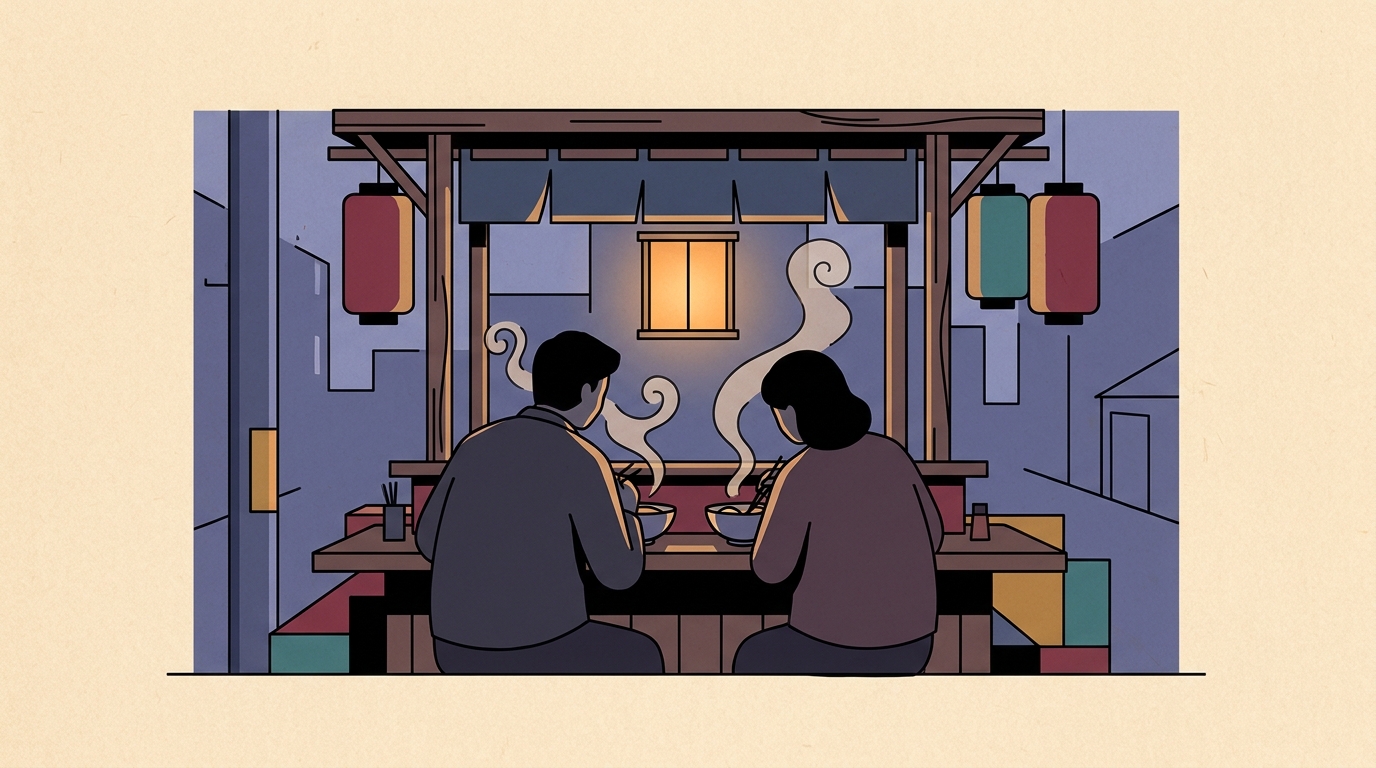
You're watching a K-drama. Two friends are talking over ramen, and one says:
"어제 뭐 했어?" (eo-je mwo hae-sseo, "What did you do yesterday?") "그냥 영화 봤어." (geu-nyang yeong-hwa bwa-sseo, "Just watched a movie.")
You rewind. No 를. You rewind again. Still no 를. Your textbook was very clear: the object gets marked with 을/를, every time, no exceptions. So either the drama is wrong, or your textbook is wrong, or you're missing something.
You're missing something. And it's not a small thing — it's the difference between sounding like a learner and sounding like someone who actually speaks Korean.
What 을/를 Actually Does
Before we talk about dropping it, let's be precise about why it exists.
을/를 marks the 목적어 (mok-jeok-eo, "object") — the noun that receives the action of the verb. In 사과를 먹어요 (sa-gwa-reul meo-geo-yo, "I eat an apple"), the particle 를 tells you that 사과 (sa-gwa, "apple") is what's being eaten, not who's doing the eating.
English handles this with word order. "I eat apples" and "Apples eat me" mean completely different things because of where the nouns sit. Korean word order is far more flexible — the subject and object can swap positions without the sentence falling apart — so particles carry that grammatical weight instead.
Here's the part your textbook quietly skipped: 을/를 is the official marker, but context is the backup system. In spoken Korean, the backup system runs the show.
The Real Reason Koreans Drop It (It's Not Laziness)
This is where most explanations stop at "it's just casual speech" and leave you no better off than before. That's not good enough. The actual mechanism is 생략 (saeng-ryak, "omission") — and it's not random at all.
생략 (saeng-ryak, "omission") is the deliberate dropping of grammatical elements that context already makes clear. The key word is deliberate. Korean is extraordinarily efficient: if the listener can reconstruct the meaning without a particle, carrying that particle into the sentence is extra weight with no payoff. Dropping it isn't careless — it's the language doing its job well.
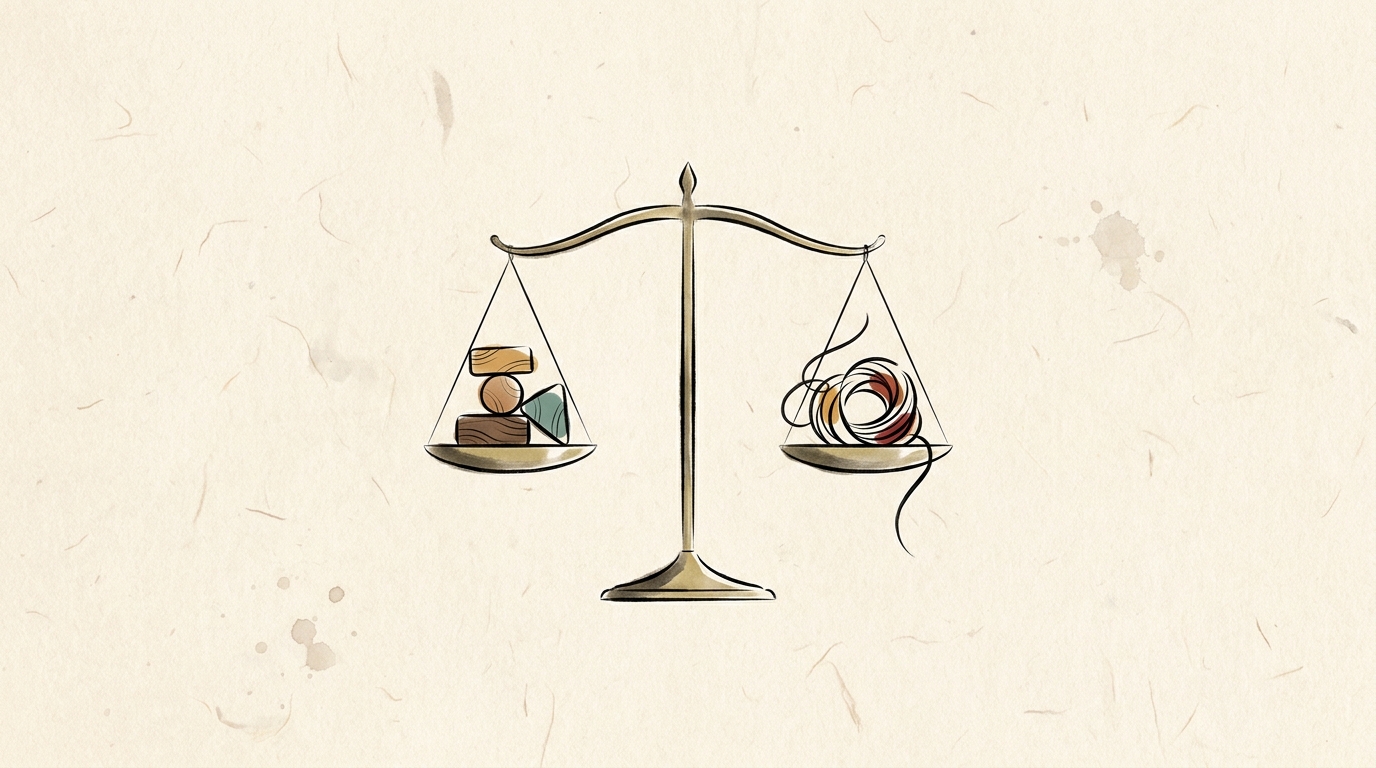
But here's what no textbook diagram shows you: three separate factors decide whether 을/를 appears or disappears in any given moment. Register, clarity, and rhythm. Miss any one of them and you'll still be guessing.
Register — 격식도 (gyeok-sik-do): How formal is the situation? Written documents, news broadcasts, job interviews, and formal presentations belong to a high-register world where 을/를 is expected and its absence reads as an error. Casual conversation with friends, quick texts, and spontaneous banter belong to 구어체 (gu-eo-che, "colloquial/spoken language") — the register where omission is the default, not the exception. Native speakers switch between these registers constantly and automatically. Most learners are stuck in one.
Clarity — 명확성 (myeong-hwak-seong): If dropping 을/를 would genuinely confuse the listener — if the object could be mistaken for the subject — the particle stays. It's doing real structural work in that case. But in most everyday sentences, the verb makes the object obvious. 밥 먹었어 (bap meo-geo-sseo, "ate rice") — nobody thinks 밥 is doing the eating.
Rhythm — 리듬 (ri-deum): This one surprises learners. Korean has a natural spoken cadence, and stacking every grammatical particle into casual speech makes it sound clipped and effortful. Dropping 을/를 often makes a sentence breathe better. This is why even highly educated native speakers omit it constantly in conversation — not because they've forgotten the rule, but because the rhythm of the sentence asks for it.
Three levers. Once you see all three, the pattern stops feeling random.
The Subtle Difference That Remains
Here's the nuance that even intermediate learners often miss: dropping 을/를 doesn't just make a sentence more casual. It subtly shifts where the emphasis lands.
영화를 봤어요. (yeong-hwa-reul bwa-sseo-yo, "I watched a movie.") — the particle pulls attention toward 영화. The object is being foregrounded.
영화 봤어요. (yeong-hwa bwa-sseo-yo, "Watched a movie.") — the whole event is what you're reporting. No single element is spotlighted.
Both are grammatically correct. But the first version carries a faint sense of deliberateness — as if you're specifically saying a movie was what you watched, not something else. The second is just... telling someone what happened. In real conversation, that distinction matters. When a character in a drama uses 을/를 in an otherwise casual scene, a native speaker's ear notices. Something is being emphasized. The writers put that particle there on purpose.
When You Must Keep 을/를
There are situations where omitting the particle is genuinely a mistake, not a style choice.
Ambiguous sentences. If your sentence structure is complex enough that the object could be read as the subject, 을/를 is load-bearing. Don't cut it. This is the entire reason the particle exists.
Certain verbs. Some verbs resist omission even in casual speech. These include: 좋아하다 (jo-a-ha-da, "to like"), 싫어하다 (si-reo-ha-da, "to dislike"), 알다/모르다 (al-da/mo-reu-da, "to know/not know"), 원하다 (wo-na-ha-da, "to want"), and 사랑하다 (sa-rang-ha-da, "to love"). Drop 을/를 with these and something sounds slightly off — native speakers rarely do it. The reason isn't entirely systematic; it's just how these verbs settled into the language. Accept it and move on.
Writing. Essays, formal messages, reports — written Korean follows the full grammatical standard. Omitting 을/를 in writing is an error, not a register choice. The medium itself sets the register.
Formal speech. Presentations, interviews, official announcements — 을/를 stays. You're in 구어체 (gu-eo-che, "colloquial/spoken language")'s opposite territory.
A Bonus Pattern: 하다 Verbs and the Invisible 을/를
Many Korean nouns pair with 하다 (ha-da, "to do") to form verbs. In these cases, 을/를 can appear before 하다 or simply merge into the compound — and both are fully correct:
공부를 했어. (gong-bu-reul hae-sseo, "Did studying.") ↔ 공부했어. (gong-bu-hae-sseo, "Studied.")
운동을 해요. (un-dong-eul hae-yo, "I exercise.") ↔ 운동해요. (un-dong-hae-yo, "I exercise.")
Same meaning, every time. The version with 을/를 feels slightly more deliberate; the merged version is more fluid. In everyday speech, the merged form dominates. Both are grammatically solid, so use whichever fits the moment.
And one more pattern worth knowing: when a secondary particle like 도 (do, "also") or 만 (man, "only") enters the sentence, it replaces 을/를 entirely — not drops it, but substitutes it, carrying both the object function and the added meaning at once:
밥도 먹었어. (bap-do meo-geo-sseo, "I ate rice too.") — 도 replaces 를
공부만 해요. (gong-bu-man hae-yo, "I only study.") — 만 replaces 를
This is 생략 (saeng-ryak, "omission") working at its most compressed: one particle does two jobs, and the sentence gets lighter without losing anything.

Do This Right Now: The Five-Sentence Swap
Take five sentences from your textbook — the kind with 을/를 sitting neatly in place. For each one, do this:
Step one: Say it out loud as written. Notice how it sounds.
Step two: Drop 을/를 and say it again. Does the meaning survive? (In most cases, yes, immediately.) Notice how it feels in your mouth — lighter, faster, less deliberate.
Step three: Check two things. Does the sentence use a "keep-it" verb like 좋아하다 or 알다? Is there any real ambiguity about what's the subject and what's the object? If yes to either, put 을/를 back. That's the system working correctly, not an exception to it.
Try it with 한국어를 공부해요 (han-gug-eo-reul gong-bu-hae-yo, "I study Korean"). In casual conversation, 한국어 공부해요 (han-gug-eo gong-bu-hae-yo) is completely natural. But if someone just asked "What language do you teach, and what do you study?" in the same exchange, you'd want that 를 back — the context is no longer doing the work for you.
Then take that same awareness into your next drama episode. Watch for the moments when characters switch registers — when the banter stops and something serious happens, when someone addresses a superior, when a scene turns formal. Listen for 을/를 snapping back into place. The writers are using it as a register signal, and now you'll hear it.
The gap between textbook Korean and real Korean isn't chaos — it's a system with three levers: register, clarity, rhythm. Once you feel those levers, you'll know when to drop 을/를 and when to hold it. You'll stop sounding like a textbook without making errors. And you'll start hearing things in Korean you simply couldn't hear before, because you now know what to listen for.
That's not a small step. That's how the language actually opens up.
🔊 Pronunciation Guide
Native-speed audio for the Korean in this article. Listen, then shadow out loud.
The exact phrases Koreans actually use every day — with the nuance notes that keep you from sounding like a textbook. Delivered as a beautiful PDF, free.
Send Me the Free PDFNo spam. Unsubscribe anytime.