Why Every Korean Asks Your Age First: It's Not Rude — It's a Language Setting
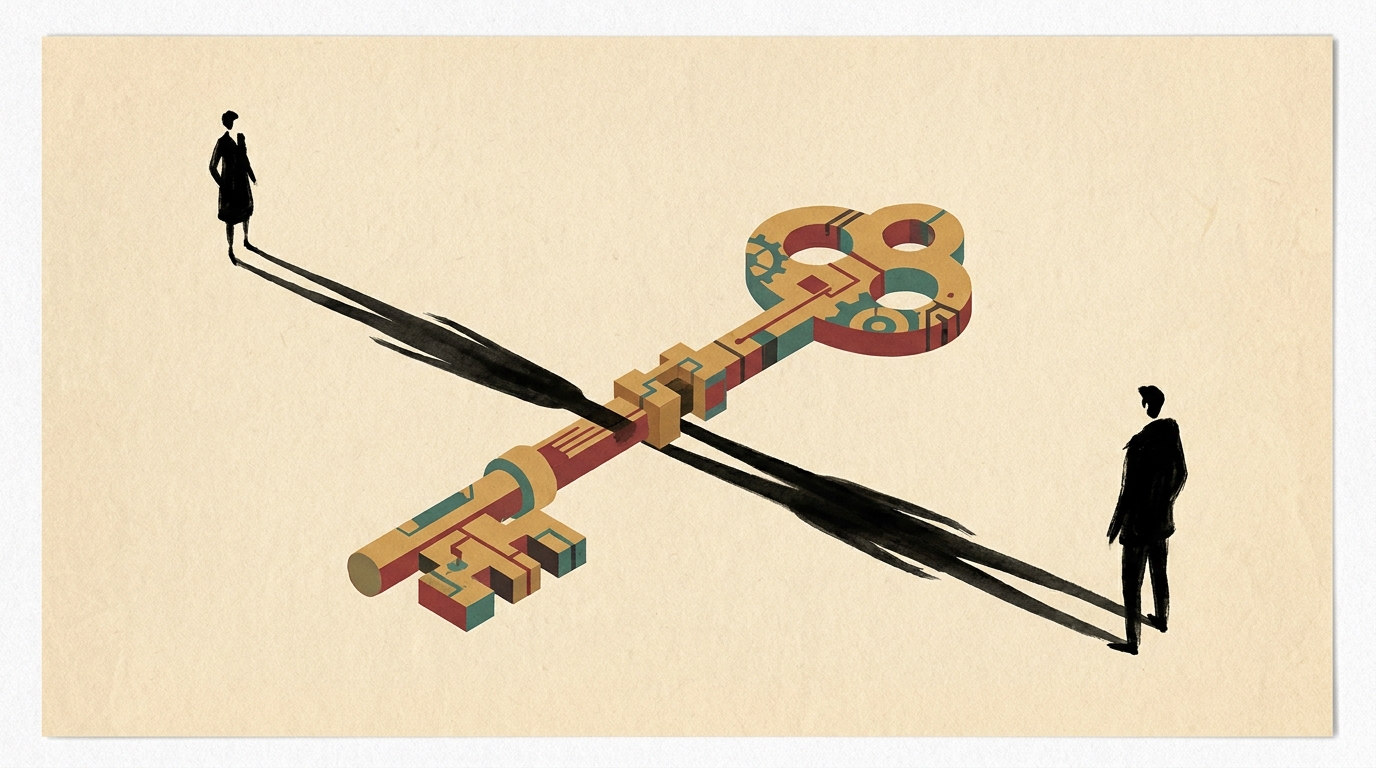
You're meeting a Korean person for the first time. Things are going well. Then they ask: "몇 살이에요?" (myeot sal-i-e-yo?, "How old are you?")
In most Western cultures, that question from a stranger lands somewhere between awkward and rude. You smile, deflect, maybe give a vague answer. They look confused by your hesitation. And just like that, the conversation has a crack in it before it's even started.
Here's what nobody tells you: that question wasn't nosiness. It was a technical requirement — and without your answer, your new Korean acquaintance genuinely doesn't know which language to speak to you.
Age Is a Language Setting, Not Small Talk
Korean has multiple speech levels — formal, polite, casual — and choosing the wrong one sends a social signal you didn't intend. Speak too casually to someone older and you come across as disrespectful. Speak too formally to a peer and you create awkward, unnecessary distance.
The catch: you cannot choose the correct speech level without knowing the other person's age. This is why Koreans ask. Age isn't personal curiosity dressed up as small talk. It's the missing input the language needs before it can run properly.
Think of it like a device prompting you to select a region before it can set the time zone. The question is functional, not invasive.
This is the thing most textbooks skip entirely — they teach you the speech levels but never explain why Koreans are so motivated to establish age within the first two minutes of meeting someone. The answer isn't culture for culture's sake. It's grammar.
Wait — Which Age? Korea Actually Has Three Systems
Here's where most learners get genuinely lost, because Korea uses — or has used — three different ways to count age, and they don't always give you the same number.
1. 세는나이 / 한국 나이 (se-neun na-i / han-guk na-i, "counting age / Korean age")
This is the traditional system. You are 1 year old the moment you are born, and you gain another year every January 1st — regardless of when your birthday falls. A baby born on December 31st is 1 year old that day and 2 years old the very next morning.
Yes, really.
Your 세는나이 can run 1 or even 2 years higher than what your passport says. It's the age Koreans reach for instinctively in everyday social life: introductions, figuring out who's older, deciding how to speak to each other.
2. 만 나이 (man na-i, "full age / international age")
This is the system you already know. You count from your birthday and only add a year once that birthday has passed. The word 만 (man) means "full" or "complete" — as in, you've fully lived through that year. To use it in a sentence, a Korean would say something like 만 스물다섯 살이에요 (man seu-mul-da-seot sal-i-e-yo, "I am a full 25 years old") — the prefix 만 signals they're using the international standard, not the traditional count.
As of June 28, 2023, 만 나이 became the official legal standard in South Korea. Medical records, contracts, and official paperwork now use this system. But changing a law doesn't change a culture overnight. In everyday conversation, most Koreans still instinctively reach for Korean age — and the social rules around speech levels and titles are still built on it.
3. 연나이 (yeon na-i, "year age")
Simple arithmetic: current year minus birth year. Born in 2000? Your 연나이 in 2024 is 24. It appears in a few administrative contexts like school enrollment, but you'll almost never hear it in casual conversation. File it away and don't lose sleep over it.
The practical takeaway: when you meet someone in daily life, assume Korean age is still the operating system. When you're filling out a form or talking to a doctor, 만 나이 is what they want.
The Chart Nobody Puts in Textbooks

Once you see why age matters, the social rules stop feeling arbitrary. Here's how age difference maps directly to speech:
| Age relationship (Korean age) | Speech level | Example |
|---|---|---|
| They're 2+ years older | Formal polite (존댓말) required | 어디서 오셨어요? (eo-di-seo o-syeoss-eo-yo?, "Where are you from?") |
| 동갑 — same age | Polite → casual after mutual agreement | 야, 우리 말 트자? (ya, u-ri mal teu-ja?, "Hey, shall we drop the formalities?") |
| They're younger | Casual speech is possible | 어, 그래. 잘 지내? (eo, geu-rae. jal ji-nae?, "Yeah. How've you been?") |
That middle row contains one of the most important social phrases in Korean: 야, 우리 말 트자? It's an invitation to perform 말 트기 (mal-teu-gi) — the mutual agreement to switch from polite speech to casual speech. Think of it as a small ceremony that marks the start of a real friendship. It only happens between people who are 동갑 (dong-gap, "the same Korean age"), or when an older person explicitly offers the switch.
동갑이에요? (dong-gap-i-e-yo?, "Are we the same age?") is often the follow-up question right after ages are exchanged, because discovering you're the same age opens a social door that any age difference keeps closed. This is why Koreans get animated when they find out they're 동갑 with someone they just met — it's not just a fun coincidence. It's permission.
The Titles That Replace Names
Korean age doesn't just change how you speak — it changes what you call people. Once someone is older than you, their name often gets quietly replaced by a relational title:
- 형 (hyung) — younger male → older male
- 오빠 (oppa) — younger female → older male
- 언니 (unni) — younger female → older female
- 누나 (nuna) — younger male → older female
Even a single year's difference is enough. If your Korean friend Minjun is one year older than you and you're female, calling him 오빠 (oppa) instead of 민준 씨 (Min-jun ssi, a polite name-plus-title) isn't just acceptable — it's warmer, more natural, and signals that you understand how the relationship actually works.
This surprises most Western learners, who reserve sibling terms for actual siblings. In Korea, these titles are the basic vocabulary of friendship across age lines. They're not metaphorical. They describe the structure of the relationship.
Two More Words You'll Need: 연하 and 연상
These come up constantly once you're having real conversations — and especially in K-dramas.
연하 (yeon-ha, "younger") refers to someone who is younger than you. 연상 (yeon-sang, "older") refers to someone who is older. You'll hear them paired with relationship words all the time: 연상 남자친구 (yeon-sang nam-ja-chin-gu, "an older boyfriend") or 연하 여자친구 (yeon-ha yeo-ja-chin-gu, "a younger girlfriend"). Knowing these two words lets you talk about age dynamics naturally, without always having to say "he's two years older than me" the long way around.
A Practical Script for the Next Five Minutes
The most useful thing you can do right now is learn how to answer the age question — and how to ask it back — without fumbling.
When someone asks your age:
Don't try to calculate your Korean age on the spot. Instead, give your birth year:
저는 OOO년생이에요. (jeo-neun OOO-nyeon-saeng-i-e-yo., "I was born in [year].")
For example: 저는 1997년생이에요. (jeo-neun cheon-gu-baek-gu-sip-chil-nyeon-saeng-i-e-yo., "I was born in 1997.")
Koreans will calculate your Korean age themselves instantly. You sidestep the math and avoid any confusion about which system you're using. This is genuinely what many Koreans do with each other too — birth year is clean and unambiguous.
To ask their age without sounding blunt:
실례지만, 몇 년생이세요? (sil-lye-ji-man, myeot nyeon-saeng-i-se-yo?, "Excuse me, what year were you born?")
Asking by birth year rather than direct age is slightly softer and gives the other person the same flexibility you're giving yourself.
To check if you're the same age:
혹시 동갑이에요? (hok-si dong-gap-i-e-yo?, "Are we perhaps the same age?")
혹시 (hok-si, "perhaps / by any chance") is one of the most useful softening words in Korean. It takes a direct question and makes it considerate — the difference between "Are we the same age?" and "Are we perhaps the same age?" is small in English but noticeably warmer in Korean.
One Honest Note About Discomfort
If being asked your age still feels uncomfortable, that's a real and valid cultural reflex — not a character flaw. But here's something worth knowing: declining to answer, or visibly reacting with discomfort, will genuinely puzzle most Koreans. They're not trying to judge you or place you in a hierarchy for sport. They're trying to figure out how to speak to you correctly.
The kindest thing you can do — for the conversation and for yourself — is answer simply and move on. Once both ages are on the table, the functional part is done and the actual relationship can begin.
Age in Korean isn't a number. It's the key that unlocks the whole operating system — who calls whom 오빠, who gets to propose 말 트기, whose 존댓말 is required and whose isn't. Once you see it that way, 몇 살이에요? (myeot sal-i-e-yo?, "How old are you?") stops feeling like an intrusion and starts feeling like what it actually is: an invitation to connect properly.
You now know something most textbooks never bother to explain. Use it.
🔊 Pronunciation Guide
Native-speed audio for the Korean in this article. Listen, then shadow out loud.
The exact phrases Koreans actually use every day — with the nuance notes that keep you from sounding like a textbook. Delivered as a beautiful PDF, free.
Send Me the Free PDFNo spam. Unsubscribe anytime.