사양하다 (Sa-yang-ha-da): Why Your Polite "No" at a Korean Table Is Just the Opening Move
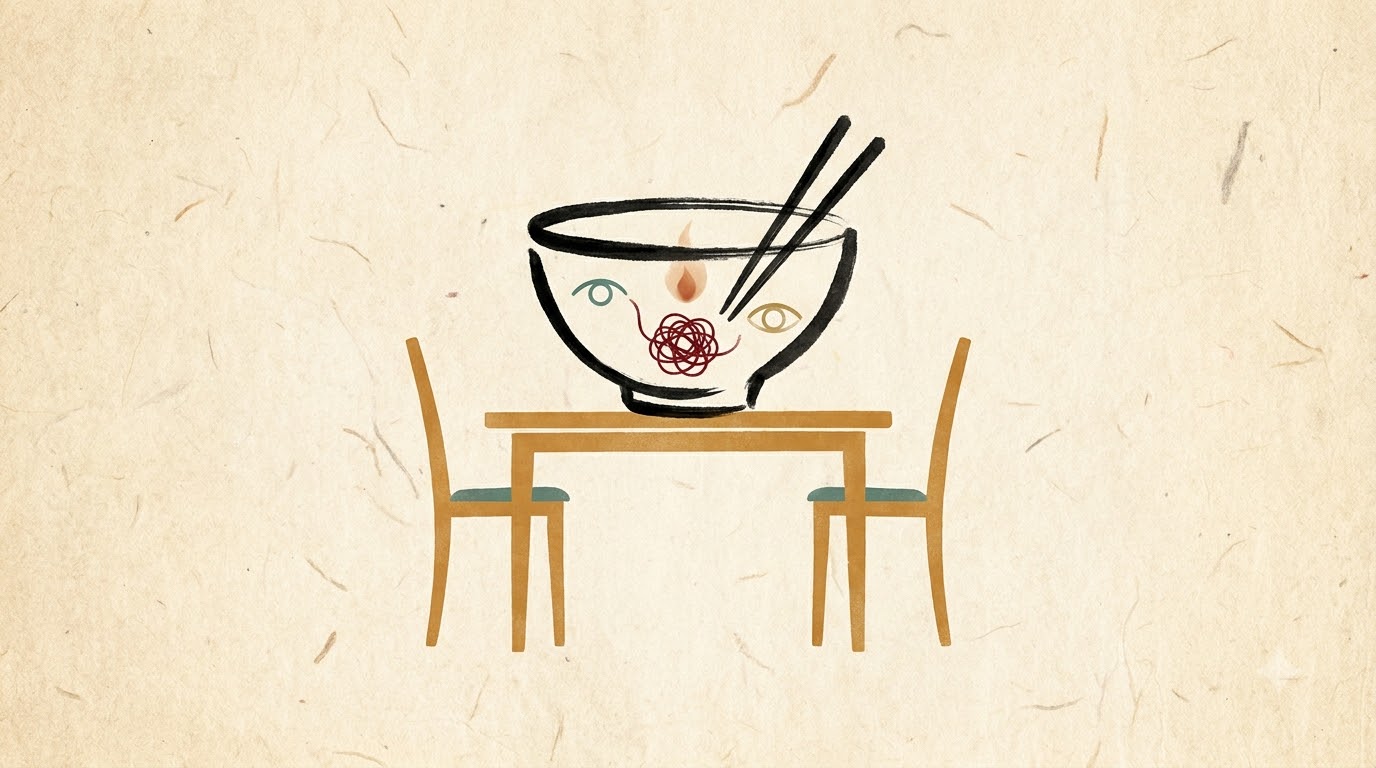
You said no. Clearly, warmly, with a smile. And then your Korean host put more food on your plate anyway.
Before you assume they ignored you — they didn't. They heard you perfectly. They just know something you don't: at a Korean table, the first refusal isn't the answer. It's the first line of a script both people are supposed to know. If you've ever walked away from a Korean meal either accidentally stuffed or genuinely hungry because you kept declining, this is the rhythm you were missing.
The "No" That Isn't Really a No
Here's the thing textbooks skip entirely: in Korean social life, 사양하다 (sa-yang-ha-da, "to decline politely out of consideration for the other person") is not the same as refusing. The nuance hiding inside 사양하다 is warmth — you're not saying I don't want this. You're performing a small act of care: I don't want to burden you. That distinction changes everything about how your refusal lands.
This behavior is held in place by 체면 (che-myeon, "social face — the invisible boundary of mutual dignity"). 체면 is often translated as "pride," but that undersells it. It's the shared, unspoken agreement between two people to protect each other's comfort and standing. When a host offers you food, they are extending their warmth outward. A clean, final Western-style "No, thank you" doesn't just decline the rice — it can arrive like a door closing before the host's gesture had a chance to complete itself. Their 체면 takes a small, quiet hit.
So Korean social etiquette solves this with architecture: a three-beat rhythm that lets both people keep their dignity intact.
The Three-Beat Rhythm (And Where Foreign Learners Fall Out of Step)
Beat One — The First Decline
When your host offers more food, the expected first move is a warm, modest refusal:
아닙니다, 정말 배부릅니다. (a-nim-ni-da, jeong-mal bae-bu-reum-ni-da, "No, I am truly full.")
That word "truly" is doing social labor. You're not just saying you're full — you're reassuring the host that the meal was so good, so generous, that you genuinely have no room left. This is 사양하다 in action: the refusal carries appreciation inside it. A Korean host who hears this does not think conversation over. They think one more try.
Beat Two — The Re-offer, and Why It's Not Pestering
A host who 권유하다 (gwon-yu-ha-da, "to recommend or urge warmly with hospitality") a second time is not ignoring your refusal. They are signaling that their first offer was sincere — not a polite formality, but a genuine investment of care. The second offer is the host's way of saying: I mean it.
This is exactly where 눈치 (noon-chi, "rapid situational radar — the ability to read the unspoken emotional current in real time") becomes your most important tool at the table. 눈치 is what tells you whether the host's second offer is heartfelt warmth or a reflexive social gesture. Watch the body language: a host who leans forward, reaches for the serving spoon, and holds eye contact is sending a completely different signal from one who mentions it once while already turning toward someone else. Without 눈치, you'll either eat food you don't want or refuse food you secretly crave — both outcomes avoidable if you're reading the room.
Beat Three — Graceful Acceptance
After the second offer, the socially fluent move is to yield — not eagerly, but warmly:
그럼 조금만 주십시오. (geureom jogumman jusipsio, "Then please give me just a little bit.")
"Just a little bit" is doing enormous work in four syllables. It accepts the host's kindness while demonstrating 염치 (yeom-chi, "a sense of propriety and acute awareness of unearned favors"). 염치 is the internal compass that tells you when you're receiving more than you've given. Someone who accepts food too readily — with zero hesitation — risks appearing 염치없다 (yeomchi-eopda, "shameless, without basic social propriety"). The small, hedged acceptance — just a little — keeps everyone's dignity exactly where it belongs.
The Aha Moment: Your Refusal Is a Gift to the Host
Here's the part that reframes everything: the first decline is not for your benefit. It's for theirs.
When you immediately and enthusiastically accept a host's offer, you've actually made their job harder. Now they wonder: Were they hungry the whole time and too polite to say so? Did I not offer enough earlier? The initial 사양하다 releases the host from that anxiety. It says: Your hospitality was enough. I'm declining out of gratitude, not need.
Think of it this way — the three-beat rhythm is a pressure valve. Beat One releases the host's obligation. Beat Two confirms their sincerity. Beat Three completes the exchange with both people's 체면 intact. Skip Beat One and go straight to acceptance, and the valve never gets to release. The whole social mechanism jams slightly.
This is why your polite "No" keeps getting followed by more food. The host isn't ignoring you. They're waiting for the rhythm to finish.
The Grammar of Softness
How you decline matters as much as the fact that you decline. Korean gives you real grammatical tools for this.
Compare:
- 안 먹습니다. (an meokseumnida, "I don't eat it.") — Correct Korean, socially blunt. It reads like a policy statement, not a conversation.
- 배불러서요. (bae-bul-leo-seo-yo, "It's because I'm full.") — The trailing -서요 implies the rest of the sentence without completing it. It's deliberately open-ended, leaving space for the host to respond rather than shutting the exchange down.
The trailing reason is the key move. Adding why you're declining signals that you're not rejecting the person — just the extra helping. It keeps the warmth in the room.
The same principle works at a drinking gathering:
술을 잘 못 해서요. (su-reul jal mot hae-seo-yo, "It's because I can't drink well.")
This phrase declines alcohol, communicates your limit, and does it all without turning the moment awkward. It's a social cushion — information delivered softly, with the conversation still breathing afterward.
What to Actually Do at Your Next Korean Meal
When food is offered and you genuinely don't want more: Say 아닙니다, 정말 배부릅니다 (a-nim-ni-da, jeong-mal bae-bu-reum-ni-da) with a smile, then watch. Does the host set down the spoon and move on? They've accepted it. Does their hand hover near the dish, or do they glance at your bowl again? They're preparing Beat Two.
When they offer a second time and you truly cannot eat: Hold your position, but keep the warmth: 정말 괜찮습니다, 감사합니다. (jeong-mal gwaenchanseumnida, gamsahamnida, "I'm truly fine, thank you.") Two genuine refusals with visible appreciation is socially sufficient. Most hosts — and it's worth saying that people vary enormously here, especially those with international experience who may read a clear refusal exactly as intended — will respect this without a third push.
When they offer a second time and you're actually a little curious or hungry: Accept with 그럼 조금만 주십시오 (geureom jogumman jusipsio). You've completed the rhythm, your host is quietly pleased, and you get to try the dish. Everyone wins.
The one thing to avoid: A flat, immediate refusal with no warmth, no reason, no smile — the kind that ends the exchange before the host's gesture has landed. You are not obligated to eat anything you don't want. But the way you decline tells your host whether you feel at ease with them. Warmth in the refusal is its own message, separate from the content.
The Deeper Thing the Rhythm Is Teaching You
The three-beat structure at the Korean table was never really about food. It's two people taking turns confirming that the relationship is warm, that the welcome is real, that nobody is a burden. The offer, the decline, the re-offer, the graceful acceptance — it's a small ritual of belonging, repeated across millions of Korean tables every day.
When you understand this, you stop feeling ambushed by a host who keeps offering. You start using 눈치 to read the room, protecting each other's 체면, and showing enough 염치 to keep the exchange graceful. The meal becomes a conversation rather than a transaction.
And the next time someone puts food on your plate after you said no? You'll know exactly what's happening. They're not ignoring you. They're waiting for you to dance.
The first refusal is the door handle. The dance begins when you let the door open.
🔊 Pronunciation Guide
Natural-sounding audio for the Korean in this article. Listen, then shadow out loud.
The exact phrases Koreans actually use every day — with the nuance notes that keep you from sounding like a textbook. Delivered as a beautiful PDF, free.
Send Me the Free PDFNo spam. Unsubscribe anytime.