설레다 Is Not a Romance Word — You've Only Seen Half of It
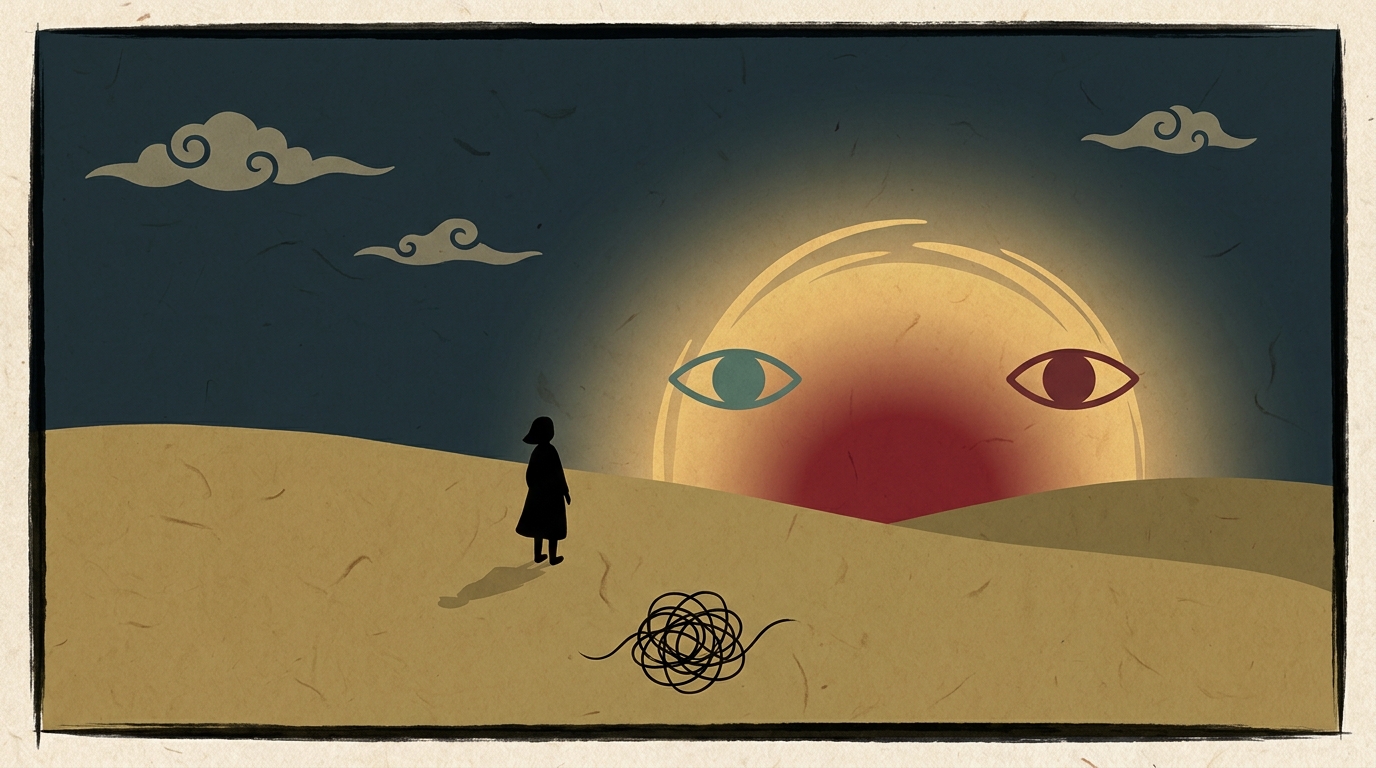
Your Korean friend texts you: "내일 제주도 가서 설렌다!" Something short-circuits. Isn't 설레다 the word from that drama — the one the lead uses when he sees her across the rain-soaked street? Why is it showing up next to a flight itinerary?
Here's what no textbook bothers to say: 설레다 (seol-le-da, "to feel a fluttery anticipation") was never a romance word. Romance is just where you first met it. The word's actual job is bigger — and its real definition will untangle four Korean emotion words that your dictionary lazily smashes into a single English translation.
The One-Sentence Definition That Rewires Everything
Strip every drama scene away and here is what 설레다 actually means: the heart moving in advance of something good that hasn't arrived yet.
The target of that anticipation can be a person, a season, a parcel, or a boarding gate. When the good thing is someone you have feelings for, you get romance. When it's anything else, you get the everyday version of the exact same word. The mechanism is identical — only the object changes.
This also explains 설레다's built-in expiration date. The moment the anticipated thing becomes real — you actually land in Jeju, you actually see the person — the 설렘 dissolves into a different emotion entirely. Anticipation can only live in the gap between now and not-yet. That gap is the whole word.
Here is the "aha" that most learners miss: if you ask a Korean friend 요즘 설레는 일 있어? (yo-jeum seol-le-neun il it-eo?, "Is there anything you're looking forward to lately?"), you are not asking "are you seeing someone?" You are asking "is there anything good hovering just ahead of you?" Hear it as a romance question and the whole conversation tilts sideways. Hear it correctly and you're no longer reading from a dictionary — you're reading from a life.
설레다 in the Wild: Five Scenes That Have Nothing to Do with Love
Native Korean speakers reach for 설레다 across all kinds of ordinary moments. These are the ones you'll encounter most.
The night before a trip. 내일 여행 간다고 생각하니까 설레서 잠이 안 와 (nae-il yeo-haeng gan-da-go saeng-gak-ha-ni-kka seol-le-seo ja-mi an wa, "Thinking about tomorrow's trip, I'm too fluttery to sleep"). Notice the structure — it's the exact same pattern Koreans use when they can't sleep because of a crush. Only what comes before 설레서 has changed.
The first day at a new job. 첫 출근이라 떨리기도 하고 설레기도 해 (cheot chul-geun-i-ra tteol-li-gi-do ha-go seol-le-gi-do hae, "It's my first day at work — I'm nervous and fluttery at once"). Pairing 설레다 with 떨리다 ("to feel nervous, to tremble") is a classic Korean move. Both feelings are named side by side — the anxious edge and the bright anticipation, held together without canceling each other out.
Spring breezes and first-snow forecasts. 봄바람 불면 괜히 설레 (bom-ba-ram bul-myeon gwaen-hi seol-le, "When the spring breeze blows, I feel fluttery for no reason"). That word 괜히 — "for no reason" — pairs with 설레다 so naturally it almost functions as a set phrase. The idea that 설렘 can arrive without a specific cause is deeply embedded in Korean emotional life. First snow works identically: just the forecast is enough to trigger it.
Concert countdowns and K-pop comebacks. 콘서트가 일주일 남았는데 벌써 설렌다 (kon-seo-teu-ga il-ju-il nam-at-neun-de beol-sseo seol-len-da, "The concert is a week away and I'm already fluttering"). Spend any time in Korean fan communities and you'll see 설레다 everywhere — none of it romantic. This is probably the fastest context in which to start using the word yourself.
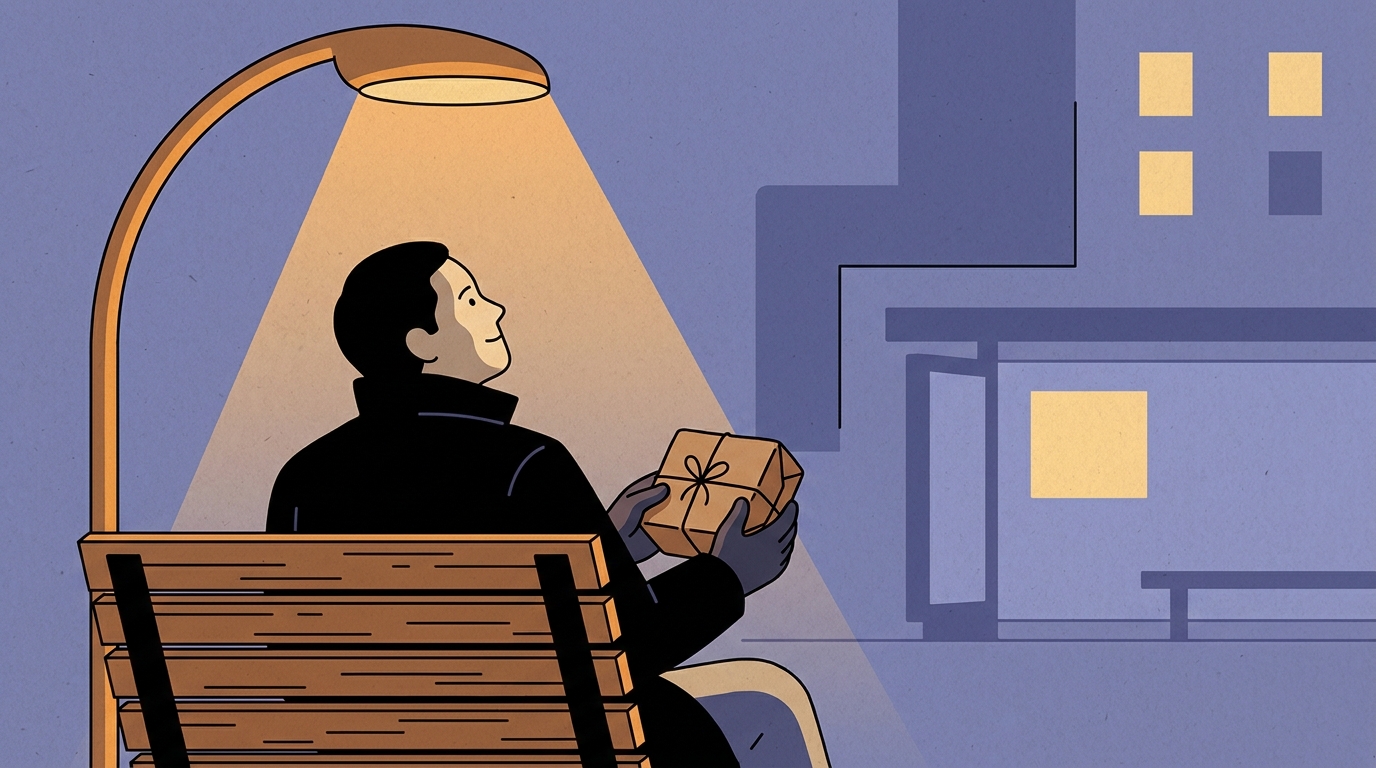
Package delivery day. 택배 오는 날은 아침부터 설레 (taek-bae o-neun na-reun a-chim-bu-teo seol-le, "On package-delivery day I'm fluttery from the morning"). This one matters because it shows you that 설레다 can be light and small. You don't need to save it for grand occasions. If you've been rationing it for romance, you've been making it rarer than it is — and that makes you sound unnatural.
The Four "Excited" Words — Finally Mapped
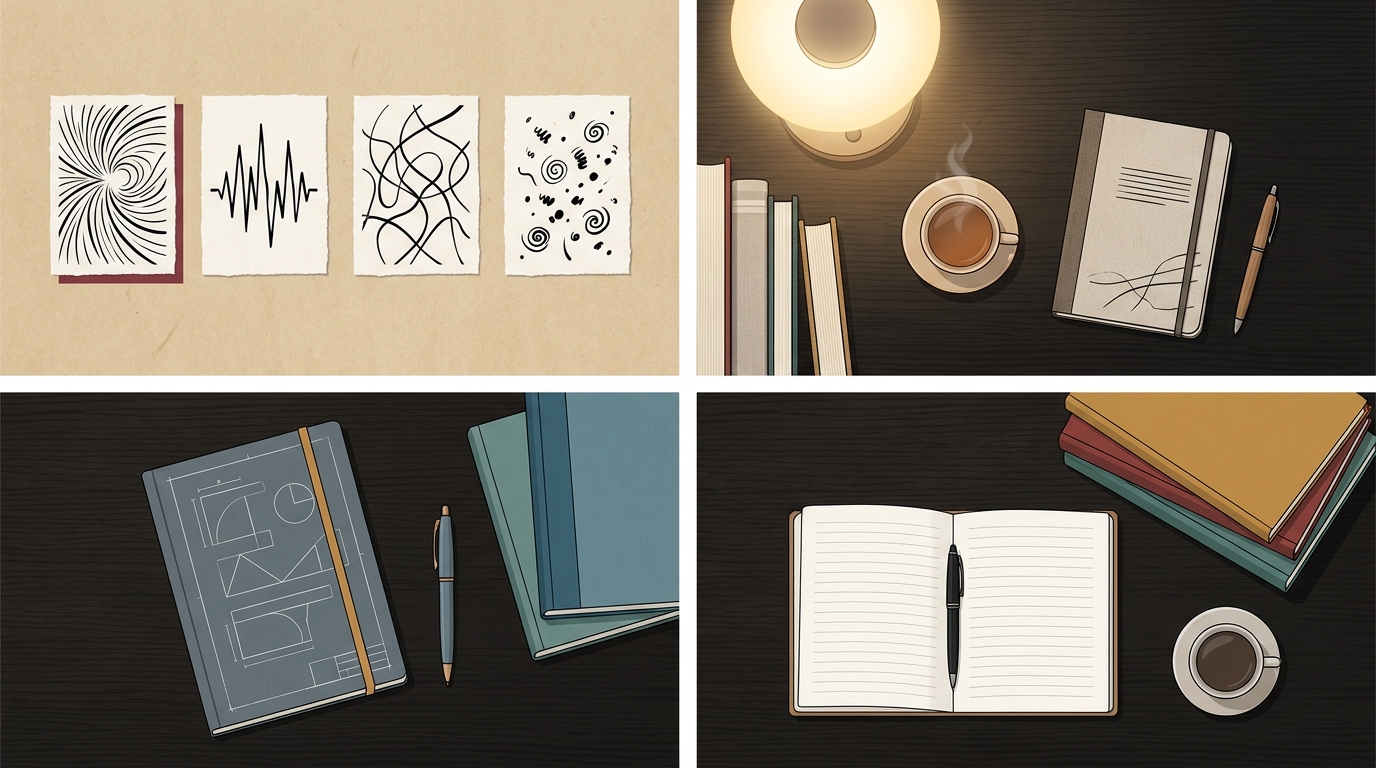
This is where most intermediate learners stall. You look up 설레다, 들뜨다, 기대되다, and 두근거리다 and receive the same English word four times. Here is the map your dictionary refuses to draw.
설레다 (seol-le-da) — The heart moving in advance, toward something good and not-yet-real. Positive only, forward-facing only. One critical rule: you cannot use it for something that already happened. "어제 콘서트 설렜어" doesn't work on its own — but recalling how you felt before the concert does. The moment the event arrives, 설렘 is already gone.
들뜨다 (deul-tteu-da, "to be buoyantly excited — floating, slightly ungrounded") — Picture a classroom the afternoon before a long holiday. Everyone is buzzing, nobody can concentrate, the energy is almost unstable. That restless, unmoored quality is exactly 들뜨다. It has a slightly more unsettled nuance than 설레다, which is why 들뜨지 마 ("don't get so worked up") is something parents and teachers say — the word implies you've lost your footing a little. 설레다 doesn't carry that mild reproach.
기대되다 (gi-dae-doe-da, "to be looked forward to — calm, expectation-based anticipation") — The neutral, safe option. You can say 다음 분기가 기대됩니다 in a business meeting without anyone blinking. It conveys expectation as a stated fact, without the emotional temperature of 설레다. Think of it this way: 기대되다 tells someone what you expect; 설레다 shows them how your heart feels about it. In formal writing or professional contexts, reach for 기대되다. Just know it won't carry the flutter.
두근거리다 (du-geun-geo-ri-da, "for one's heart to pound — the physical sensation itself") — This one is about the body, not the emotion. The word is built from the onomatopoeia 두근두근 (du-geun-du-geun), the sound of a thumping heart. Crucially, 두근거리다 is not positive by default. Your heart pounds before a confession, yes — but also in a horror movie, in an interview waiting room, before a difficult phone call. When you want to describe a physical symptom rather than name a feeling, this is your word. 설레다 is always good; 두근거리다 is just honest.
One-line test: Heart moving in advance toward something good? → 설레다. Floating and can't settle? → 들뜨다. Calmly expecting something? → 기대되다. Heart physically pounding, good or bad? → 두근거리다.
One more word deserves its own note: 벅차다 (beok-cha-da, "to be overwhelmed with fullness — emotion too big for the chest"). Unlike the others, 벅차다 is not anticipation — it's arrival. It's the feeling at the end of a concert, at a graduation, in a moment when joy is so full your chest can barely hold it. But the same word also means "too much to handle" when a workload crushes you. The best of moments and the edge of your limit — same word, context does all the work. If 설레다 is the shimmer before something arrives, 벅차다 is the overflow after it does.
The Spelling Trap That Catches Native Speakers Too
Here is something that will make you feel better about being a learner: a large portion of Korean native speakers spell this word wrong.
The standard forms are 설렘 (the noun) and 설레다 (the verb). The non-standard forms — 설레임 and 설레이다 — are everywhere online, in song lyrics, and famously in the name of a well-known Korean ice cream brand. That cultural saturation means the wrong spelling often looks more familiar than the correct one.
- 설레는 마음 (O) / 설레이는 마음 (X, non-standard)
- 설렘 가득한 아침 (O) / 설레임 가득한 아침 (X, non-standard)
For TOPIK and any formal writing, 설렘 and 설레다 only. If you see 설레임 in a friend's KakaoTalk message, you're witnessing a very common native-speaker error — warm and understandable, but not worth copying.
One Grammar Point That Trips Everyone Up
설레다 is a verb, not an adjective. This sounds minor, but it changes how you conjugate it.
Because learners sometimes treat it like a feeling-adjective (like 행복하다), they produce 설레해요 — which doesn't exist. The correct form is simply 설레요. Its modifier form follows regular verb conjugation, giving you 설레는, not any adjective-style form.
- 마음이 설레요 (O) / 마음이 설레해요 (X)
- 설레는 밤 (seol-le-neun bam, "a fluttery night") (O)
Try This Right Now
Pick something you're genuinely looking forward to this week — anything. Then say it out loud in Korean, using the right word from today's map.
Waiting on a delivery? 택배 오는 날이라 설렌다. Calmly anticipating a meeting? 다음 미팅이 기대된다. Heart hammering before a presentation? 두근거린다.
Then, next time you talk to a Korean friend or language partner, try asking: 요즘 설레는 일 있어? (yo-jeum seol-le-neun il it-eo?, "Is there anything you're looking forward to lately?"). Watch what they talk about. It probably won't be a person.
설레다 was always bigger than romance. It was always about that particular shimmer between now and something good — the gap where anticipation lives. You just needed someone to show you the whole picture. The flutter was never limited. You were.
🔊 Pronunciation Guide
Native-speed audio for the Korean in this article. Listen, then shadow out loud.
The exact phrases Koreans actually use every day — with the nuance notes that keep you from sounding like a textbook. Delivered as a beautiful PDF, free.
Send Me the Free PDFNo spam. Unsubscribe anytime.